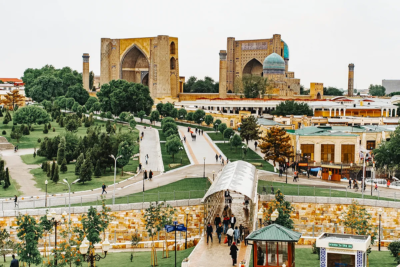
If you only have one day in Samarkand, you can still manage to visit the city’s most famous sights. This 1-day itinerary focuses on the highlights of Samarkand’s Timurid architecture, such as the Gur-e-Amir Complex, Registan, Bibi-Khanym Mosque and Shah-i-Zinda, as well as a few smaller but interesting places nearby.
The historic center is fairly compact, so the route is designed to comfortably walk between all locations. In fact, you should not need any transport among these sites at all.
If you would like the practical information on how to get to Samarkand, where to stay or where to eat, check out my Samarkand travel guide for all the practical tips.
If you have more than 1 day in the city, check out my Samarkand 2-day itinerary.
Gur-e-Amir Complex with Amir Timur Mausoleum
Entrance price: 65,000 UZS (photography with a camera required additional charge during our visit).
Opening hours: 8am-7pm (9-5 from November to March).
Start your day early and begin at one of the most important monuments in the city – the Gur-e-Amir complex with the mausoleum of Amir Timur. This will allow you to avoid crowds in a small space of the mausoleum.
Gur-e-Amir in translation from Persian means tomb of Amir or king. The main building of the complex is a mausoleum, where Timur and some of his descendants, including the famous Ulug Beg are buried. Its construction was completed in 1404. The complex is gorgeous. Its exterior with its blue dome and tiles (which is common in Uzbekistan) and beautiful mosaics and the interior with golden glow and more mosaics are both stunning.
The complex also includes a khanaka (a place of spiritual gatherings) and madrasa (religious seminary or school). Originally, it was supposed to become an Islamic education center under the leadership of Timur’s grandson, Muhammad. His grandson’s death led Timur to build a mausoleum here.
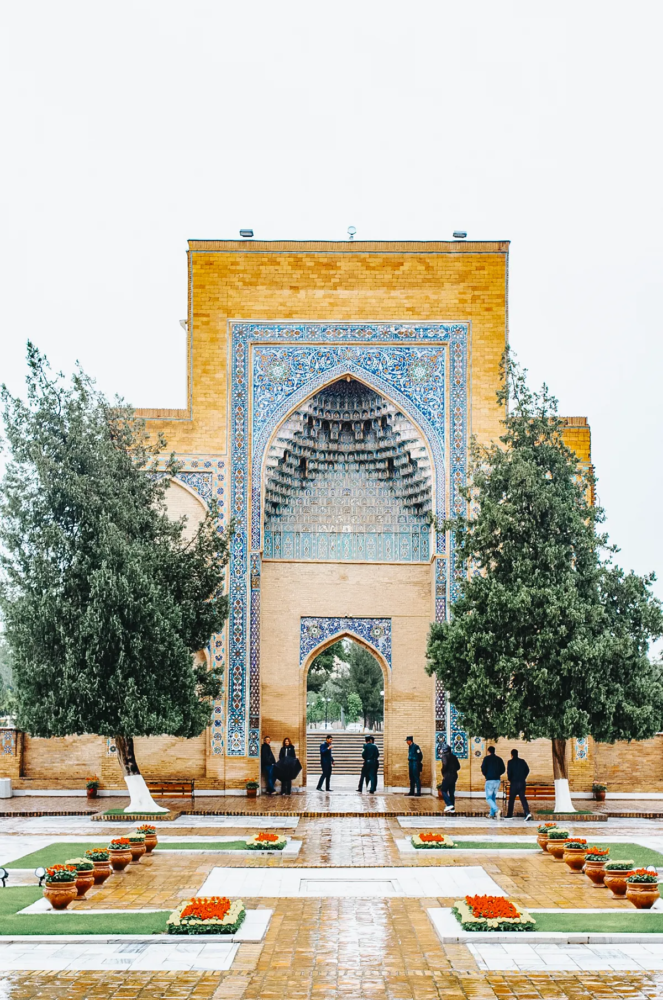
We visited on a very rainy day in April at about 11 am and there were several tour groups inside the mausoleum and it was extremely crowded and noisy. If you come here early in the morning, you can have a more peaceful experience. Hence, I included it as a first stop on the itinerary.
Inside you will find a number of gravestones. Timur’s gravestone is constructed from a single piece of jade. His remains are under this gravestone in an underground crypt.
Nearby the Gur-e-Amir, you will find Amir Timur’s statue.
Rukhabad (Rukhobod) Mausoleum
Entrance price: free.
The Mausoleum is located next door to Gur-e-Amir and is free to enter. It is a small building and quite underwhelming compared to the magnificent neighbor. However, it is still worth a short visit, while you are in the area. The mausoleum was built over the grave of an Islamic scholar Sheikh Burhaneddin Sagaradzhiin in 1380. The sheikh died in Beijing, but his wish was to be buried in Samarkand and Timur constructed this building to honor him.
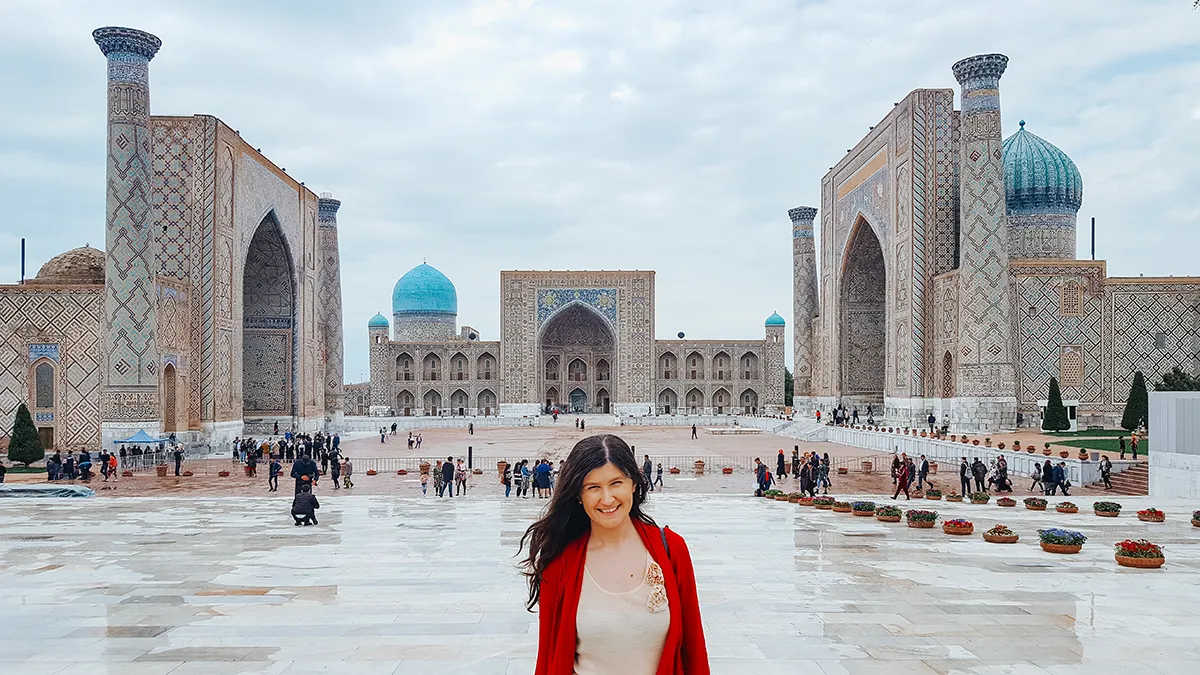
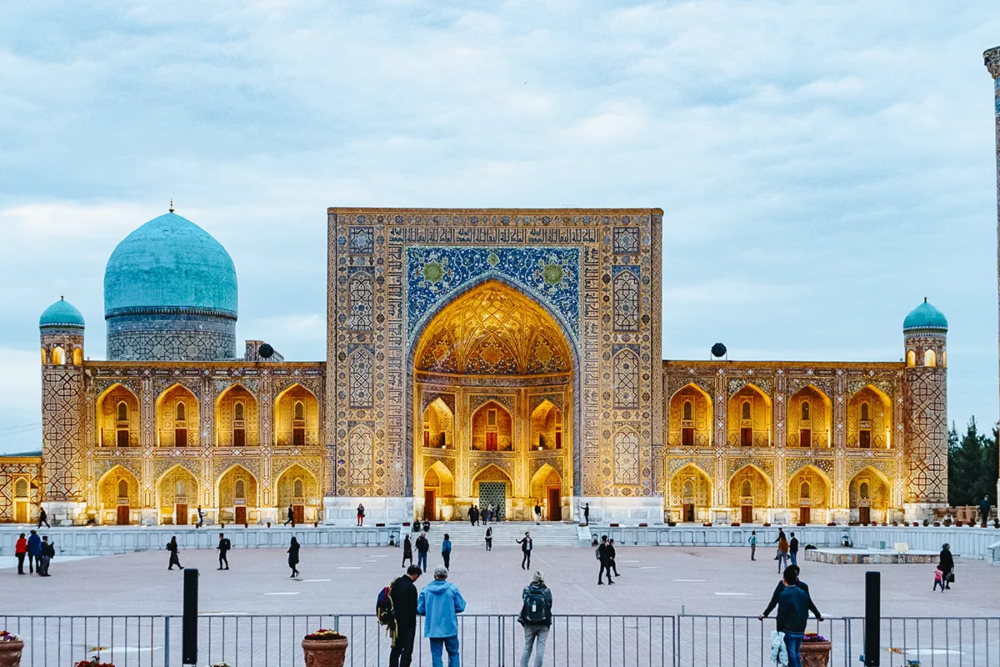
Registan: The Jewel of Samarkand
Entrance price: 100,000 UZS.
Opening hours: 8am-7pm (9-5 from November to March).
Walk from Gur-e-Amir: 15 minutes
Find the detailed information and tips for visiting Registan in a dedicated post.
Bibi-Khanym mosque and Mausoleum
Entrance price: 75,000 UZS.
Opening hours: 8am-7pm (9-5 from November to March).
Walk from Registan: 10 minutes
This complex has some fascinating stories behind it. Bibi-Khanym was married to Amir Hussein Al-Balkh. After winning over this Amir, Timur captured and married her. She was of Genghis Khan’s bloodline and therefore, marrying her was a strategic choice. Through this marriage, Timur called himself a son in law of Genghis Khan and his descendant. Despite Timur’s 3 dozen wives, Bibi-Khanym was the queen consort until his death.
The Bibi-Khanym mosque was constructed in 1399-1404. At the time, it was the largest mosque in the East. According to one legend, the mosque was built by Bibi-Khanym to celebrate Timur’s return from India. An architect in charge of the construction fell in love with the queen. He did everything to create obstacles and delay the construction. When the queen enquired about this, the architect blackmailed her requesting a kiss in return for timely completion of the construction works. The queen agreed to the kiss, but it left a mark on her cheek. The mosque was completed in time. After his return Timur noticed the trace of the kiss and killed the architect.
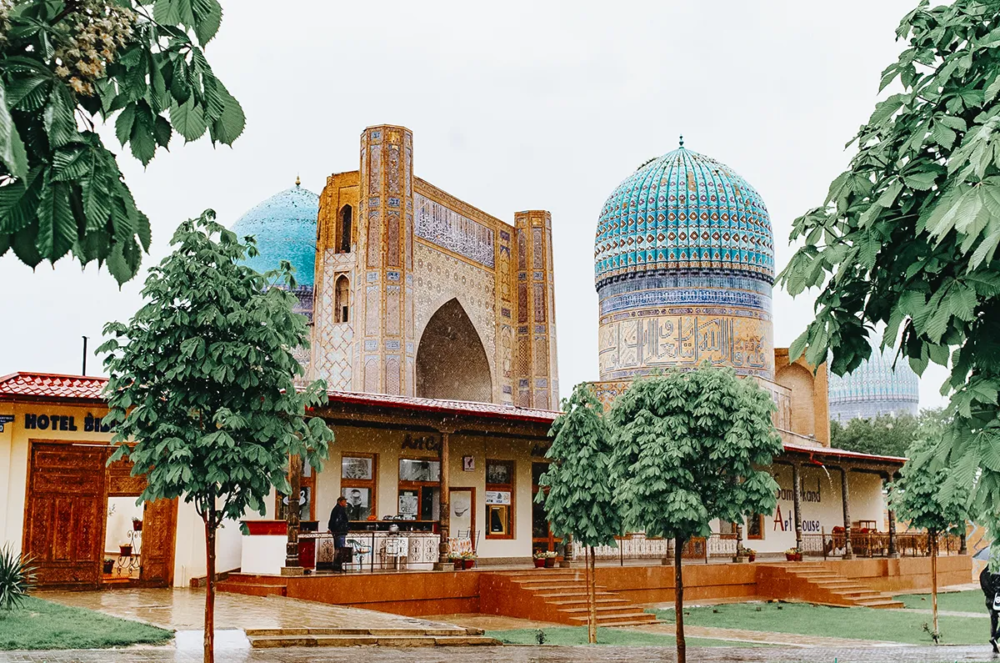
According to another story, Timur brought architects from India and Iran and used 95 elephants to build a magnificent building in memory of the mother of his wife.
Either way, the construction of the mosque was ordered by Timur or by Bibi-Khanym, but it was built in a rush. Therefore, it wasn’t durable and started to crumble soon. Its constant renovations were very expensive, so since 16th century no more restorations were done. It was also affected by the earthquake. The new renovations started from 1974 and are constantly ongoing.
The interior is still in quite a poor condition. While you can’t enter, you can peek inside.
In the middle of the courtyard, you will see a book pedestal. This is a quran stand. It was added by Ulug Beg and stood inside the mosque, but nowadays it’s located in the courtyard.
Despite the fact that we visited on a rainy day, there still were quite a lot of people walking around the grounds of the mosque. While the mosque is very popular, the Bibi-Khanym Mausoleum located opposite the mosque, across the pedestrian road was almost empty. Bibi-Khanym is buried here. We were basically the only ones wandering around its grounds.
Next to the mosque, you will find the Bibi-Khanym teahouse. You can try Uzbek dishes here. We visited and tried the dumplings. They were not too good though. Plus, the cleanliness standards left a lot to be desired. Either way, it’s still well-known and popular among locals and tourists.
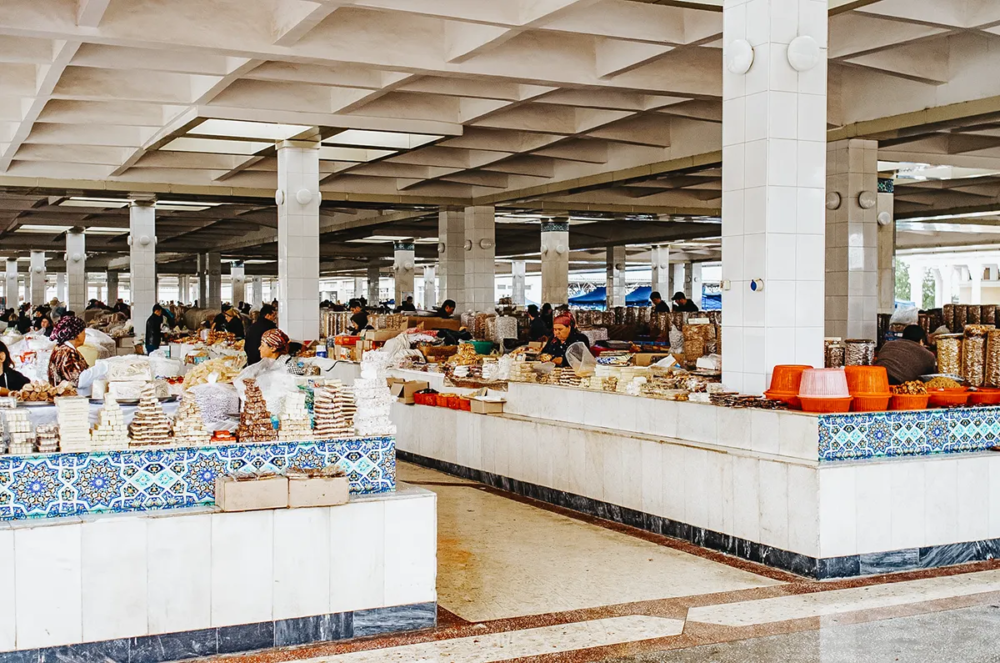
Siab Bazaar: The Largest Market in Samarkand
Siab bazaar is a popular tourist destination. It is located very close to Bibi-Khanym and is the largest bazaar in Samarkand. If you enjoy wandering around bazaars, trying things and haggling, you will like it here. Personally, this is not my cup of tea, so one peek was sufficient.
Hazrat Khizr: The Mosque with Wonderful Views
Entrance price: 25,000 UZS. While some sources say it’s free, this is for locals. Tourists normally have to pay, as we did.
Opening hours: 8am-6pm
Walk from Bibi-Khanym Mosque: 5-10 minutes
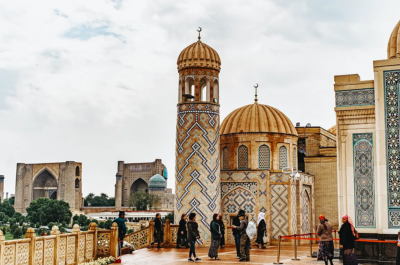
This mosque has a very original shape, which was what attracted me to it. Many people describe it, as uninteresting among the grand buildings of Samarkand but I disagree. This mosque is unique and cute. Its colors are lovely. It also provides gorgeous views over parts of the city, including the Bibi-Khanym.
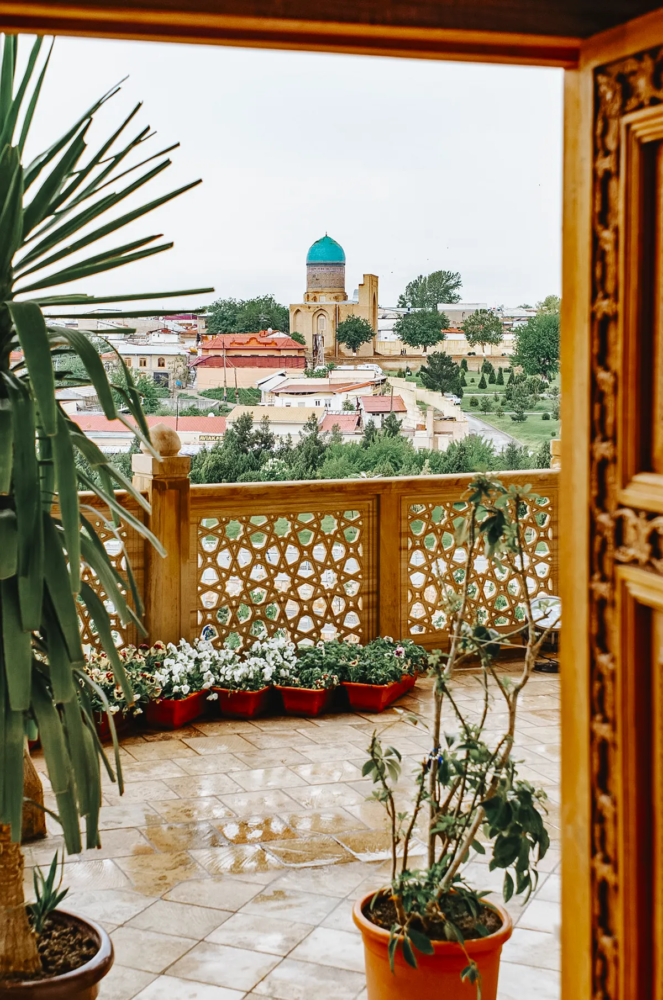
Originally, the mosque was built in the 7th century and was the oldest mosque in all of Uzbekistan. However, it was destroyed by the Mongols in the 13th century. It was then rebuilt and destroyed again a few times. The building you see now dates back to the 19th century.
Hazrat Khizr, after whom the mosque is named, is a controversial figure in Islam. Some believe that he got immortality, while others deny his importance. According to the legends he was a mentor of Moses and has appeared in different times since. He appears time after time to the righteous people and helps them.
Shah-i-Zinda: The Gorgeous Necropolis
Entrance price: 50,000 UZS.
Opening hours: 7am-7pm
Walk from Hazrat Khizr: 10 minutes.
Finish your day by visiting the Shah-i-Zinda, the beautiful necropolis photos of which you see all over Instagram. This necropolis is famous for its stunning blue-tiled mausoleums and is considered one of the most gorgeous architectural complexes in Central Asia.
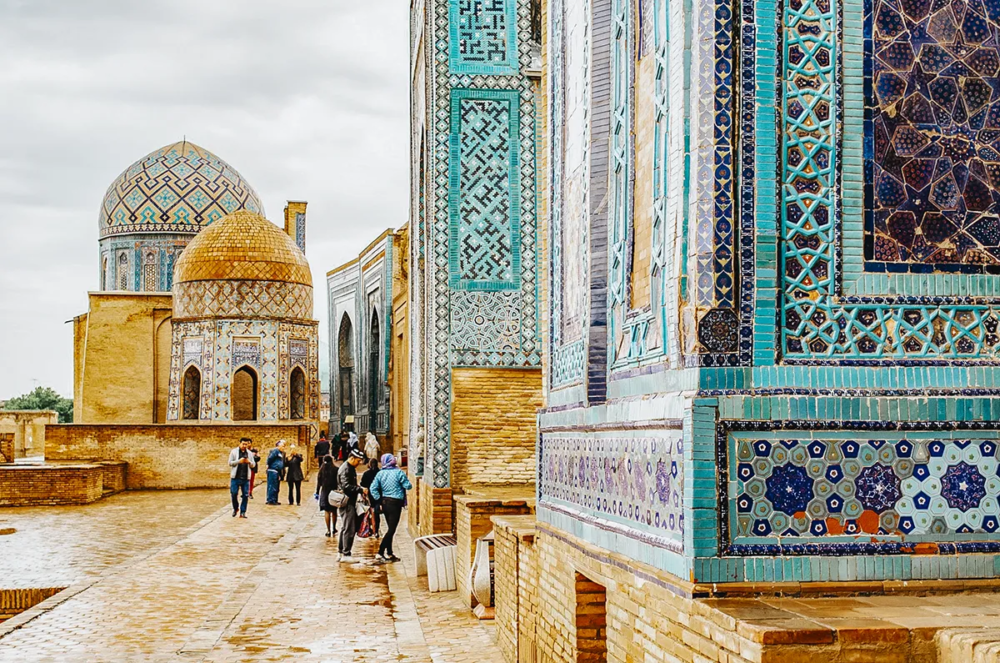
Exploring Shah-i-Zinda properly takes at least 2-3 hours. However, if you are a fast paced traveller and still have time and energy, you will still manage it in your 1-day itinerary, as it’s open till 7pm. Alternatively, if you have more time, you can move it to day 2. We actually didn’t have time for it on the first day, so visited on the second.
The name Shah-i-Zinda means the Living King. They say, cousin of Muhammad, Kusam Ibn Abbas is buried here. According to the legend, he was beheaded, when he was preaching about Islam, but he didn’t die, took his head and escaped. After this he continued to live underground at this location, hence the name the living king.
During 9th to 19th centuries, a lot of new buildings were added to this burial site. It became a place, where many royals and nobles during the Timurid dynasty were buried, including some of Timur’s wives, his relatives and other prominent people.
Because of this past, this is one of the most prominent pilgrimage sites. Many religious Muslims come here to pray, so be respectful while walking around.
We visited on a rainy day, although rain was starting and stopping, it wasn’t the best time. However, there still were quite a lot of people, most of them locals though.
The complex consists of a couple dozen small buildings with the tombs inside. The tombs had a lot of money thrown on top of them. We were surprised to see it, but it is a sort of offering to the dead.
The architecture of the small buildings lining the complex is just stunning. Do explore each of them inside and out. Don’t think that if you saw one of the buildings, you saw them all. They have different colors and patterns, and it was very interesting to compare.
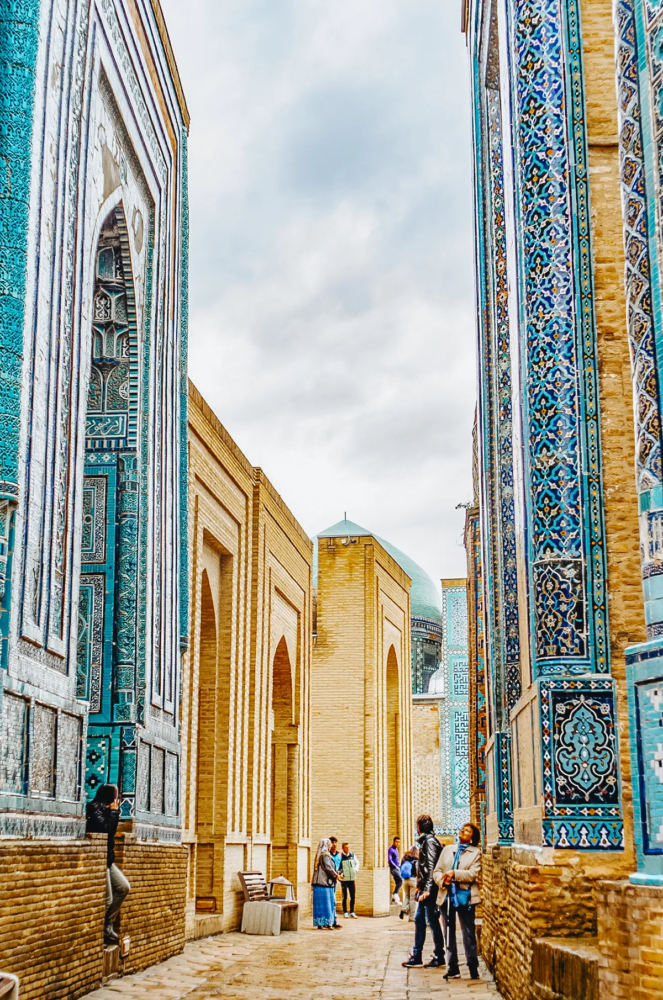
The different colored tiles, the gorgeous artwork and the lights make this complex a favorite photography location. Especially, if you have a wide-angle lens, it really provides many photo opportunities. This is especially true in the soft light of sunset. Therefore, include the visit last on your itinerary to catch this time.
What we didn’t like was the way the restoration of some parts of the site was done – they repainted parts in white, which stood out in a very unpleasant way among the beautiful tiles.
By the way, next to Shah-i-Zinda you will find an old cemetery for not so prominent people. I am usually not a fan of visiting cemeteries and we didn’t spend a lot of time here, but it may interest some of you.
If you would like to explore the city with a guide, this GetYourGuide walking tour includes most of the attractions on this itinerary.
If you prefer not to walk among the sites, book this private city tour with transportation.
Evening: Registan Light Show
In the evening, after all the sightseeing, go back to Registan and enjoy the light show (if you are lucky and you are in Samarkand on a day, when the show is planned).
See the detailed tips on how to catch the show in this post.
Even if you only have one day in Samarkand, this route allows you to see the city’s most famous monuments and experience the atmosphere of the Silk Road. With more time, you can also explore sites outside the city center.
Join our travel community on Facebook Coffee Fueled Travel Club
See Also