Gyeongbokgung Palace, meaning “palace blessed by heaven,” is one of the key spots on any Seoul itinerary and for a good reason. Not only is it the oldest and grandest of the city’s 5 royal palaces, but it’s also where you can watch the famous Changing of the Guards ceremony.
It is also very popular because it was a filming location for various K dramas, including Goblin, The Last Empress and The Moon Embracing the Sun. Korean series are also one of the reasons I was so excited to see Seoul palaces.
The history of Gyeongbokgung dates back to 1395, when it was established by the new Joseon dynasty. The palace grounds were destroyed and restored several times. Most of the current buildings were rebuilt during the major restoration project in 1990, while some buildings were restored as late as the 2000s.
If you are planning what to see at Gyeongbokgung Palace, this guide covers all the key highlights and practical tips. Besides, if you want to know how to include it in your Seoul itinerary, see my detailed Seoul Travel Guide with 1 to 5-day itineraries.
- Practical Information for Visiting the Gyeongbokgung Palace
- How to Get to Gyeongbokgung Palace
- Tickets of the Gyeongbokgung Palace
- How Much Time do you Need to Visit the Gyeongbokgung Palace
- Changing of the Guards Ceremony
- What to See at the Gyeongbokgung Palace: Sightseeing Route
- Gyeongbokgung Palace at Night
Practical Information for Visiting the Gyeongbokgung Palace
How to Get to Gyeongbokgung Palace
If you have been following my recommendations and are staying near a metro station, you can get to the Palace using Seoul’s extensive metro network:
- Gyeongbokgung Station on line 3, exit 5 is just a few minutes walk from the Gwanghwamun Gate.
- Gwanghwamun Station on line 5, exit 2 is a bit farther, about 7 minutes away.
You will enter from the south side – Gwanghwamun Gate and exit from the north side, via the Sinmumun Gate, which is just across from the President’s Residence.
While visiting the palace on your own is quite easy, you can book a guided tour of the palace, which includes pick up and drop off.
Tickets of the Gyeongbokgung Palace
Ticket price: 3000 won.
Free over 65 and a discount for juniors.
Royal Palace Pass: 10000 won. The pass lasts for 3 months. If you are visiting other palaces as well, you may consider buying the Royal Palace pass, which includes admission to:
- Gyeongbokgung Palace
- Changdeokgung Palace
- Changgyeonggung Palace
- Deoksugung Palace
- Jongmyo shrine.
However, please, note that the Pass no longer includes the Secret Garden of the Changdeokgung Palace. Gyeonghuigung Palace is free to visit.
Discover Seoul Pass: I don’t recommend purchasing this pass for visiting palace, given that the Pass price is high and it’s not worth it for cheaper sights, like this one.
Admission times: 9 am-6 pm. Closed Tuesdays.
Once you enter the Gwanghwamun Gate, you can buy the tickets on the right hand side.
If you like tours, you have an option to join free official guided tours of the palace at 11:00, 13:30 or 15:30. You just have to show up and join the tour. However, it’s first-come first-served, so be there somewhat earlier to make sure you can join.
How Much Time do you Need to Visit the Gyeongbokgung Palace
If you want to explore all parts of the palace, as well as view the Changing of the Guards Ceremony and take all the photos and stroll to less popular areas, I recommend allocating at least 2-3 hours. We spent about 3 hours here leisurely exploring all parts. But if you have a very limited time here, you could quickly see the highlights even in an hour.
Changing of the Guards Ceremony
Do come to buy your tickets before 10 am to catch the Changing of the Guards ceremony (the reenactment happens every day, except Tuesdays, twice a day at 10 am and 2 pm). It is happening at the courtyard, where the ticket booth is, before you show your ticket to enter the palace, however tons of people come for this ceremony, so to avoid queues and find your spot, arrive a little earlier.
The viewing area is sectioned off, so it’s best to position yourself in the center of the courtyard for the best view. The guards will enter the courtyard from next to the ticket booth and move through to the Gwanghwamun Gate.
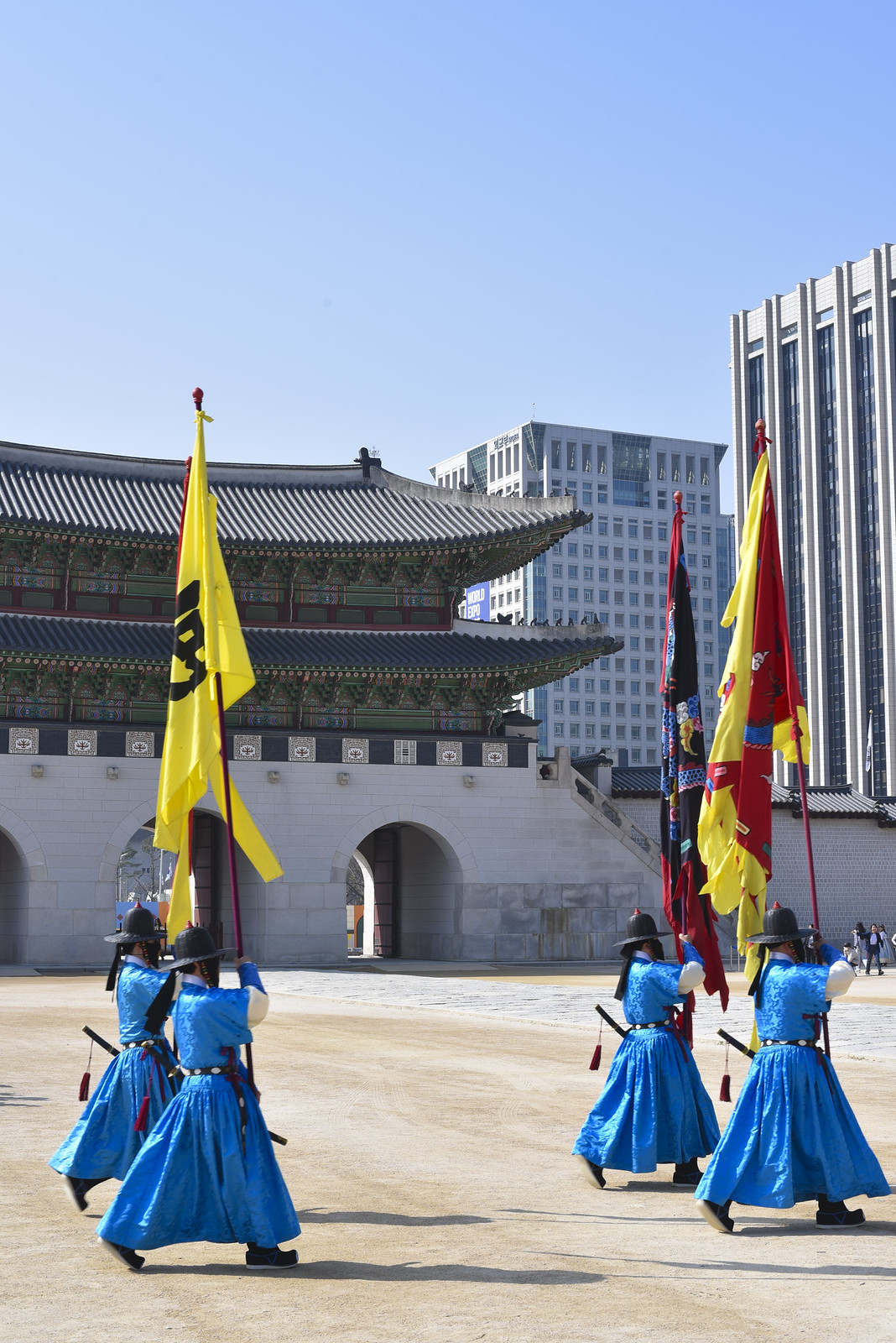
After the ceremony, you have two options, either visit the National Palace Museum or directly enter the palace. The museum is not really crowded. It’s also free of charge, as all national museums. That’s a great thing, like in the UK honestly.
If you plan to skip the museum and enter the palace immediately after the ceremony, it’s best to leave slightly earlier before the end of the procession, when most people flock to enter. This won’t help much with the crowds, but still.
What to See at the Gyeongbokgung Palace: Sightseeing Route
The Route Map: This map may help you see the locations of each building you would want to see.
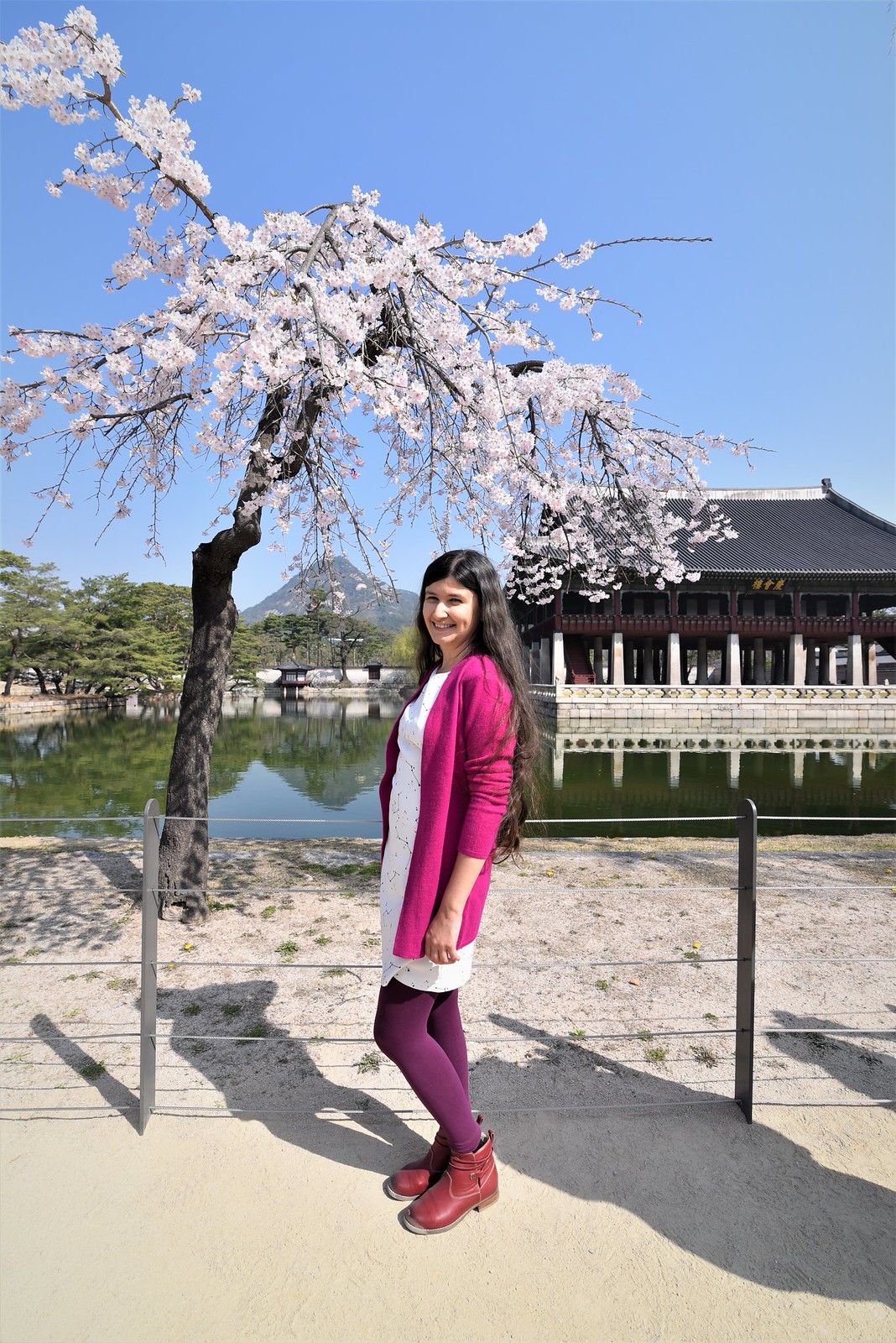
To enter the palace, you present your ticket at the Heungnyemun Gate. If you are visiting during spring time, you will find some cherry blossoms inside with cute views.
Next, past the Geunjeongmun Gate, you will end up at the heart of the palace, the Geunjeongjeon Hall, which was used for royal and state ceremonies, including coronation of the Joseon kings. While you can’t enter this or any other hall, you can peek inside to see the throne.
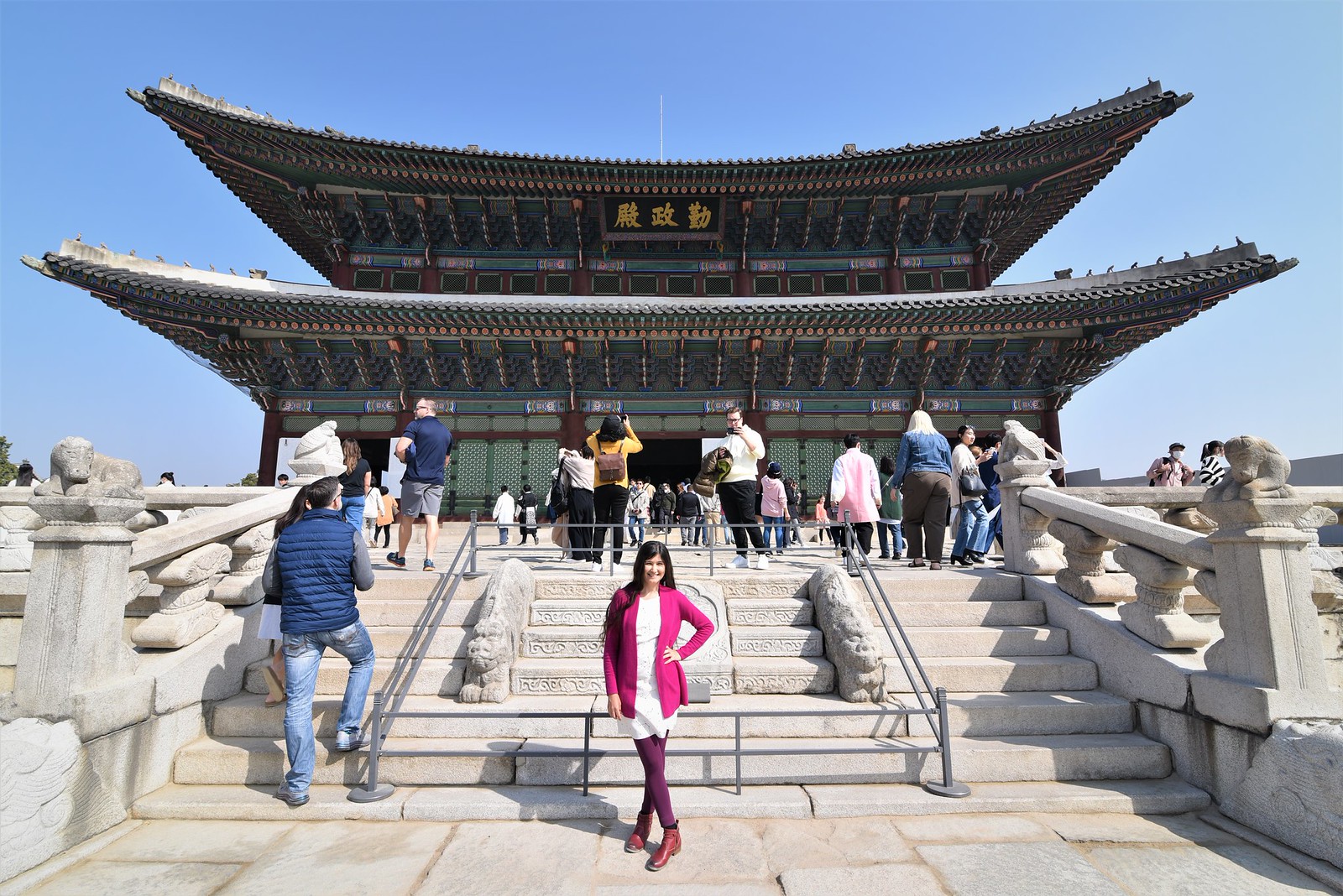
Behind this main hall is Sajeongjeon, which was used for everyday business, including meetings with councilors. This hall is said to be the only one that survived all calamities.
These two halls are followed by the living quarters of the king and then of the queen consort. If you want to see what was inside these halls, you will be disappointed, as most items are moved to the museums, while these halls are mainly empty.
Next, head to the Gyeonghoeru pavilion surrounded by the pond. This building was used for state events, including banquets. If you want to view the pavilion itself, you have to join a tour. We didn’t do this, as this is available from April through October and it wasn’t open when we visited. If you are interested, inquire at the ticket office. It’s unnecessary though, unless you are absolutely set on viewing it better.
After this, if you want to more thoroughly explore, head to Donggung – East Palace, which was the princes’ residence, followed by the kitchens and living quarters of queen mothers.
Jagyeongjeon – served as the queen mother’s quarters. It was built in the 1800s and is said to be the only building that survived the Japanese demolition project in the 20th century.
Hyangwonjeong Pavilion to the north is lovely and provides gorgeous background for photos.
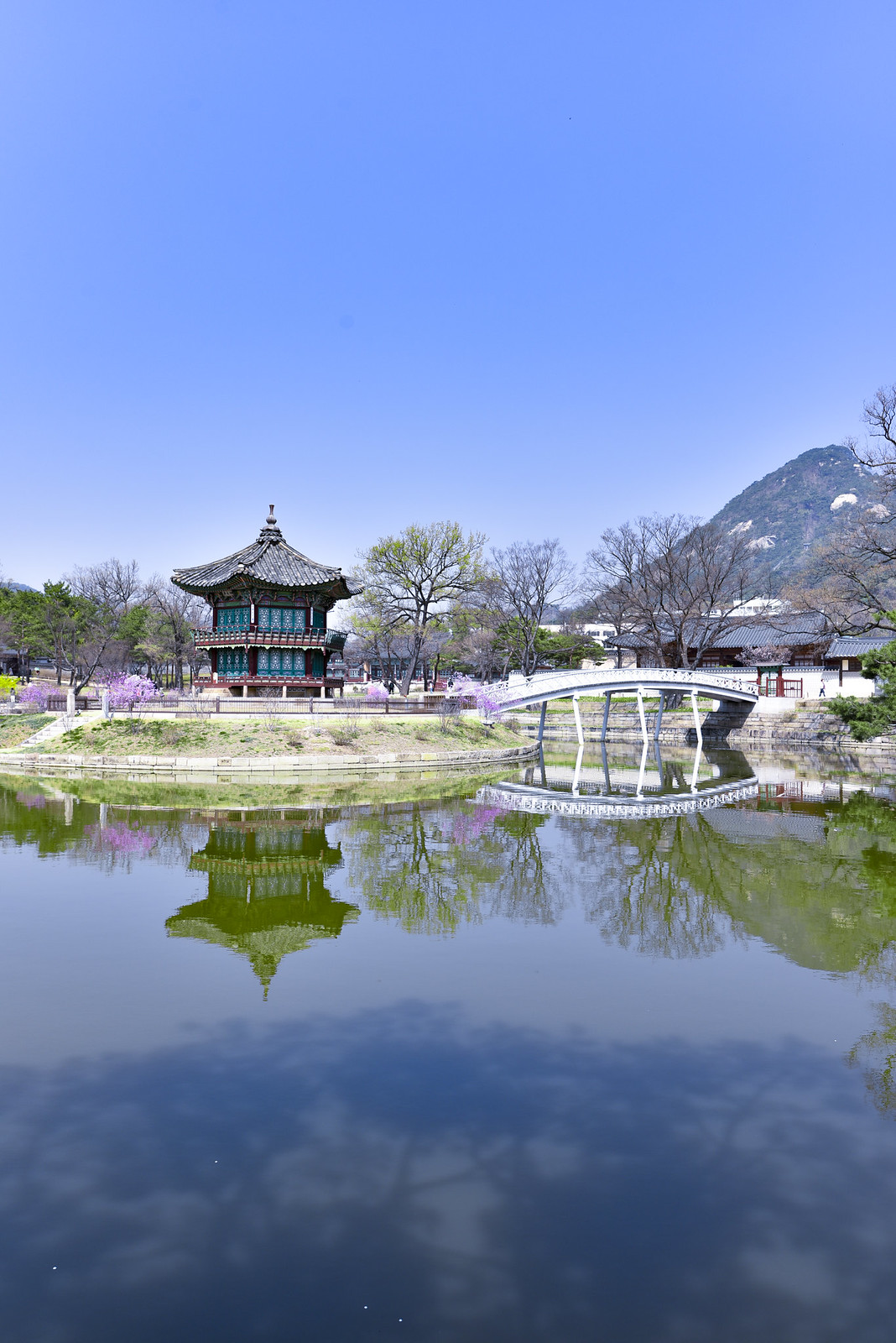
Behind it stands the Geoncheonggung Palace used by Kings and Queens during the later years of the Joseon rule. This was the place, where queen Myeongseong was assassinated in 1895 – this event is recalled often due to the fact that it was soon followed by the Japanese occupation, which lasted many decades. This event is actually either depicted or referred in many historical K-dramas.
One note – in this palace, as well as the others – if you are expecting to see many items from the old times, you will not find them here. You will see the thrones, maybe a couple of fans and the folding screens/room dividers (those were special and had various uses, including protection from wind, separating space, separating the kings, when they didn’t want to be seen). The items that were used in the palaces are mostly in different museums, particularly in the National Palace Museum.
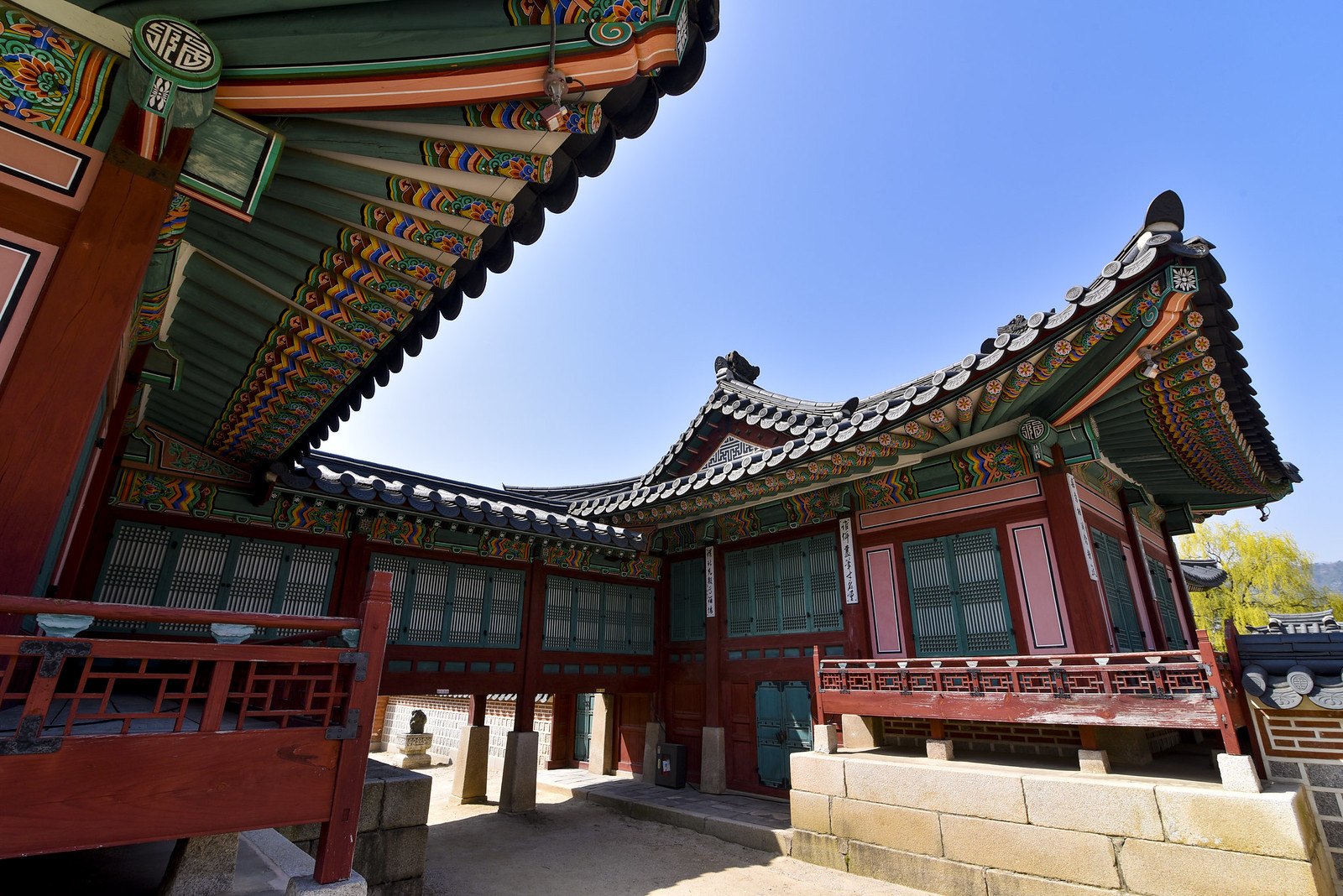
After this, you can head towards the Sinmumun gate, very close to which stand Jibokjae. This building served, as a library and study of Joseon King Gojong. It is currently open only from April to October, Wednesday to Sunday, 10 am -4pm. The library currently houses thousands of historical books and has beautiful wooden interior decor. It was not open when we visited, so I have to do this next time.
While visiting the palace on your own is quite easy, for historical context, you can book a guided tour of the palace or join the free guided tours.
If you are a history buff and have enough time, after visiting Gyeongbokgung, you can head to the National Folk Museum of Korea. The museum is free. We skipped this, as there were too many other things we wanted to do.
After visiting the palace, you can head to the Bukchon Hanok Village to enjoy the cute streets and visit one of the many cafes.
Gyeongbokgung Palace at Night
If you are visiting Seoul in Spring or Autumn, you might be able to visit the palace at night as well. This is usually possible during May-June and September-October dates from 7 pm to 9.30 pm.
The night viewing ticket is separate and costs 3,000 won. You can reserve your tickets via the official website when they become available for the season, however, only 2500 tickets are available online. You can also get them on the spot, 300 tickets are available to foreigners every day and sell on a first-come first-served basis. You have to present your passport.
Join our travel community on Facebook Coffee Fueled Travel Club
See Also