Planning how to spend only one day in Seoul can feel overwhelming, as the city offers so many diverse options. But this carefully designed Seoul 1 day itinerary covers the city’s key highlights in a simple, mostly walkable route, making it ideal if you are wondering what to do in Seoul. From historic palaces and traditional hanok villages to vibrant streets filled with cafes and culture, you will be able to get a taste of the city in this short period of time without rushing between distant locations.
This itinerary focuses on the main attractions around Gwanghwamun, Bukchon, Insadong, and Ikseon-dong, with an optional evening visit to Namsan Tower. As first-time visitors, this is how I planned our first day and it worked out wonderfully without feeling rushed.
If you prefer to explore with a local guide, book this customizable private tour and choose the spots you most want to visit.
Cheonggyecheon Stream
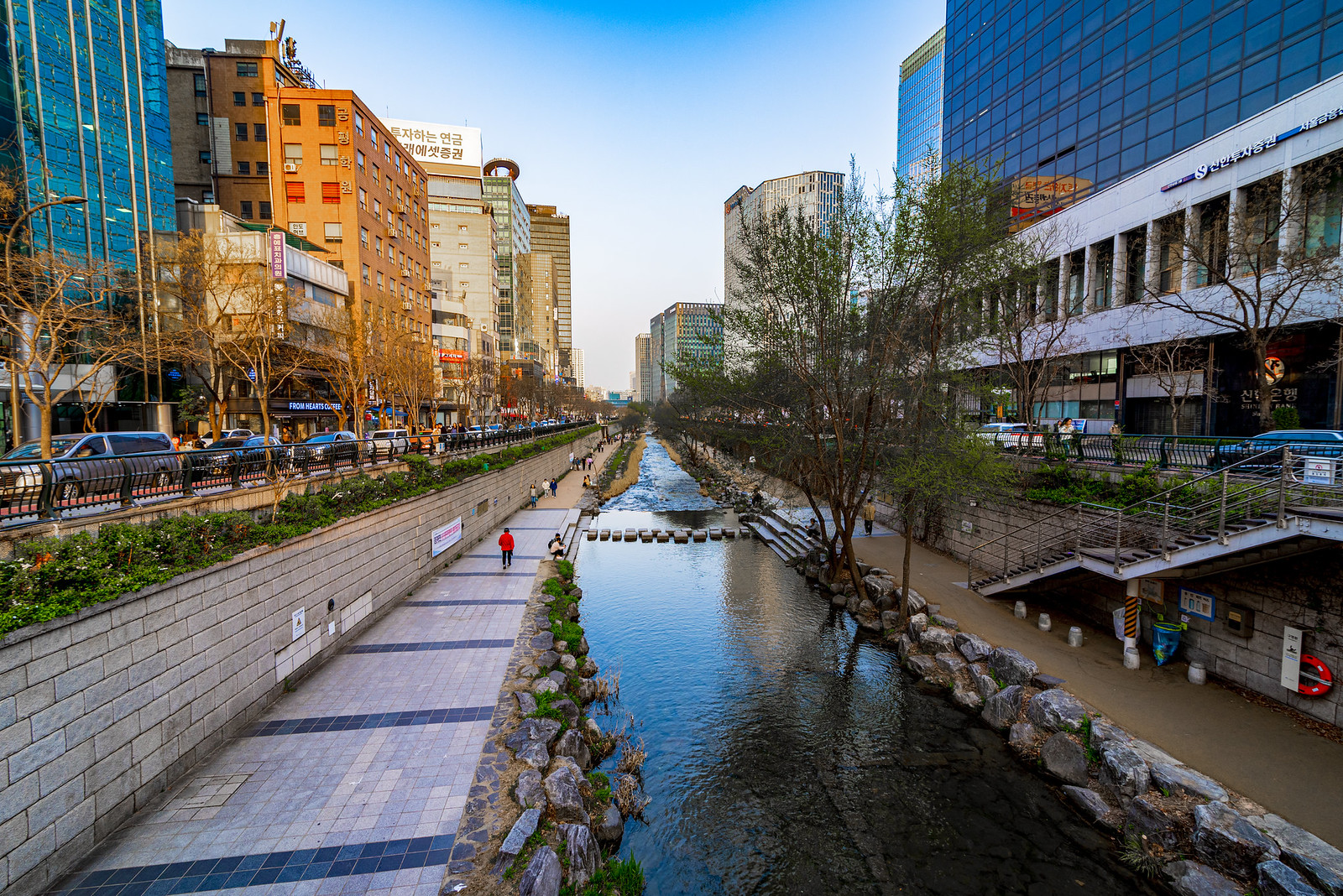
If you are a very early riser, you can start your day by walking along the Cheonggyecheon Stream (if you don’t arrive early, do this in the evening instead). This stream starts at Cheonggye plaza and spans 11 km length towards the Eastern side of the city. The restoration of this area was completed by 2005 by the then Mayor of Seoul, who was severely criticized for spending significant amounts of money on this project. However, this stream became a favorite of the locals and visitors alike, with people getting some rest here from the hustle and bustle of the neighboring streets.
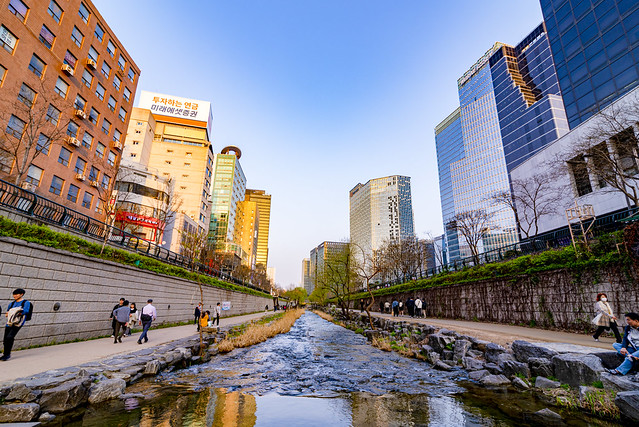
The stream is actually very popular especially in the evenings. It was also featured in a number of K dramas, such as Flower of Evil and Lovestruck in the City.
Gwanghwamun Square
If you are not an early riser, then you can simply take metro line 5 (there are also other lines going nearby, depending where your hotel is) directly to Gwanghwamun. You can grab coffee from either of the two Felt coffee branches (they open early on weekdays – at about 7-8 am) near the Gwanghwamun Square and head to explore the square.
Here is the list of cafes we liked around Seoul Gwanghwamun and Bukchon Hanok Village area.
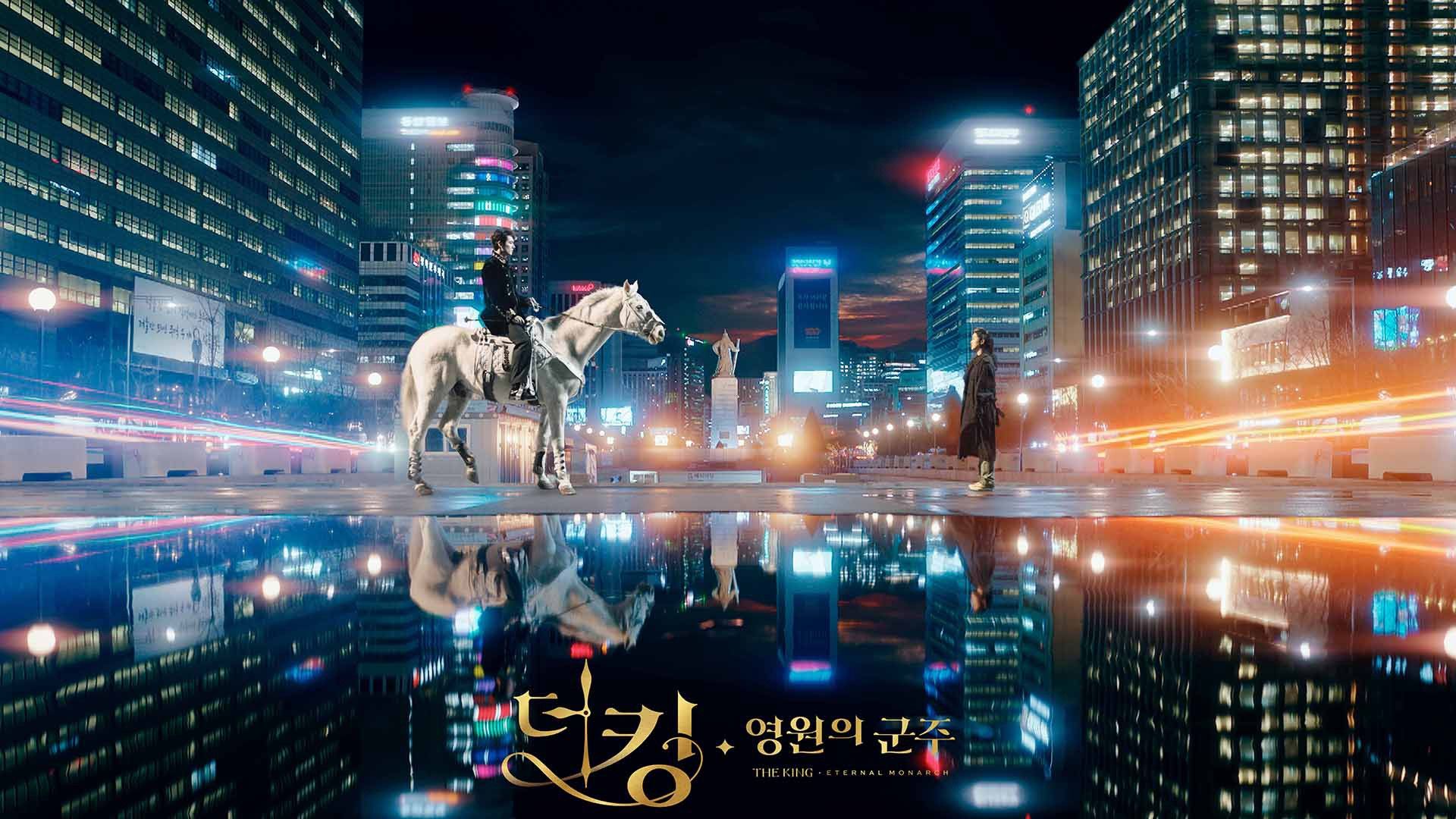
The square remains kind of the heart of Seoul to this day – national celebrations happen here, any huge demonstrations and political events also take place here. This tradition dates back to Joseon dynasty times, when people would gather in front of the Gwanghwamun gate to make requests to the king. This square is also featured in K dramas, such as Queen In-hyun’s Man (you see the gate here) and King: Eternal Monarch (you can see King Sejong’s statue in the background, as well as the full square).
Check out the Cheonggye plaza and the waterfall, then pass the Admiral Yi (known for his achievements fighting Japanese navy) and King Sejong (known for introducing Hangul) statues. From next to his statue, you can access the Story of King Sejong Exhibition Hall, which is a free museum depicting his accomplishments.
After exploring the square, head to the Gyeongbokgung palace for Changing of the Guard ceremony, which starts at 10 am.
Gyeongbokgung Palace
Price: 3000 won, free over 65 and a discount for juniors. Free if you wear a hanbok.
Closed on Tuesdays
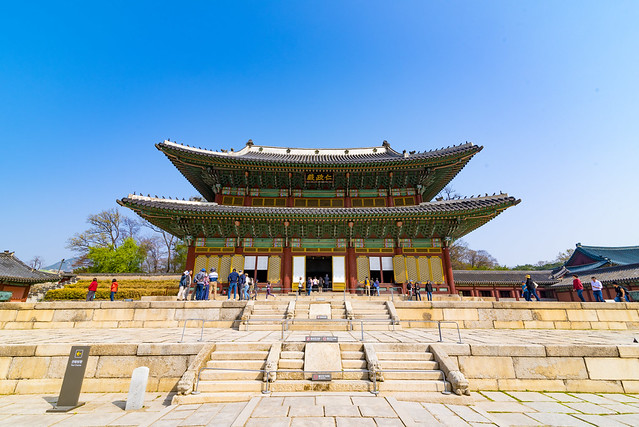
This palace is the oldest and most famous of the 5 palaces in Seoul. Built in 1395, it served as the official residence of the Joseon dynasty intermittently for many years.
If you are a history buff and have enough time, before or after visiting Gyeongbokgung, you can head to the National Folk Museum of Korea and the National Palace Museum of Korea. All National museums are free. We skipped this, as there were too many other things we wanted to do.
Cheongwadae (Blue House)
Cheongwadae is located just across the northern gate of the Gyeongbokgung. So you can easily see it, as soon as you exit the palace.
Cheongwadae serves as the official residence of the President of the Republic of Korea since 1948. During the interim period of 2022-2025, the President moved the office to the Ministry of Defence building. So Cheongwadae was open to the public up to December 2025, when the new President moved back. We were lucky to visit the ground before it closed, but you can only have a look from the outside at the moment.
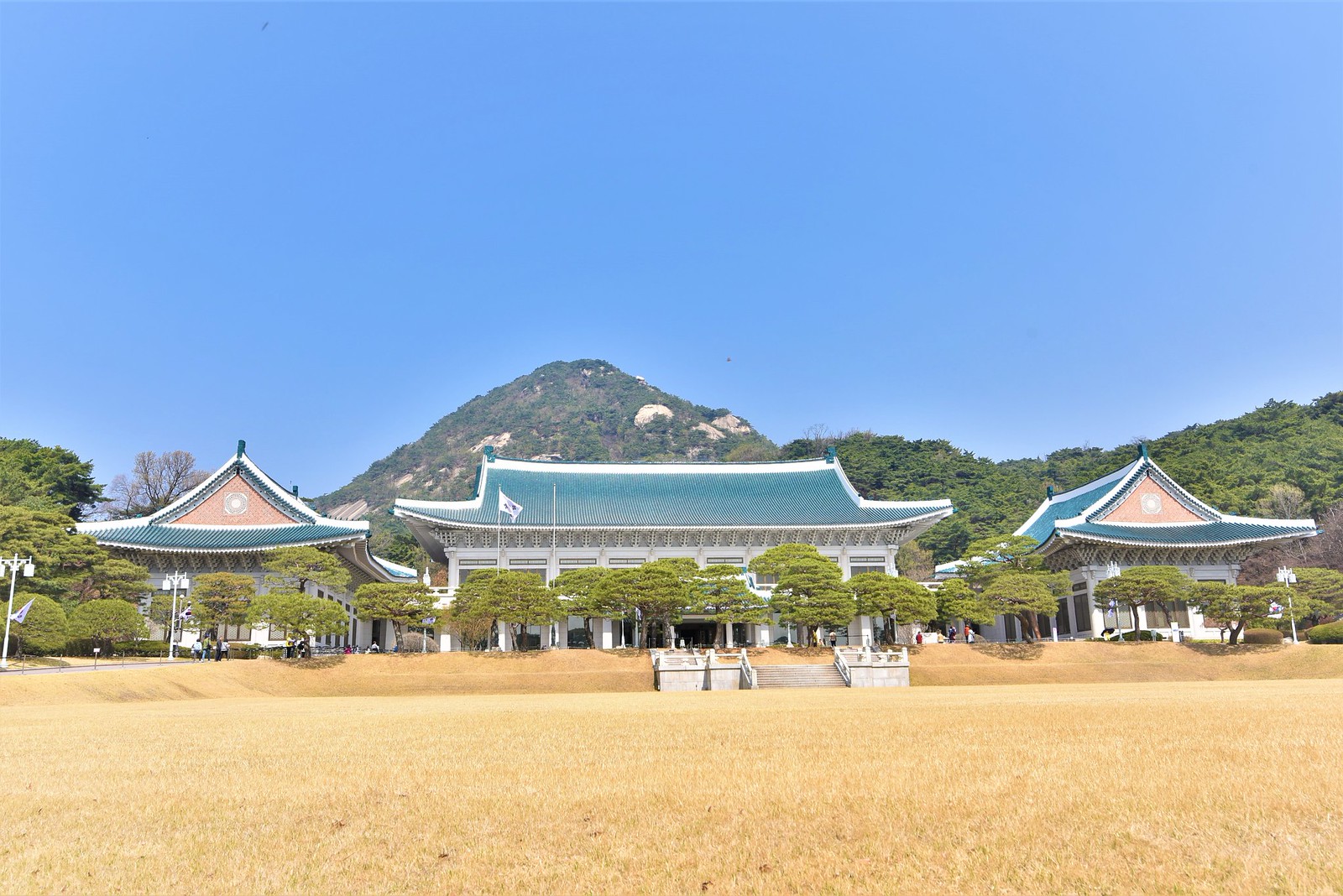
Here is a pretty good map of the park grounds and some more detailed information about it.
The main site here is the blue building, which is the main office building. Hence, the name – Blue house. This building is used, as the office of the President. We saw the photos of all the previous presidents on the walls here, as well as the cabinet of the president, the reception hall, etc.
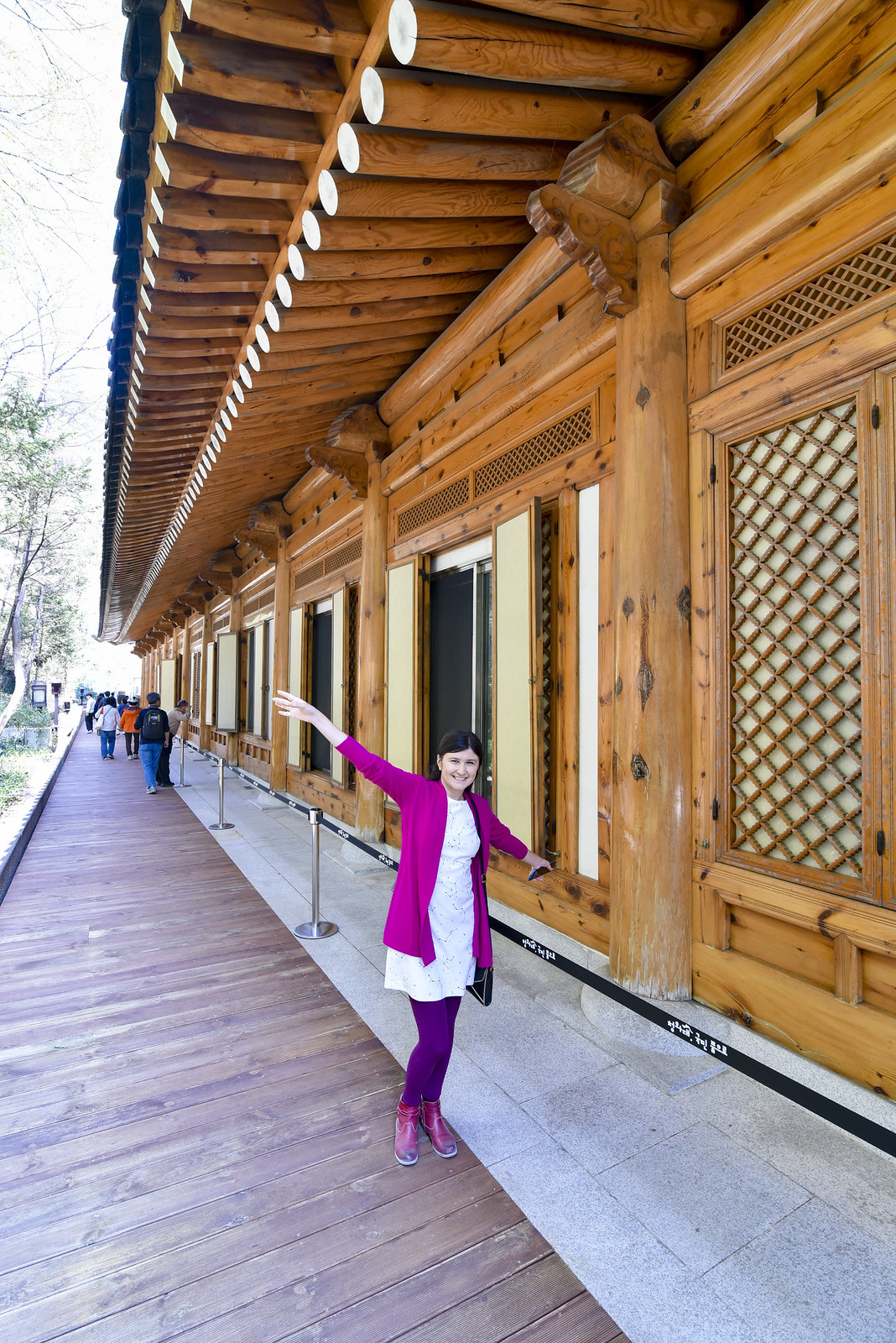
Nearby the Blue House is the Official residence building, where the President lives with his family. The building was interesting for us because of its wooden exterior. Then the trail southwards has the buildings for ceremonial events and the gardens.
Bukchon Hanok Village
You can easily walk to Bukchon Hanok village area from the exit of the Gyeongbokgung Palace: just reach the Samcheong-ro and find stairs to climb up. There’s really no easy way to access these narrow roads but to climb or take a taxi to a higher point (some are accessible to taxis) and then walk down. If you aren’t physically able to climb hills, taxi is your only option.
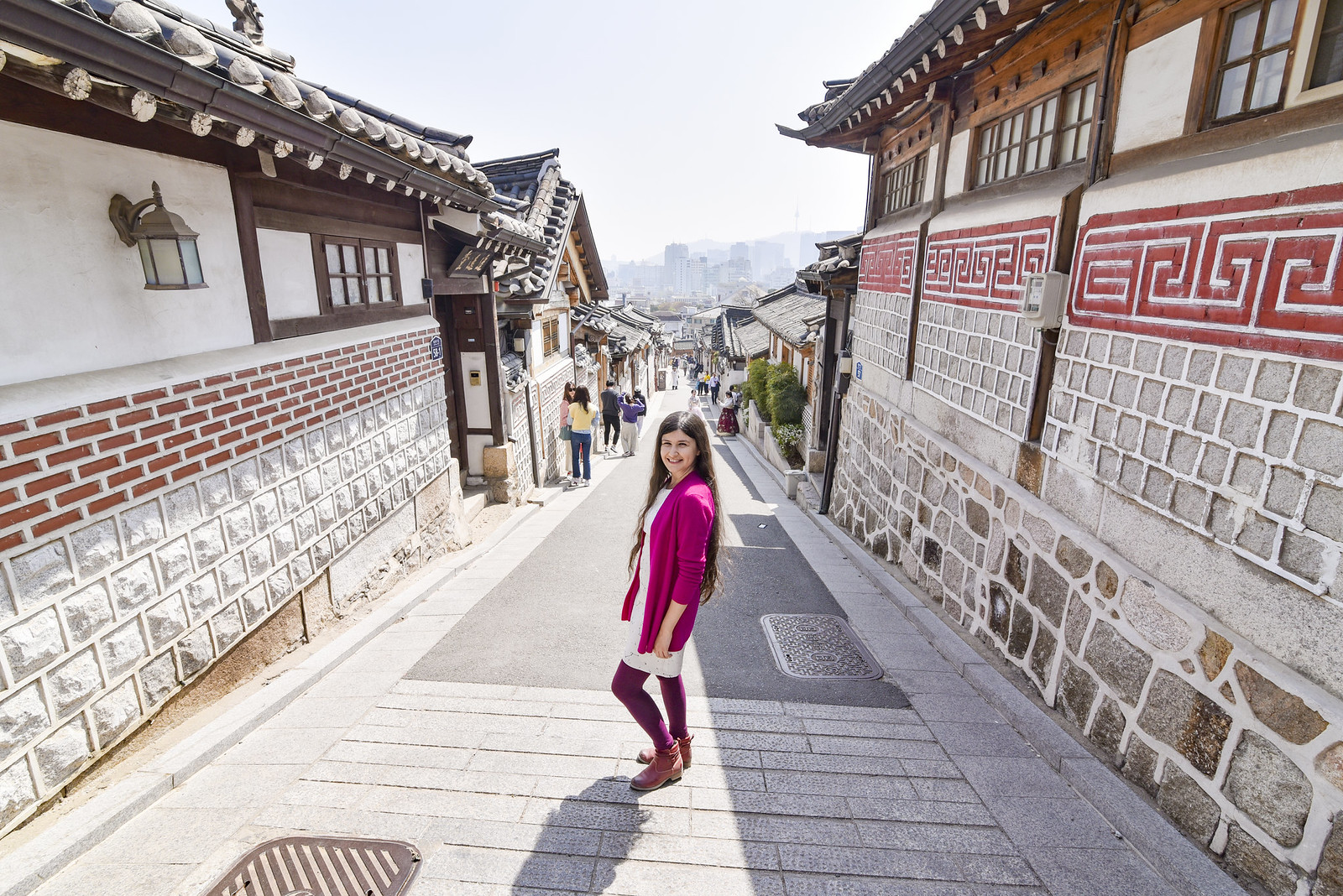
The village is very popular due to beautiful hanoks – houses from Joseon times. Keep in mind that this is not an attraction park. While many houses are turned into museums, including House of Baek Inje, Bukchon Museum or Seoul Education Museum, people still live in other houses.
This village is popular for a reason: it has cute small streets and nice views of the city, as well as nice cafes inside hanoks, small museums to explore and more. Interestingly, it was featured in several K dramas, such as My Roommate is a Gumiho and The Heirs.
Do spend a couple of hours just walking around and exploring the cool houses.
Don’t miss the traditional tea house Cha-Teul. If the queue is huge, ditch this and try to find another teahouse (possibly Sinyet chatjip off Insadong street, which should be less crowded). We actually did wait for it, as we loved it’s cute Korean style courtyard a lot.
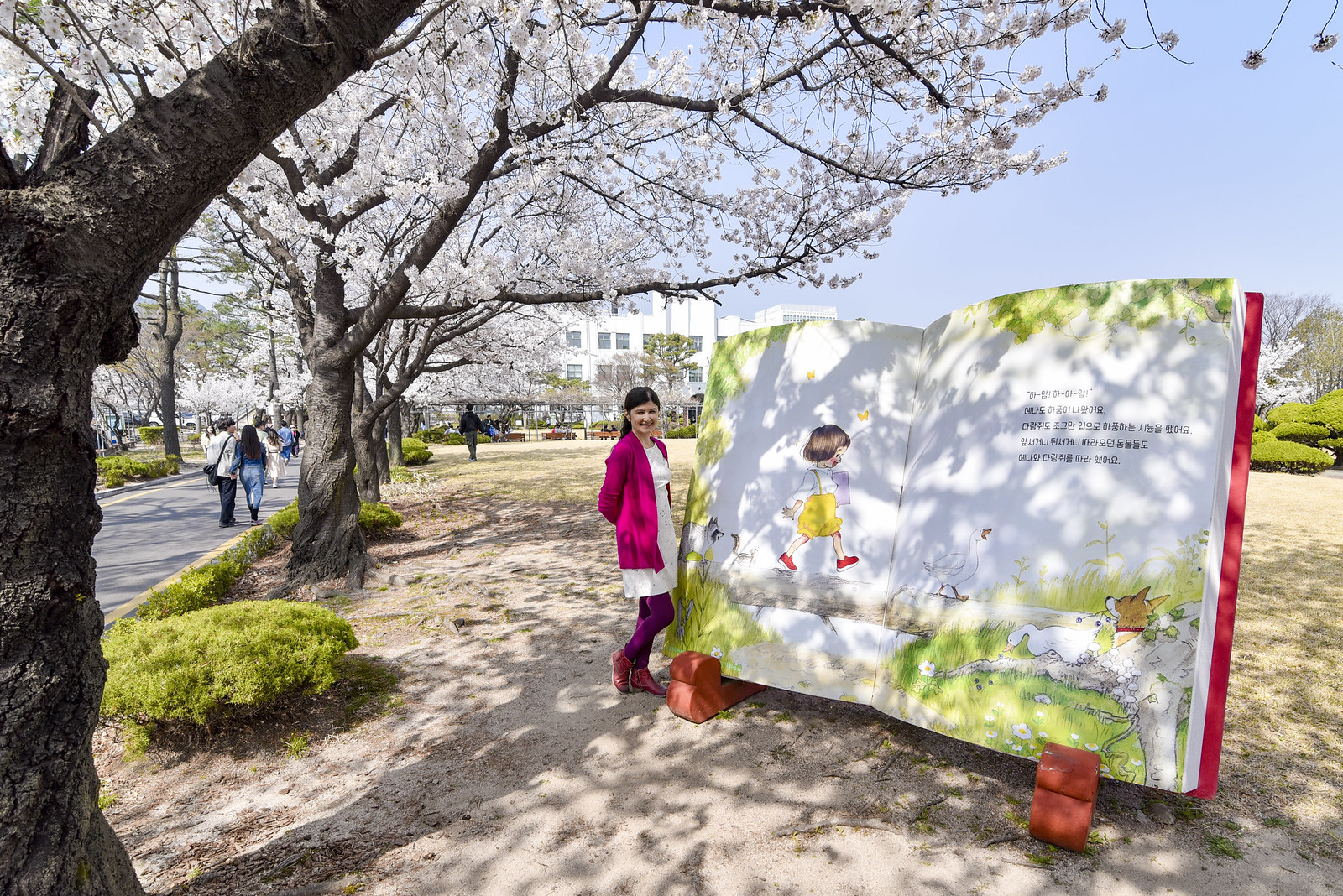
If you are visiting during the cherry blossom season, don’t miss the Jeongdok Public Library, the yard of which is full of cherry trees. When we visited at the end of March, the cherry blossoms were in full bloom and the library yard was full of people posing for photos. It really is a lovely site.
After you are done walking around the area, choose one of the most popular cafes, for example Onion Anguk, Layered or Fritz coffee company. You can find detailed description of each with the Naver and Google map links in my blog post here. Just keep in mind that if you aren’t visiting very early in the morning or late in the evening, these cafes will highly likely be very crowded. Therefore, you will have to decide whether they are worth the long wait. For instance, we did want to visit Cafe Onion Anguk, however, having looked at the queue, we decided we were not willing to wait two hours for it. There are too many nice cafes in other areas to waste time waiting.
Unhyeongung Palace
Free to Visit.
Closed on Mondays.
After walking down from the Bukchon Hanok village, near Anguk station, you will find Unhyeongung palace. This is not one of the five grand royal palaces and is not on the radar of tourists, so you will likely find it almost empty. However, it was used as a royal residence at various times. It was destroyed during the Korean war and parts of it were reconstructed in the 1980s. Do explore the residential and ceremonial halls here and enjoy the quiet after the crazy hustle and bustle of the Bukchon Hanok village.
Jogyesa Temple
Walk for a few minutes towards Jogyesa temple. This is a lovely Buddhist temple near Insadong street. The temple was built in the 14th century, but as many things in Seoul, was destroyed by fire. It was subsequently rebuilt in the beginning of 20th century and survived Japanese occupation period.
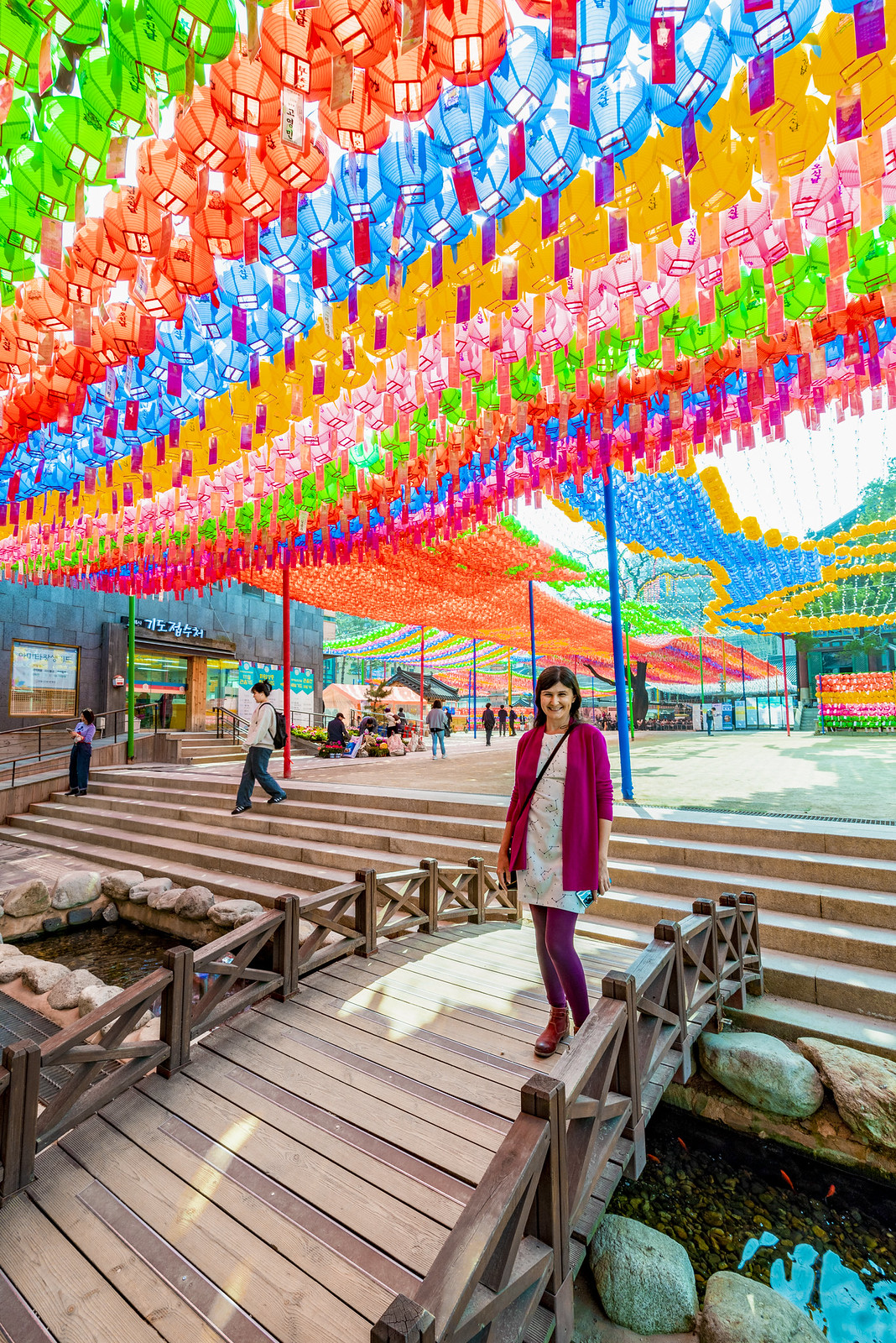
The temple itself is the biggest in Seoul, however it has smaller grounds than you would anticipate, especially if you have visited other temples around Korea. For us this was the first temple we visited in Korea, so it did fascinate us.
The main hall is open 24 hours, so you can visit any time, day or night – it’s beautiful either way. While we were there (at around 3 pm) prayer service was ongoing and the hall was full of people.
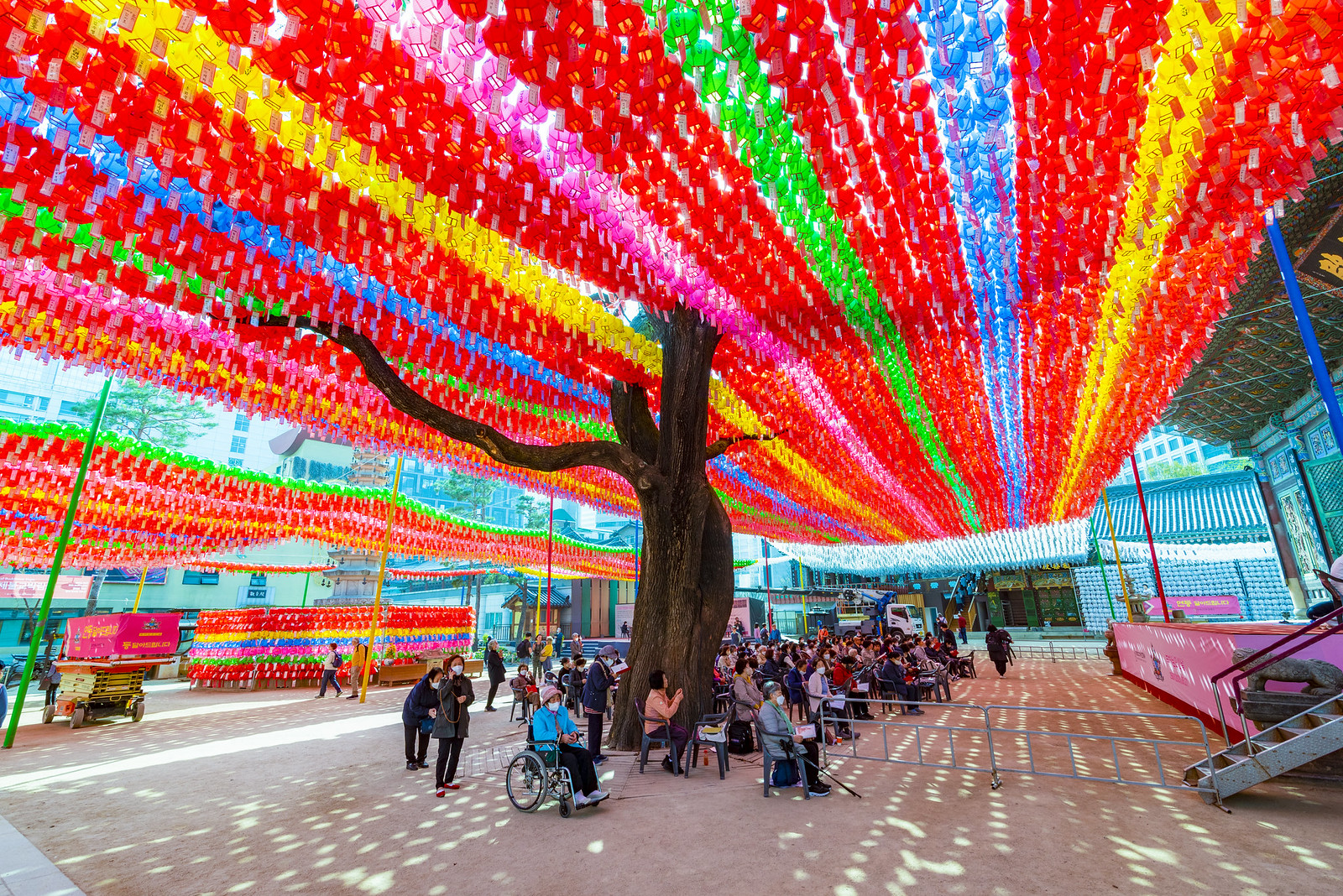
The temple is beautifully decorated all year round, but if you are there during the Lotus Lantern festival in May, it is supposed to be gorgeously lit.
Insadong Street
This famous pedestrian only street basically starts across the road from Jogyesa. You should visit it during the day, as towards evening, after about 6 pm, everything is closed and the street is dead. The street is particularly famous for its art galleries and the vintage shops. You will find various crafts, beautiful calligraphy items, fans, hanboks etc. We explored various shops boasting to be the oldest, showcasing pictures of famous people visiting the stores (we spotted photos of Elizabeth II, for example).
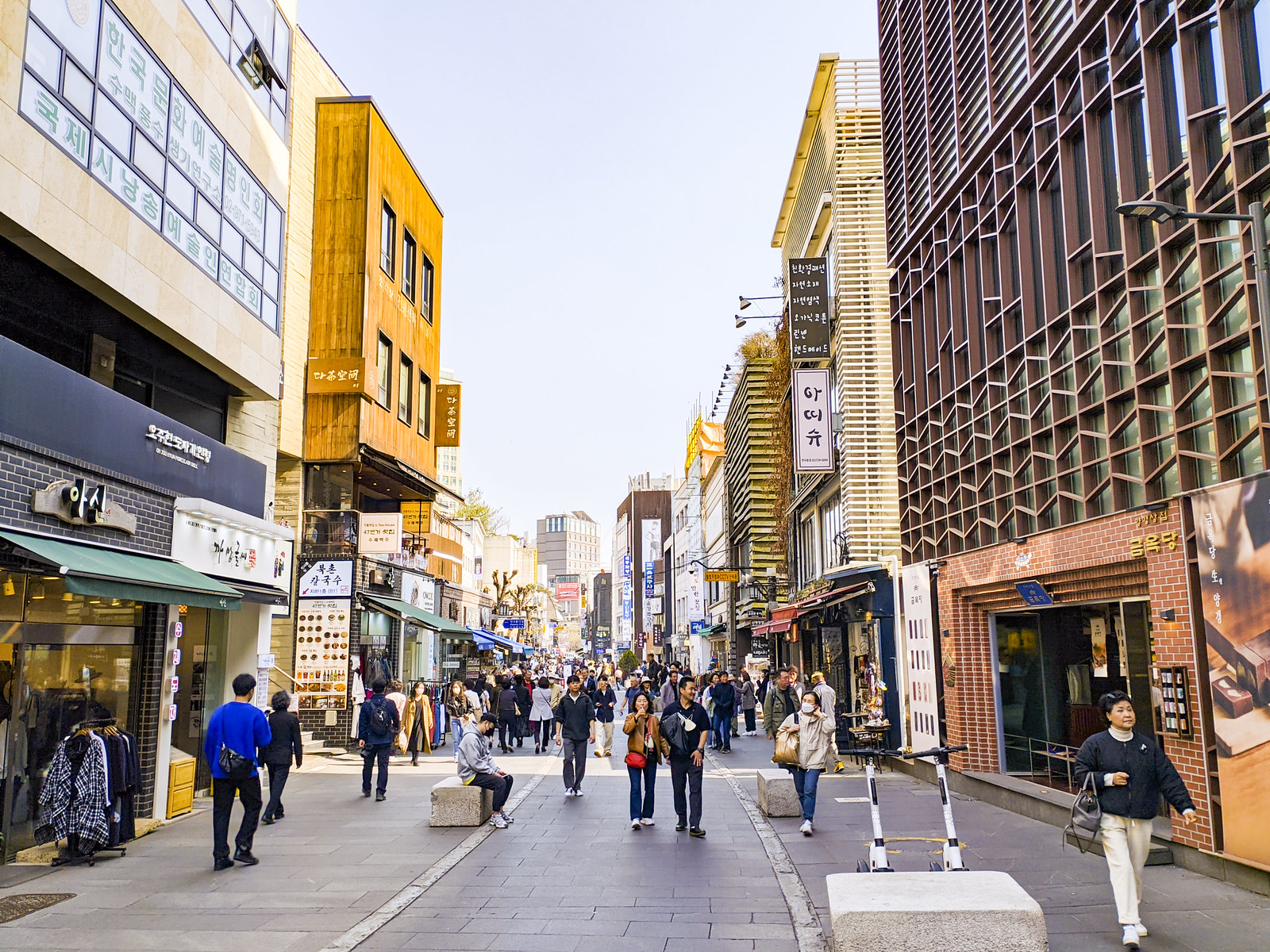
Off Insadong street is the Ssamzi-gil market, which can be an interesting stop to view the cute items being sold.
If you are interested in them, you will find Kimchi Museum, Alive Museum and Colorpool Museum on this street (the last two are actually included in the Discover Seoul Pass).
Ikseondong Hanok Village
This tiny village area is by far my favorite in Seoul. We visited it on our first day and I made sure to come back on our last day as well to walk around its super cute streets once again. It has very narrow alleys and is hence pedestrian only. You will find tons of different restaurants and cafes here, as well as fortune-telling stands (these are very popular all around Korea).
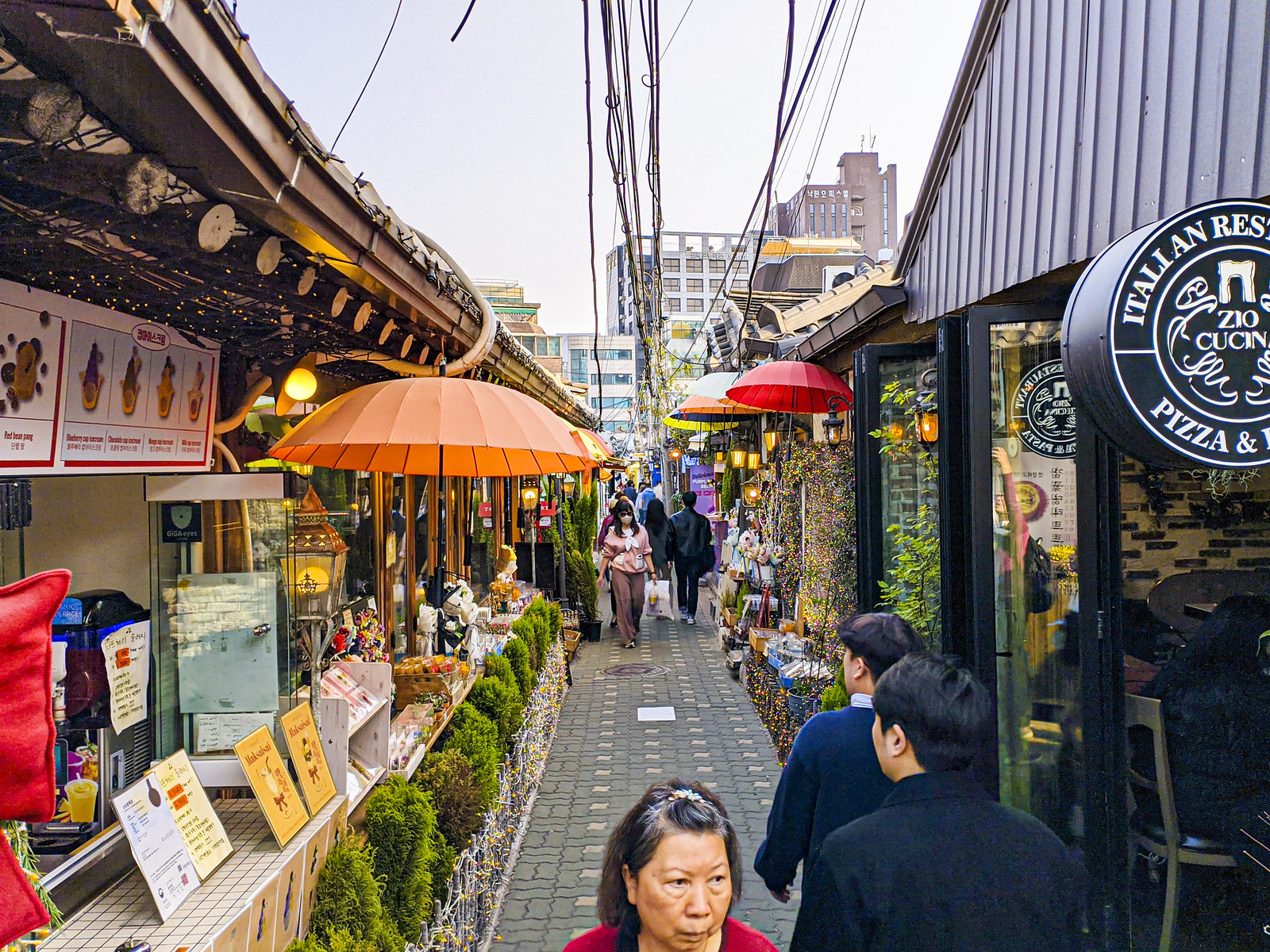
We just walked around the whole area exploring every alley at least three times, as it’s really tiny. It’s very popular among locals, especially in the late afternoon-evening hours. Despite the popularity, the cafes here don’t have huge queues, unlike in Bukchon Hanok village, so you can find a nice place to enjoy coffee, sweets or food very easily. We especially liked Appiforet and Chongsudang here.
Here is the list of cafes we liked around Seoul with relevant reviews.
Have a look at the links and choose which one you prefer to visit or just walk around and jump into the one you will fancy most. I also grabbed one of the fortune telling balls (they are sorted according to your zodiac sign). I Google translated to read my great fortune. I assume all of them have some nice words in, so it can be a fun thing to do.
Tapgol Park
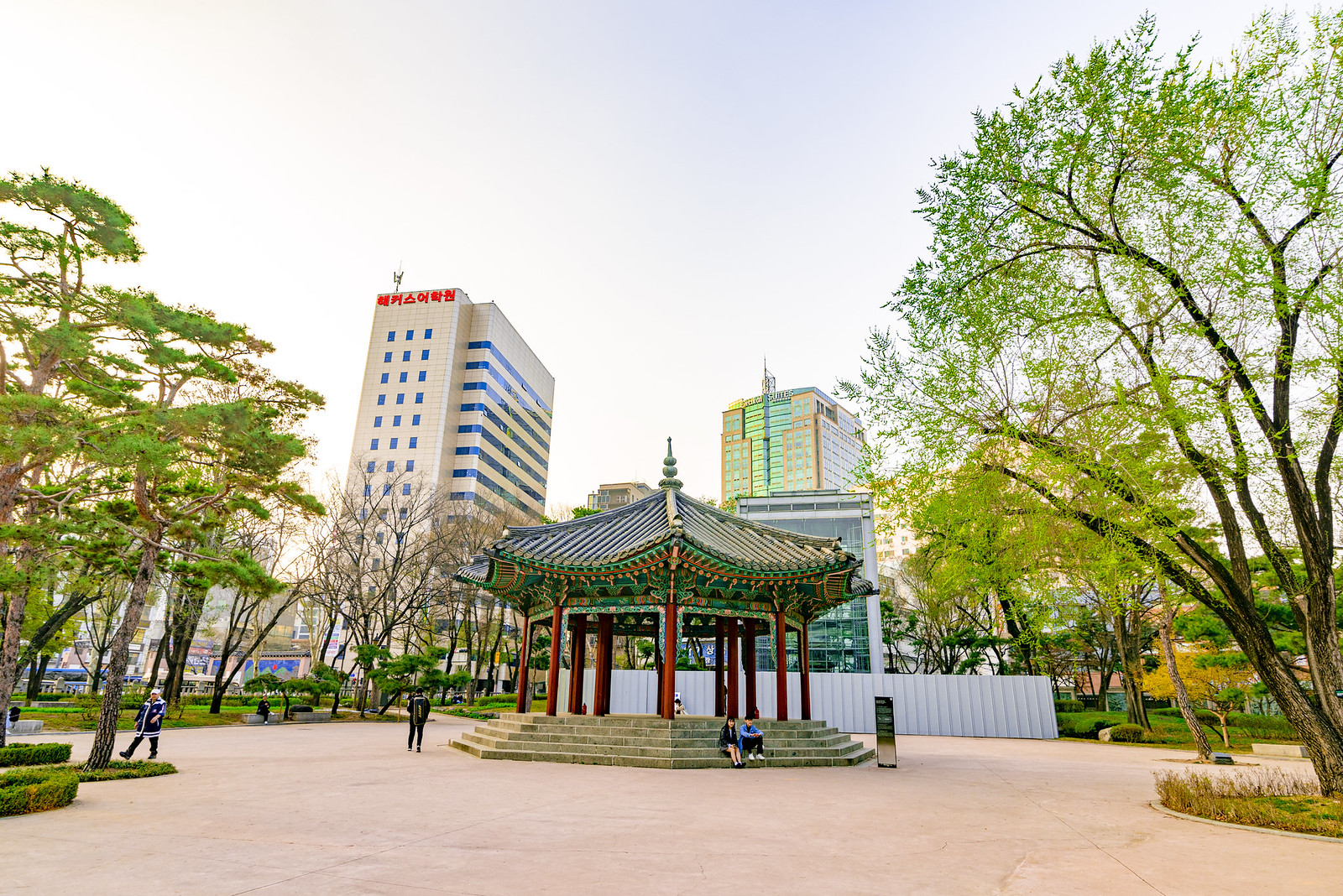
Unless you wanna stay in Ikseondong forever (I know I did), you can then walk towards the Tapgol Park (Temple park). The name signifies the 13th century 10-storey pagoda. This is a small park and honestly it’s not anything beautiful. You should visit it for its historical significance, as Palgakjeon pavilion in this park was the location of first reading of Korean Declaration of Independence in 1919. You will find several monuments dedicated to this event. There are also ceremonies held here every March 1st.
HiKR Ground (Hi Korea)
Free
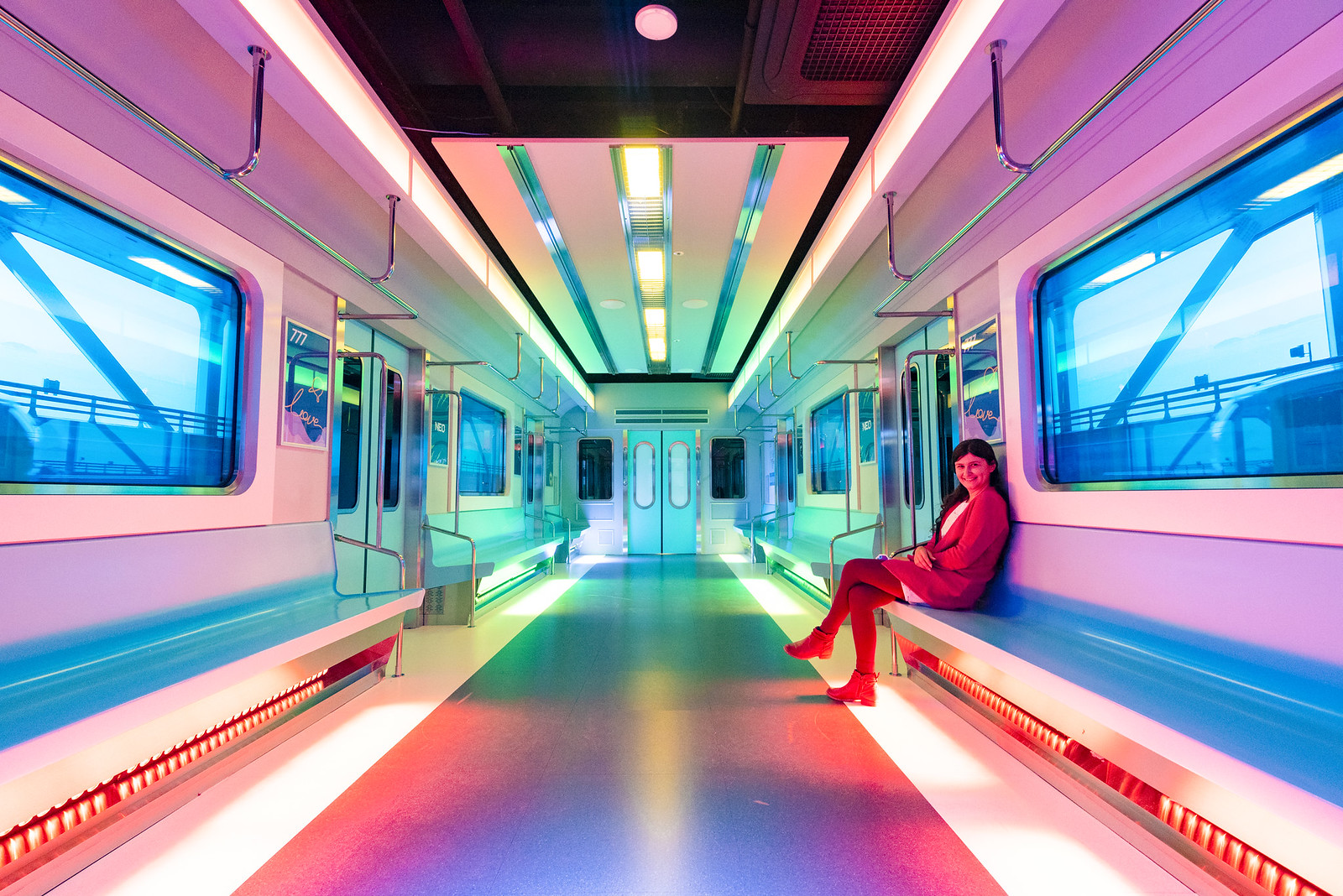
After the park you can walk towards HiKR Ground. The place is open till 7 pm. We made it here half an hour before closing time, but managed to quickly have a look around and have fun. I actually would have liked to stay more, so consider this when planning your arrival time.
This is a Korean Tourism Publicity center featuring various modern things, like K-pop, modern art and architecture. The second floor, where they had the sort of sets of K-pop songs was the most fun. You could change the lighting and scenes as you pleased and just goof around. There were also various modern art installations, interactive musical karaoke stands and more.
Cheonggyecheon Stream in the Evening
After HiKR closes, you can head to Cheonggyecheon Stream once again, which is lighted in the evening. Even if you already visited the stream in the morning by following this itinerary, it’s worth it to come back. The stream is especially popular in the evening with locals in warmer months, as they sit next to it and chill. There are also various events going on during some evenings, so you may come across one, if you are lucky. When we visited in March, evenings were rather chilly, so we didn’t see many people walking around though.
By the end of this tiring day you can find food in Myeongdong area nearby. You can just wander in one of the places, if you like Korean food. Some of the famous places nearby include Gwanghwamun Gukbap, Myeongdong Kyoja and Menten.
Alternatively, if you want to explore in the evening with a guide, join the market food tour.
Optional: Namsan Tower
With only 24 hours in Seoul, if you still have energy left, you should head to the Namsan Tower in the evening. You can walk to the cable car station from Myeongdong area or take a bus up the hill. However, if you have more time you should leave it to other days in order to be able to see it during day and nighttime.
Here is the detailed information on how to get to Namsan Tower and what to see.
If you have more than 1 day in Seoul, continue to the itineraries for the following days:
Suggested 2-day itinerary for visiting Seoul.
Suggested 3-day itinerary for visiting Seoul.
Join our travel community on Facebook Coffee Fueled Travel Club
See Also