Whether you only have one day in Tokyo or you’re starting a longer Japan itinerary, this guide will help you make the most of your time. It’s perfect for first-time visitors who want to experience the city’s cultural heart, explore iconic neighborhoods, and get a real feel for Tokyo on the first (or only) day. You can treat this as a standalone one-day adventure – or use it as Day 1 of your multi-day Tokyo itinerary.
Here you will find the guide to visiting Tokyo and possible itineraries.
Day 1 Itinerary
Highlights: Asakusa with Sensoji, Ueno Park with Museums, Akihabara (and possibly, Shinjuku and Shibuya Areas)
With only one day in Tokyo, you can either choose a couple of most famous locations and take it easy or have a packed itinerary to see as much as possible. In case of limited time, start with Sensoji, get a feel of Ueno, skip the museums in Ueno and Akihabara, and go to Shibuya and then Shinjuku area instead to see the highlights of the city.
Sensoji Temple
Price: Free
Opening hours: 6/6.30am-5pm
How to get there: Unless you are staying closeby in the Asakusa area, you will need to take metro to Asakusa station (taking Asakusa line or Ginza line for example).

This is one of the places around Japan, which gets unbelievably crowded. If you are able to, come to Sensoji as early in the morning as possible. While most people get this advice, not many show up this early still, which means you can have easier time walking around compared to later times, when tour groups swamp the area. So try to arrive before 9am, even before the stalls at Nakamise-dori open, you will have to deal with far less crowds. We actually arrived about 11am, due to various reasons and the whole area was extremely packed. We could hardly avoid people, until rain started a bit later. With rain crowds slightly dispersed, but not enough, so it was very hard to walk with an umbrella.
This Buddhist temple is the oldest in Tokyo – Its construction was completed in 645. The temple complex suffered from fires and earthquakes and was rebuilt several time. As most historical buildings in Tokyo, it was completely destroyed during the WWII. The buildings you see now are all reconstructions, with the exception of the Asakusa shrine. Sensoji is a very important site of Tokyo nowadays and hosts a number of festivals.
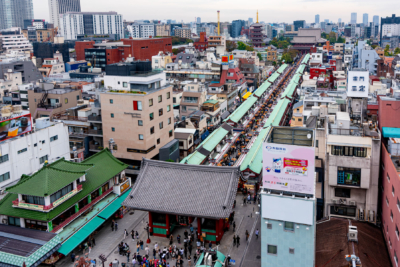
When coming from the Asakusa station, you will first encounter Kaminarimon – Thunder Gate. Peek under the huge hanging lantern to find a dragon. This gate is also a very popular photos spot, but you will probably have heaps of people in your pics, whatever time you try to snap one. The gate is a start of the Nakamise-dori, the shopping street lined with tons of small shops selling crafts, food and sweets, drinks and various souvenirs. It’s practically impassable – we tried to walk on the street, but couldn’t really, so decided to duck into the side ones behind the shops. If you arrive too early, the shops won’t be open yet but explore the temple first and enjoy the Nakamise dori after.
Passing the shopping street, you will end up at the second gate – Hozomon Gate, behind the gate you will find a pair of giant sandals. Touching them is said to give you skills to walk long distances without being tired. Certainly a perfect gift for visiting Japan. Besides, you will find lanterns here as well. Plus, the giant statues of guardians of the Buddha – Nio. The gate will lead you to the main areas of the temple. On the left, you will notice the Five-story Pagoda.
Moving forward, you will find the Main Temple Hall – Kannondo Hall. It is dedicated to Kannon – Boddhisatva of mercy, whose statue you will find inside. As in most Buddhist temples, you will find the o-mikuji stalls – the donation boxes, where you put coins.
To the right of the Kannondo Hall, you will find the Asakusa shrine. This Shinto shrine was the only one that survived WWII and is still in the form reconstructed by Tokugawa Iemitsu in 1649.
Once you explore the temple, head back to the Nakamise-dori to have fun exploring all the shops there, once they open for the day. This area, as well as the temple is lighted in the evening from the sunset, so if you ever get a chance, come back in the evening as well.
There’s also covered shopping area – Shontegai – which is great, if the day is rainy, like in our case.
Asakusa Tourist Information Center
Price: Free
Opening hours: 9am-8pm
How to get there: The Center is located near Asakusa station.
Leaving the Kaminarimon, cross the street and find the Asakusa Tourist Information Center. Head directly to the elevator and go to the 8th floor viewing area. From there you can get wonderful views of the temple areas, as well as the surroundings in Asakusa. As all tourist information centers, this is free. There are benches upstairs to sit, if you are tired. The area wasn’t so crowded, when we got there a bit before 11am, but it started getting packed by the time we were leaving. There’s also a café, if you crave some coffee.

While leaving the Sensoji area, you might want some coffee and breakfast, if you aren’t an early riser. Check out my guide to coffee shops in Tokyo by district, and decide which café would you prefer in the area. Otherwise, either walk towards Ueno or head to metro and hop on the Ginza line.
If you wish to explore Tokyo’s highlights with a local guide instead, here is a customizable private tour that may suit your needs.
Ueno Park
Price: Free. Temples and museums may have relevant fees
Opening Hours: Ueno Park opens at 5am-11pm, but most temples and museums have much shorter opening hours from 9–9:30am to 5-5.30pm.
How to get there: From Asakusa, you can either take a relaxed walk to Ueno (about 30–40 minutes), which lets you peek into the Ueno neighborhood’s side streets and cafés, or hop on the Ginza Line from Asakusa Station to Ueno Station, take exit 6 and head to the south entrance.
Ueno became popular during the Edo period, while Meiji period made it a hub for Japanese art and culture. Ueno Ameyoko Shopping Street is always bustling with people. The seafood market here is pretty popular. Not being a fan of markets, especially the fish ones, I decided to skip this area though and headed straight to the Ueno Park.
Please, find a step-by-step guide to exploring Ueno Park in my post.
Akihabara
How to get there: Once you decide to leave Ueno Park, either walk southwards to Akihabara, or hop on the Yamanote line to head to the Akihabara station.
Note: if you can, come on a weekend. The main road is closed to traffic during the afternoon and hordes of people visit Akiba.
This area is anime lovers heaven, but not only. If you love electronics, games and gadgets, you are definitely in the right place. I can’t say I am a devoted fan of either, but I definitely enjoyed Akiba’s charm. If you are visiting Japan for the first time, like we were, when we visited Akihabara, you might actually feel overwhelmed with the atmosphere. You will find a lot of young girls dressed in anime inspired outfits giving you fliers of different kinds or inviting you into the maid cafes. People are dressed in avantgarde outfits.
Don’t forget to have a look at the huge signs on the buildings with different ads. You will find the neon signs lighted at night, while the area is bustling.
There are a few things you can explore here, depending on your interests:
- If you want to gamble a little, visit one of the many game arcades and retro game stores on the main street, as well as all around the area. Popular examples of these game stores are Taito Station Akihabara and Akihabara Gachapon Hall.
- Anime fans will find a number of shops to satisfy their curiosity and get merchandise they are looking for. While Animate is the most famous among the anime stores here, there are a number of smaller shops, which may pique your interest.
- If you want to see the strange side of the Japanese culture, you can visit Maid cafes. I personally wasn’t comfortable with this concept, but of course, it’s a part of exploration of Japanese pop culture. By the way, there are also butler cafés – where instead of women, you will be served by men.
- At Home café is one of the most popular maid cafes people visit. You will notice it with its fun pink exterior.
- Electronic lovers will find shops with all sorts of technology – the retro devices, latest developments and even the items, the purpose of which you may not even know. Even if you aren’t looking for anything specific, you can still be amused by everything you encounter.
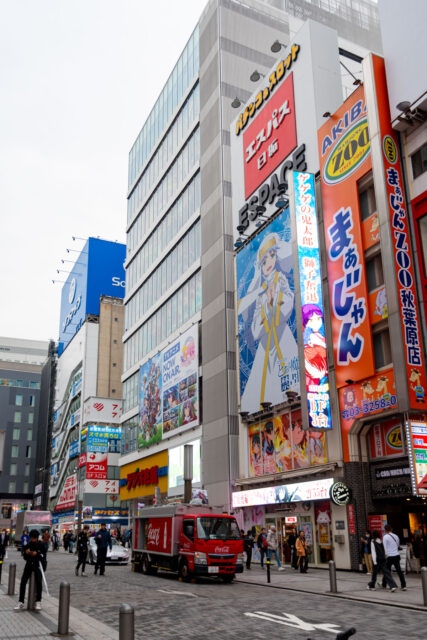
Nearby the Akihabara station, you will find electric town area, which is full of these stores. Even if you aren’t specifically interested in any of these, like me, you can still browse and enjoy the colors and vibes. The whole atmosphere will certainly lift your spirits.
While weekends are the best time to visit, we visited in the late afternoon of a weekday. It still was rather lively, although no impassable crowds. People were hanging out on the streets and in the game stores.
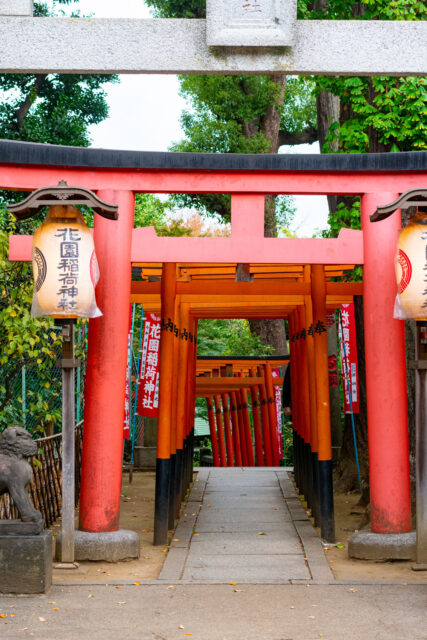
If you still have enough time for the day, you can visit nearby Kanda area and explore Kanda Miyoujin shrine – a 17th century Shinto shrine.
Dawn Robot Cafe
Note: If you are very pressed for time, skip this cafe.
Opening times: Varies – Sunday-Wednesday: 11am-7pm, closed Thursday, Friday 2.15-7pm, Saturday: 3-7pm
How to get there: Once you are done exploring the area, head to the Dawn Café. You can take a Hibiya metro line from Akihabara to Kodemmacho station.
I am sure, you are surprised that I am including a specific café, as part of the itinerary, when I usually give you a number of options of cafes in the area to choose from. But in this case, this specific café deserves it. As the name tells you, the café uses robots for its services. The main idea is offering people with disabilities a chance to work here via the use of robots. The concept seemed so interesting to me that I was not going to miss it for anything.

We arrived at about 5pm and to our surprise, didn’t have to wait for the table. You order when you enter and choose a table with or without a robot – you do pay surcharge for the robot table. Once you are seated, a person with disabilities will speak to you via a small robot sitting on the table. We spoke to a girl from Niigata area. She was shy
The bigger robot brings you your food and drinks. This robot has its own line, so be mindful not to get in its way 😊 The café also has some robots you can give instructions to and speak with.
I can’t say any of the food was memorable – I don’t even remember what sandwich I ate, it wasn’t good or bad. But this café is certainly for experience. Overall, this was very interesting and cute experience on a very rainy day.
If you still wish to go to another café, here is my list of the cutest cafes in the area.
Evening Stops if You Have Only One Day: Shibuya and Shinjuku Nightlife
Note: Given the limited time, you can squeeze Shibuya and Shinjuku into 1 day, however, if you have more days, do it on another.
Shibuya
How to get there: Hop on the Yamanote line from Kanda or Akihabara station and head to Shibuya. It should take about half an hour. Best is to alight from the Hachiko Exit.
The main reason people visit Shibuya is to cross the Shibuya Crossing. While walking here from the station, you will pass the Hachiko Statue dedicated to the loyal dog. Hachiko waited for its owner at the station every day, even after he died.
Just enjoy being a part of the immense number of people crossing the Shibuya Scramble Crossing – about half a million to 2 million people cross it daily. Different sources estimate different numbers, but either way this is the world’s busiest crossing. It really feels like you are in a sea of people, although at the end of the day, it’s just a crossing. So except that it’s so busy every day, I don’t see why it became so extremely popular.

Shinjuku
How to get there: Hop on the Yamanote line from Shibuya and you will be in Shinjuku within 15 minutes most. Once there, head to the East Exit. Shinjuku station is very difficult to navigate, so you might get lost, before you manage to find the right exit. If you still can’t, simply alight from any exit and find directions on street level.
With such limited time you can’t do everything Shinjuku has to offer. However, you can at least visit the famous Kabukicho neighbourhood and marvel at the 3D cat billboard. It’s very close to the station – this is the exact location. Just wander around the area and soak in Tokyo’s nightlife.
While my guides give you step-by-step instructions on what to see, Tokyo can be overwhelming. I personally prefer to DIY my every trip, if possible. However, if you may wish to explore with a local guide and make sure you don’t miss any highlights or get loss in the maze of Tokyo metro. In that case, you can consider this private guided walking tour, which can be customized to your interests.
Alternatively, you can check out this highly rated night walking tour of Shibuya and Shinjuku highlights.
See also
Best 2-day itinerary for visiting Tokyo.
Best 3-day itinerary for visiting Tokyo.
Best 4-day itinerary for visiting Tokyo.
Join our travel community on Facebook Coffee Fueled Travel Club
See Also