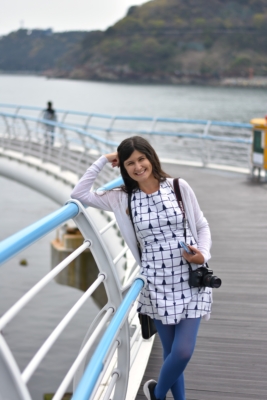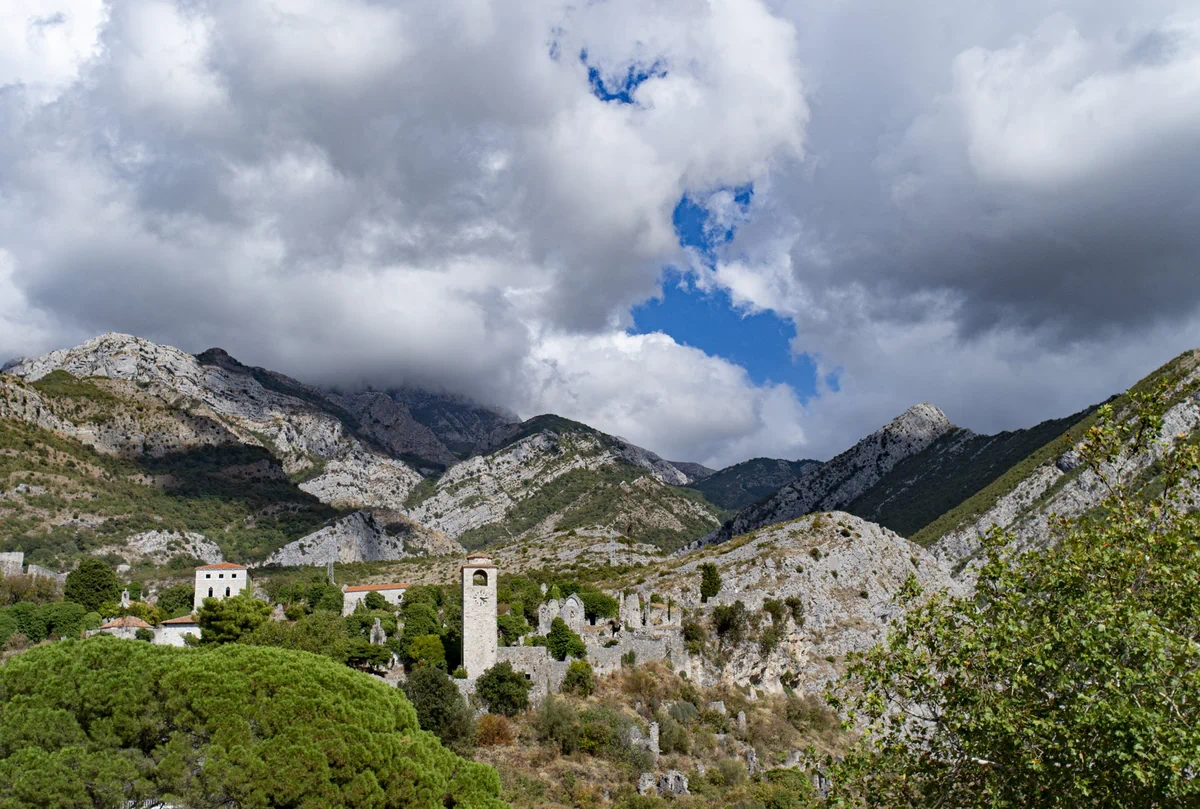
Bar is one of Montenegro’s overlooked gems. It’s only known, as a port from where the ships go to Italy, but very few people know of its historical significance. Interestingly, the name Bar comes from Antibarium, meaning the town opposite Bari across the sea in Italy. The Romans gave it this name. Over the centuries the city passed through different hands, from early Slavic rulers to Venetians and Ottomans.
We visited the town as a day trip from Sutomore, and I was genuinely surprised by how much there was to experience here. If you are already staying along the Montenegrin coast, Bar is absolutely worth a few hours of your time.
In this guide I’ll cover what to see on a day trip to Bar, plus practical tips on when to visit, how to get there and where to stay.
- Is Bar Worth Visiting?
- What to See in Bar: 1-Day Itinerary
- The Town Centre and Marina
- Stari Bar: The Old Town and Fortress
- Highlights of Stari Bar
- King Nikola’s Palace
- The Church of St. Jovan Vladimir
- Is a Day Trip to Bar Enough?
- When to Visit Bar
- Getting to Bar
- By Bus
- By Train
- By Car
- By Ferry
- Where to Stay in and around Bar
- Continuing Your Montenegro Trip
Is Bar Worth Visiting?
Bar is absolutely worth visiting. It won’t give you the polished, photogenic magic of Kotor or the beach energy of Budva, but it has quiet, authentic character, and a hidden gem in the form of Stari Bar. If you are planning your Montenegro trip, I recommend including it in your itinerary. From many parts of Montenegrin coast, such as Sutomore, Ulcinj, Petrovac, or similar, Bar is a very easy day trip.
We loved it, and hubby, who is considerably harder to impress with old ruins than I am, agreed it was one of the more memorable stops of our Montenegro trip.
What to See in Bar: 1-Day Itinerary
The Town Centre and Marina
Bar’s newer town center is pleasant without being particularly remarkable. What it does offer is a slice of authentic, everyday Montenegrin life that you simply won’t find in the more tourist-heavy towns. The streets are quiet, the marina is pretty with the dramatic backdrop of mountains behind it, and you can walk around without anyone trying to sell you anything. There is something refreshing about a town that hasn’t been polished for tourists.
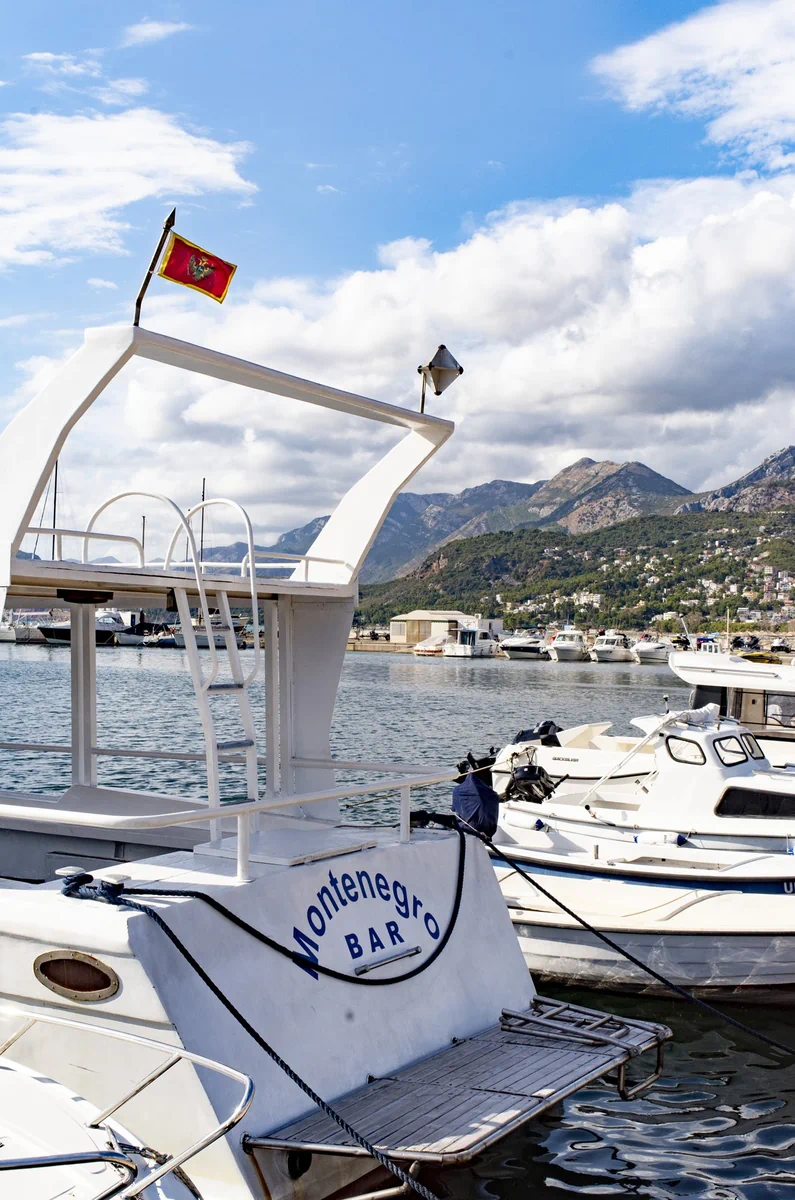
The town also has quite a few bars and cafes, which makes it easy to take breaks during your visit.
Stari Bar: The Old Town and Fortress
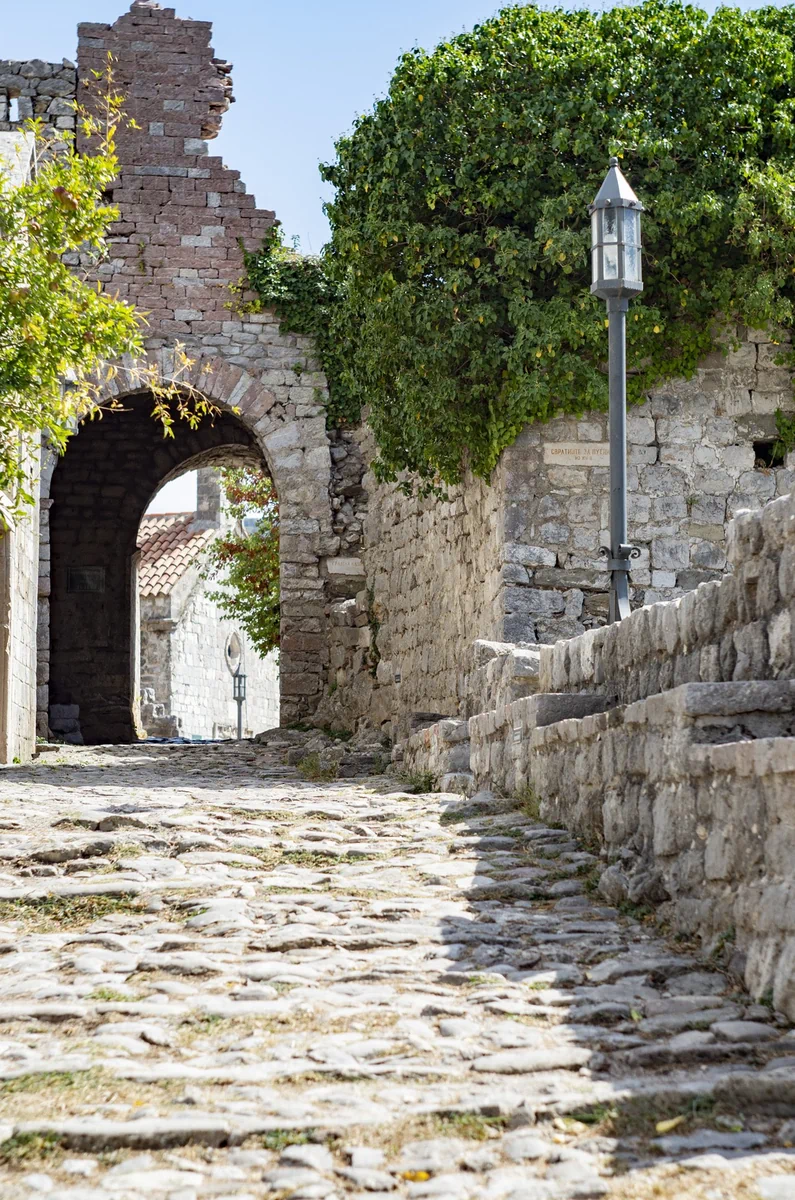
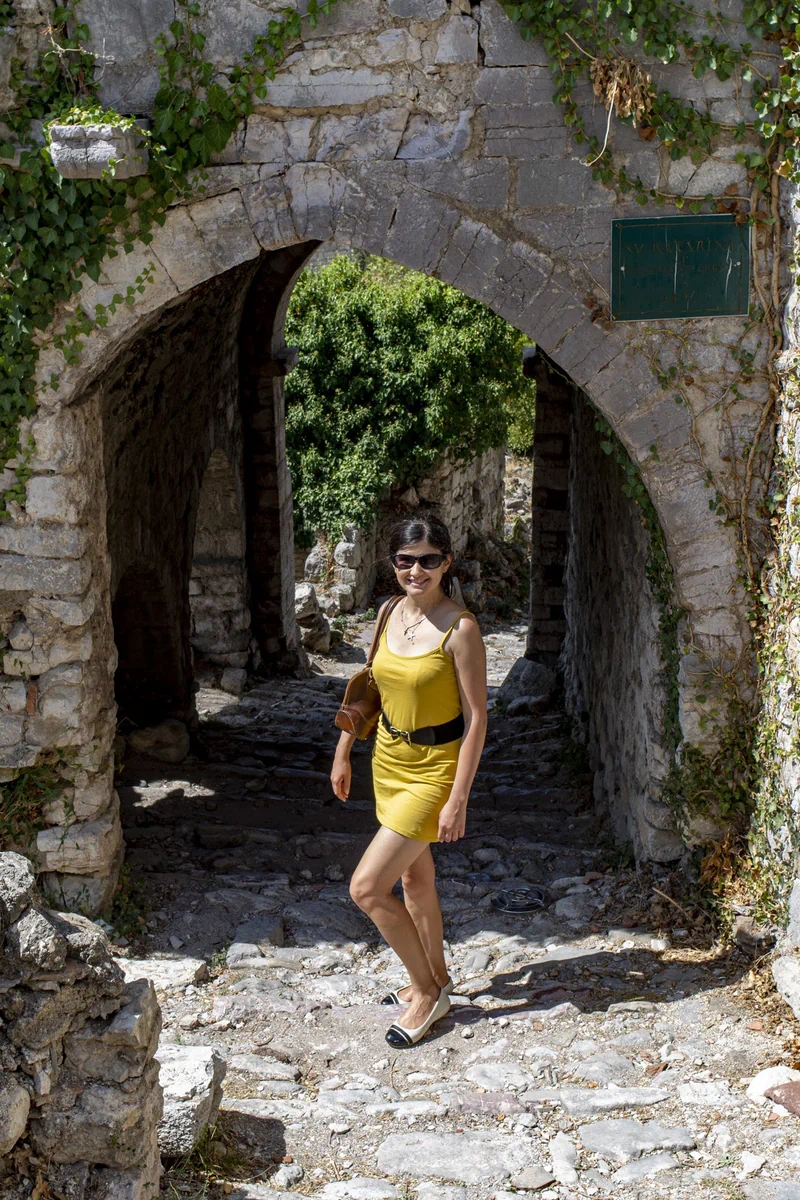
How to get to Stari Bar: Stari Bar is up to an hour walk away from the port area and from the modern town center. It is a pleasant albeit uphill walk if you don’t mind the distance. A cobbled street lined with small yards with trailing vines leads up to the entrance, which makes a lovely approach. The uphill walk is not especially strenuous, if you are relatively fit and takes about half an hour at a comfortable pace.
If you don’t walk though, your options are limited. There should be buses from the Bar train station running uphill, they cost 1 EUR. Otherwise, the taxi drivers ask exorbitant amounts to take you uphill (I heard amounts like 15-20 EUR one way, which is crazy for such a short distance).
Entrance fee: 5 EUR
Opening hours: 8 am-8 pm in summer, shorter hours in winter.
How long do you need to explore Stari Bar: We loved this beautiful place, so spent about three hours in Stari Bar and did not feel rushed. If you really want to linger and explore every corner (and stop in the hamam for a few rounds of echo testing, as we did), that is a good amount of time. If you are short on time, you can get a good sense of the main highlights in an hour or so, though I would be sad to rush it.
Stari Bar is on the UNESCO World Heritage tentative list. Unlike the old towns of Kotor or Budva, which are full of cafes, restaurants, and people, Stari Bar is something else entirely: a ruined, largely abandoned fortified city at the foot of a mountain, slowly being reclaimed by nature. The fortress has lovely cobblestone paths and ancient arches. It is also unique, as it’s built at the foot of the mountain and provides truly amazing views.
What I particularly loved about it was that there were so few people there. The site is large so the few dozen people we encountered really didn’t bother at all. So we happily wandered through the ancient streets at a slow pace.
Highlights of Stari Bar
Once you pass through the entrance gate, you step into history. The fortifications were first built here in the 6th century, and the site grew and changed hands over the following millennium and a half. Romans, Byzantines, Slavs, Venetians, Ottomans all left their marks here. Most parts you see today are from 11-12th century. The 1979 earthquake caused significant damage.
Nowadays, nature took over parts of the old town – grass grows between the stones, trees push through ancient walls, and the whole place has a romantically overgrown quality. But the walls, arches and buildings that remain are beautiful even in their ruined state.
The Clock Tower/Watchtower is the most recognizable structure in Stari Bar. Scientists believe it may originally date back to the Middle Ages, though it was destroyed and rebuilt by the Ottomans in 1752, damaged again toward the end of the 19th century, and underwent restoration in the early 20th century and again in the 1980s. It dominates the skyline of the old town and makes for a striking photo.
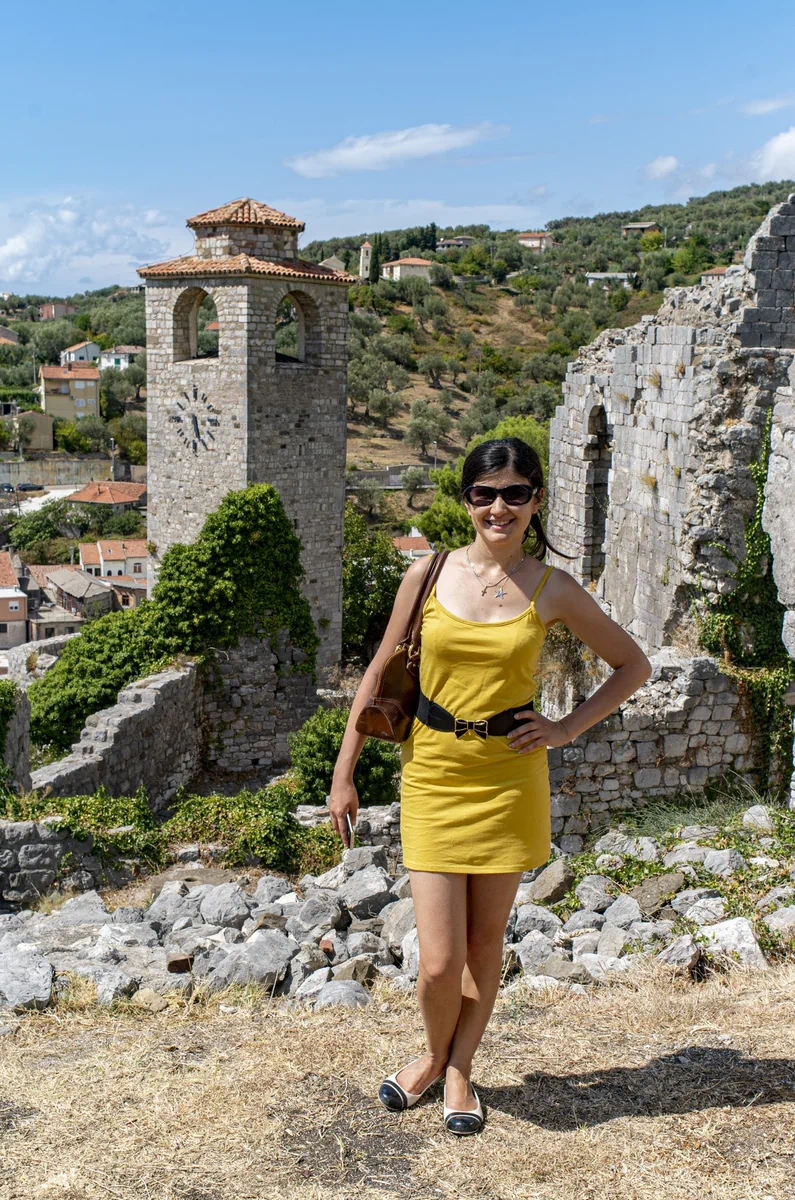
The Turkish Hamam is one of the coolest parts of the entire site. This Ottoman bathhouse was built in the 18th century, and its distinctive round shape has survived remarkably well. When you step inside, try calling out. You will get an amazing echo. So basically, you can practice your singing without anyone disturbing you. Yes, there was literally no one here, except us, so needless to say we had a lot of fun.
Remains of Monasteries and a Mosque: you will find the remnants of a couple of monasteries that were at various points converted into a mosque. It’s one of those interesting places, where you clearly see the layers of history under different rulers.
The Small Museum: there is a modest museum within the old town that provides additional context on the site’s history, buildings, and artifacts.
The Aqueduct: Near the old town you will also find a reconstructed aqueduct. The original Roman construction was completely destroyed; what you see today is a later reconstruction, but it adds to the lovely views.
If you want more detailed information about the history, buildings and museum of the Stari Bar, head to the official website of Stari Bar.
The Olive Tree: Just near Stari Bar, you can see an olive tree that is said to be 2,000 years old. There is a 1 EUR entrance fee to visit the enclosure. We skipped it, as it didn’t feel worth our time, and there are more interesting things to see nearby.
Once you’ve had your fill of the old town, head back down to the modern center for a very different but equally charming stop.
On the walk back down from Stari Bar to the town center, there are a few cafes along the main connecting street. We stopped at one and had a Turkish coffee. This is not my usual preference, but there wasn’t much else on offer. Don’t expect a specialty coffee scene here. If you need a proper coffee fix, save it for the town center.
King Nikola’s Palace
Entrance fee: 8 EUR. Gardens free.
Opening hours: In summer daily 9 am-5 pm in summer. From mid-November to mid-April only open weekdays till 3 pm.
Back in the modern town center, head to King Nikola’s Palace built in the 19th century. King Nikola built the palace for his daughter and her family. From the outside it is not particularly impressive, but the small museum inside is very charming. It houses a collection of folk costumes and historical items that give a good sense of Montenegrin royal and folk history. We loved the old furniture, including the piano, which particularly etched in my mind.
While not a grand or sprawling palace by any means (don’t expect Versailles) this palace is cute and definitely worth a stop.
The Church of St. Jovan Vladimir
Entrance fee: free.
This is a modern Orthodox cathedral, built only a few decades ago, so it doesn’t have the historical gravitas of Bar’s ancient sites. That said, it is a fine example of contemporary Orthodox church architecture, and if you happen to be passing by, it is worth a quick look.
We were lucky enough to witness a wedding ceremony during our visit. It was a small, intimate gathering. The ceremony closely resembles other Orthodox Christian services, with its circling of the altar and chanting from the priest so it wasn’t a surprise for me personally, but for anyone less familiar with the tradition it would be an interesting thing to observe.

Is a Day Trip to Bar Enough?
A day trip is more than enough to explore what Bar has to offer. Of course, you can stay longer if you want a quiet and relaxed vacation.
We spent over 6 hours in total in the town. That gave us plenty of time to see everything we wanted at a comfortable pace and take a lot of photos. The town itself doesn’t have an overwhelming number of sights, but what it does have is genuinely impressive and deserves a slow, unhurried visit rather than a rushed one.
One thing that really shows how under the radar Bar is, is that there aren’t many proper tours of the town. Your best bet is to visit independently or hire a car.
When to Visit Bar
We visited in September and honestly it was ideal. The summer heat had softened, the skies were still blue and sunny, and the town was quiet without feeling abandoned. There were very few tourists around, quite the contrast to the crowds we had encountered in Kotor and Budva later on our trip.
In general, late spring and early autumn are probably the best for Bar. You get comfortable temperatures for walking around and avoid summer heat. The only possible downside of these seasons is the chance of rain. But these occasional showers are not too cold or too long.
Summer is perfectly fine too, though July and August can be too hot, especially in the old town where you will be walking under the sun with little opportunities for finding shade.
Bar is not the kind of destination you visit in winter. This coastal town is quiet as it is, but in winter it has even less going on.
The town is usually not very crowded, so you don’t really need to be much concerned about avoiding the crowds, but outside the summer popular seasons, it’s still quieter. You can even have parts of Stari Bar to yourself.
Getting to Bar
Bar is a transport hub in more ways than one. It has the port and the train station but also is a gateway to the southern part of Montenegro and to Albania, which gives it a slightly more lively, workaday character than you might expect from a small coastal town.
By Bus
Bar is well connected by bus from the other coastal towns in Montenegro. From Budva, Kotor Ulcinj and other cities there are regular connections, and the journey is scenic along the coast.
Buses in Montenegro don’t run on tight schedules. There are several different bus companies operating on the same routes, and in practice you go to the bus stop, wait, and hop on whatever comes. It works out fine, we did this dozens of times. You could technically check bus schedules on Busticket4me. But I wouldn’t buy bus tickets online, as you have to have your ticket printed and some bus drivers may not even accept it, unless you exchange it for paper ticket at a bus station.
We came to Bar by bus from Sutomore. We hopped on one of the passing buses on the main coastal road and arrived to the Bar bus station.
By Train
There are two trains running daily during the summer months only – mid-June to mid-September. The full route would take about 11-12 hours, while only a bit more than an hour from Podgorica, but delays are quite common. You can find the train schedule on the Montenegro railways official website, but from Prijepolje, not all the way from Belgrade.
You can’t book the tickets for this train online. You will have to buy them at the train station with cash. You might find some available tickets on the day of travel, but that’s not guaranteed. Therefore, if you want to take it, make sure to book at least a few days in advance. This was the major reason why I didn’t consider taking this train from Podgorica.
By Car
If you are renting a car, reaching Bar is straightforward. The coastal road and the main highway both connect here easily, and having a car also makes it simple to combine Bar with a beach stop at Sutomore or Susanj on the same day.
By Ferry
Bar’s port receives ferries from Bari, Italy. Nowadays, only one ferry company runs on this route once a day. If you are combining Montenegro with a broader Balkan or Adriatic itinerary, this is a scenic and practical entry or exit point.
If you want more detailed information about transport in Montenegro, check out my dedicated article.

Where to Stay in and around Bar
My main recommendation is to stay somewhere with beach access, either at Susanj beach or in nearby Sutomore. Bar is not primarily a beach destination, but Montenegro’s coast is beautiful, and the best way to enjoy a day here is to combine a morning or evening at the beach with a few hours in Bar proper. We did exactly that and it made for a very satisfying day.
We were based in Sutomore, just a short ride away from Bar. I would highly recommend it as a base for exploring the area, if you want to combine beach time with a day trip to Bar. Sutomore has decent beaches, and is quieter and cheaper than the more popular resort towns further north.
If you do want to stay in Bar specifically, the town has a range of accommodation options, but mostly apartments rather than hotels.
Check out Hotel Agape, it has a great location in central Bar and is very highly reviewed.
Join our travel community on Facebook Coffee Fueled Travel Club
Continuing Your Montenegro Trip
If you’re continuing south, Ulcinj is a great next stop and feels quite different from the rest of the coast. If you’re heading north instead, Budva is the obvious choice, with a much livelier atmosphere.