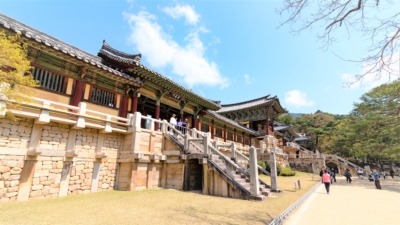
Gyeongju is considered “museum without walls” for a reason. Many of the sites you will be exploring on this day – the Royal Tombs, Observatory, the Donggung Palace with the pond – are a part of the UNESCO World Heritage – Gyeongju Historic Areas. The listing also includes a number of other Silla dynasty sites, most of which are in ruins.
With only one day in Gyeongju, you will be packing a lot of things to do, however, even a day will show you the main highlights. Whether you are visiting as a day trip from either Busan or Seoul or staying in Gyeongju for longer, follow this itinerary strictly to maximize your one day in the city.
If you want to do a very fast-paced one day trip, you can head to Bulguksa Temple first and then continue with this itinerary. However, that would be too exhausting, and you probably won’t manage to spend much time at each spot. This fast-paced itinerary is possible by public transport, although would be tight.
Alternatively, if you want to cover a lot in one day, you can join a bus tour, which can show you all the main sites of central Gyeongju, plus Bulguksa and Seokguram.
Main Highlights: Royal Tombs, Cheomseongdae Observatory, Gyochon Hannok Village, Woljeonggyo Bridge, Gyeongju National Museum, Donngung Palace and Wolji Pond
In Gyeongju, you can walk among many sightseeing spots. For this one day itinerary, you will be mainly walking, as the main historical areas are compact and no buses run through most of it. You will only have to rely on public transport (use Naver maps for directions, it was very accurate and helpful for us), when visiting the areas outside the center, which you best leave for the second day of your Gyeongju trip. I will give suggestions if you need to take transport for each location.
Please, see the detailed tips on transport in Gyeongju in my other post.
The Daereungwon Tomb Complex (Main Areas)
Price: 3000 Won
If you are staying in central Gyeongju, where most hotels are located, you can easily walk to the tombs.
The Daereungwon tombs are the raised hills you will see all around central Gyeongju. Typically, during the Sila kingdom, the tombs consisted of a wooden chamber covered with rocks and mounds of earth. They also applied some clay to ensure that the tombs stayed dry.
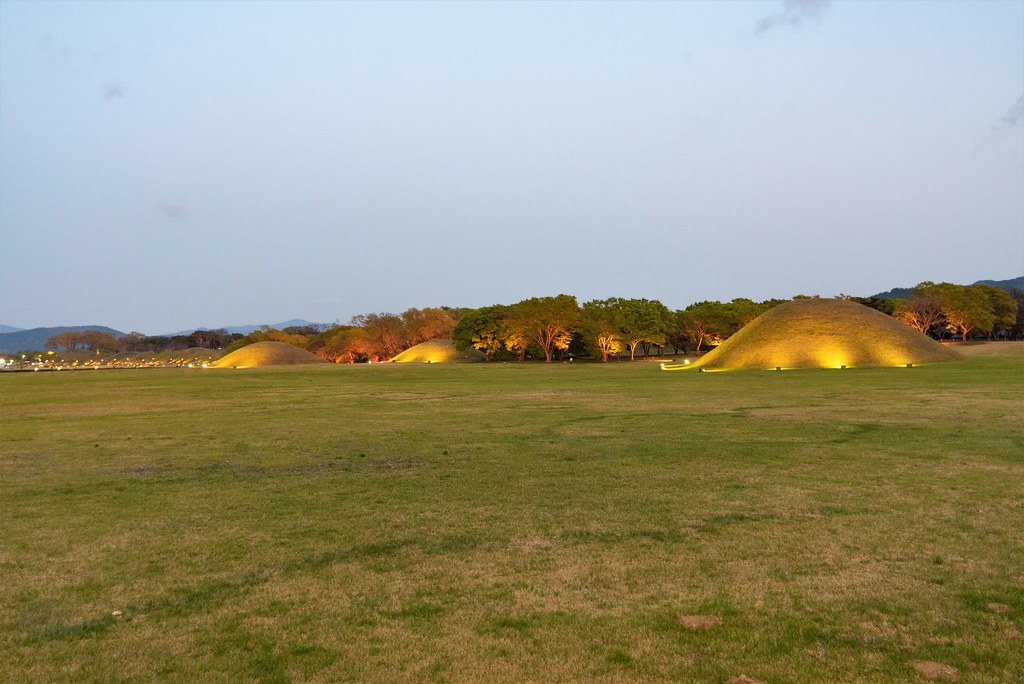
The museum holds 23 ancient tombs. It contains tombs of kings and queens, as well as other prominent people of the time – like generals. Some tombs were dedicated to one person, usually the royalty, while several people were buried in some of them. It’s known which notable people were buried in some of the tombs, while no information is available about others. There actually were no entrances to the mounds over centuries, so they were kept intact.
Cheonmachong Tomb – the most famous tomb of the complex – is well known for displaying the only painting that survived from the Silla dynasty reign, as well as other antiques. Overall, 11,000 artifacts were found inside this tomb. It is one of the two tombs (along with Geumgwnchong – see below) in the complex, which you can visit.
Hwangnamdaechong is another well-known tomb consisting of two mounds – for the married royal couple.
The Daereungwon Tomb Complex (North Section)
Price: Free of charge.
While the above mentioned tomb complex is paid, there is a part of the complex, which is outside the main area – The few tombs located towards the north. This section is free to wander around.
Despite my thorough research before visiting, I had no idea about this free part of the complex. So we chanced upon it while walking around the city. Like me, I am sure most people don’t know about this part of the complex, therefore, there were really few people inside during the late afternoon, when we visited.
Geumgwanchong tomb can be visited without charge. There is a small museum inside providing interesting information about the process of building the tombs. Plus, you will find the wooden chamber inside. This tomb is where gold crown and various other artifacts were originally discovered, however, all artifacts were moved from here and are currently housed at the Gyeongju Museum (see below).
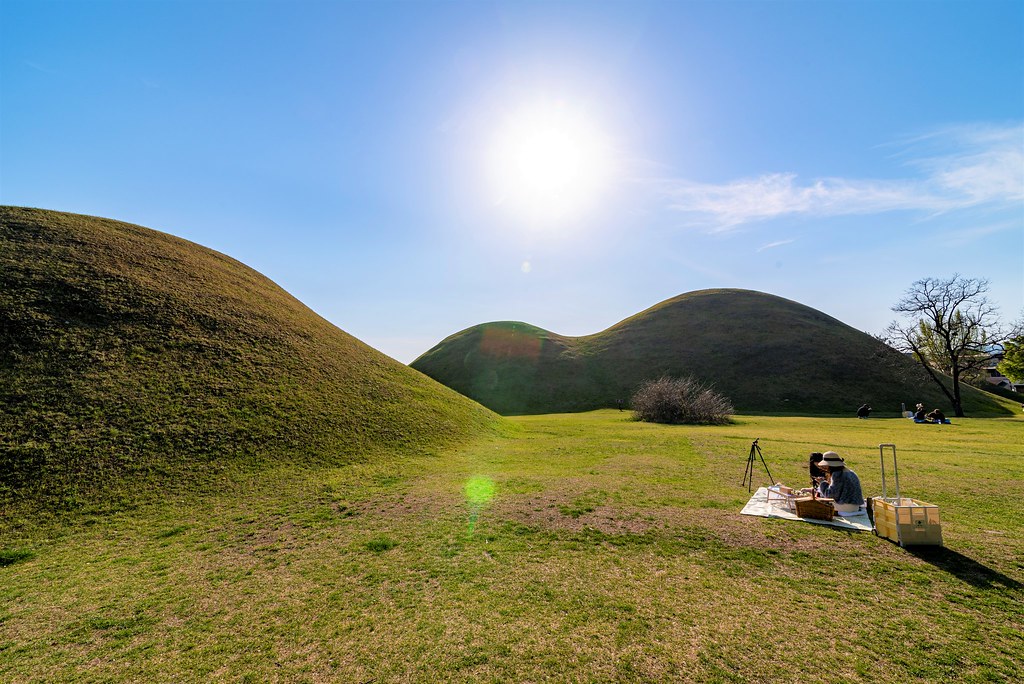 This whole area containing tombs is particularly beautiful during the cherry blossom season, as well as autumn foliage.
Note: Do not climb the burial mounds under any circumstances. The tombs are legally protected, due to their historical significance, as well as fragility. If you break this rule, you could get a hefty fine or even be jailed.
After wandering around the tomb complex, many cafes around Gyeongju will already be open (they usually open late). Therefore, you can grab your breakfast and coffee before continuing to explore the city. Walk to the Poseok-ro, maybe grab some mandu at the Dosol Maeul. Or try one of the cafes – my favourite was Hulimmog for the fluffy delicious pancakes and Café Ohi for the views.
Cheomseongdae Observatory
No entrance fees
After exploring all the cafes and restaurants, walk to the Chaomseongdae observatory. Passing it by, you wouldn’t guess this used to be an observatory, however if you learn its history, you will be fascinated. The cylindrical building of Cheomseongdae (in translation stargazing tower) was constructed in the 7th century from 362 pieces of granite – representing 362 days. It’s said to be the first observatory in Korea (or even in Asia), as during the Silla Kingdom Gyeongju was at the center of scientific and cultural development in the region.
You can’t enter the building. Apparently, it used to be accessible by a ladder in the past. However, it’s highly susceptible to wear, therefore, it was closed to the public. A lot of effort goes into the preservation of the site. Its condition is monitored every hour to ensure its protection.
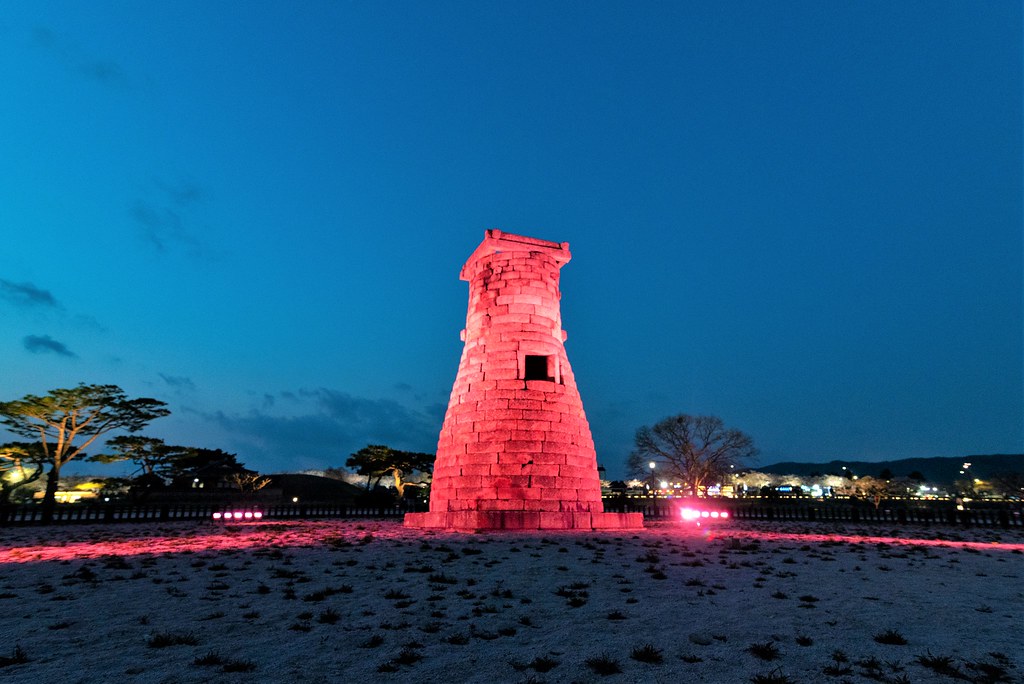
If you are here at the right time in spring, you can find different types of flowers in the gardens around, depending on whether it’s pink muhly season, tulips or cherry blossom season.
The Observatory and its surroundings are beautifully lighted in the evening and have a romantic feeling to them. Do come back in the evening, if you have the time.
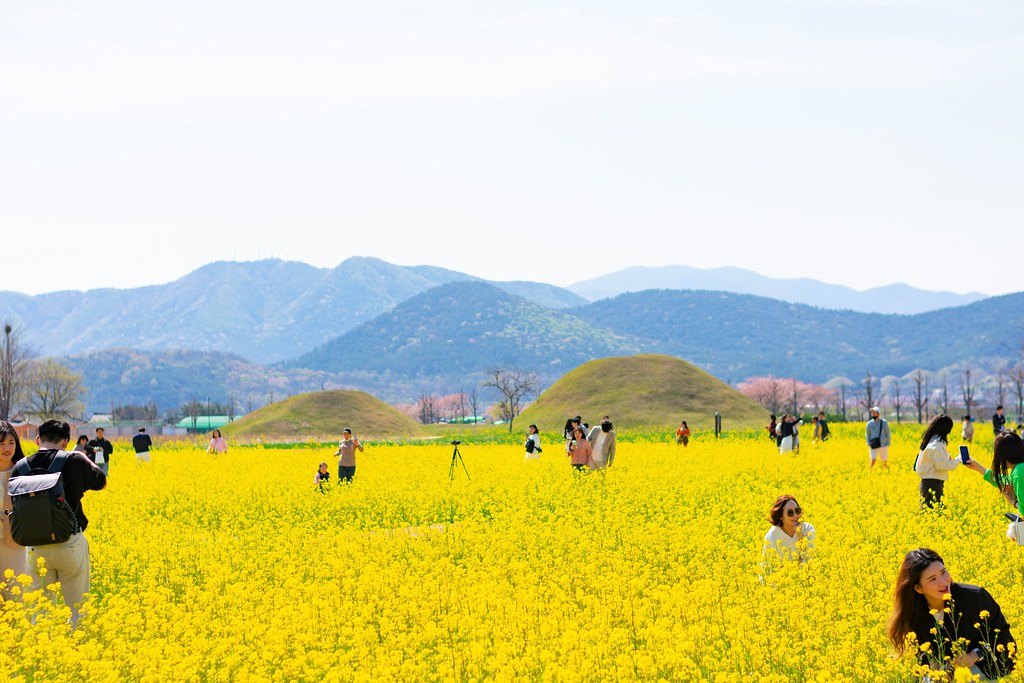
If you are visiting in spring, while walking towards Gyochon village, you might come by a lovely field, like this one:
Gyochon Hannok Village
No entrance fees
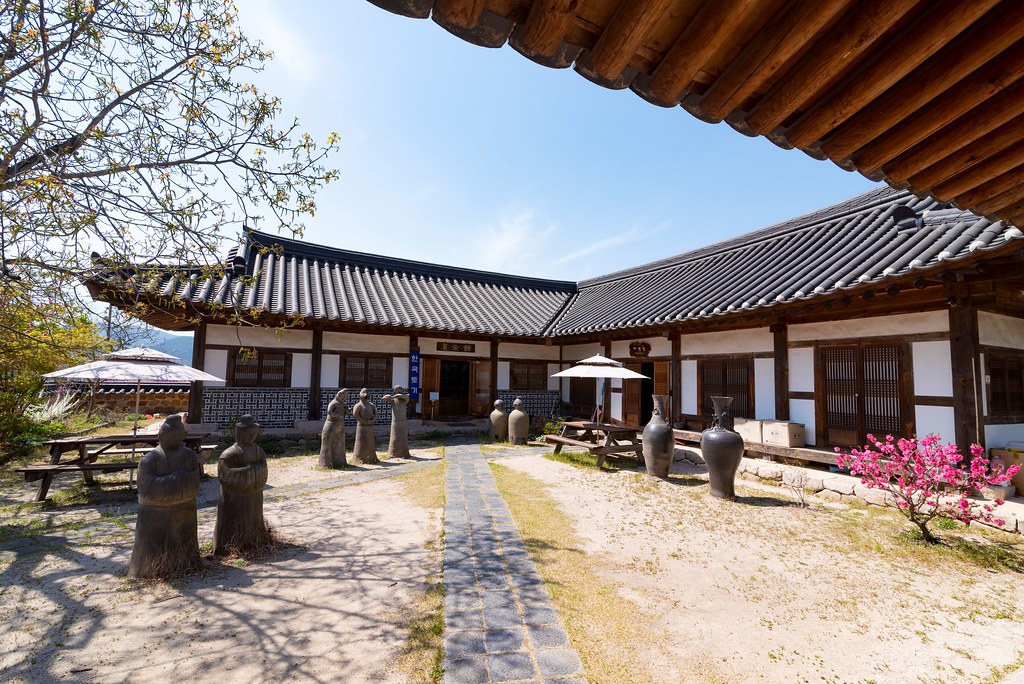
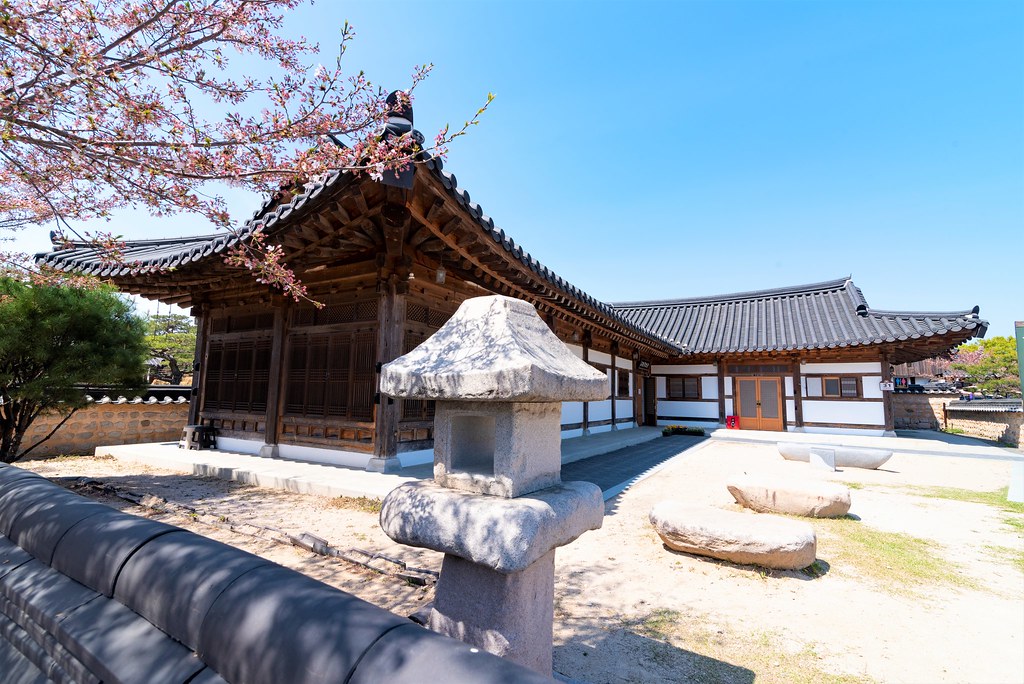
The Gyochon village showcases traditional Korean houses – hannoks, which belonged to the rich Choe family. Apparently 12 generations of the family lived here throughout 400 years until 1970. Interestingly, the clan was beloved by the locals for several reasons. They were politically neutral – they passed the official exams but never took office. They asked for lower rent rates from their tenants for the land they occupied. Whenever the famine happened, they fed the people within 40 km radius. Despite all this, the clan maintained its wealth throughout centuries.
Currently, this village offers small museums, hanbok shops, cafes, restaurants, craft stores, workshops and much more. Some of the houses though are private and not accessible.
Gyeongju Hyanggyo
A Confucian government-run school is well-known for enshrining the ancestor tablets, including those of Confucian scholars. The school existed here since 7th century – it was equivalent to current universities. It was unfortunately under renovation at the time we visited, however, it was reopened already.
House of the Choe Clan
The main house of the clan built in 1700 had 99 rooms. It was however damaged in 1970. It is now reconstructed and not one building but several, showcasing the Joseon era living.
Other than these, do wonder around the narrow streets and peek into different buildings, you may find some workshops with clay pots on display, beautiful hanboks, cute yards and much more. You can go to one of the workshops and learn, say, quilting, pottery or glass making. I would say get lost, but you can’t really, the village is too small 😊
Woljeonggyo Bridge
No entrance fees
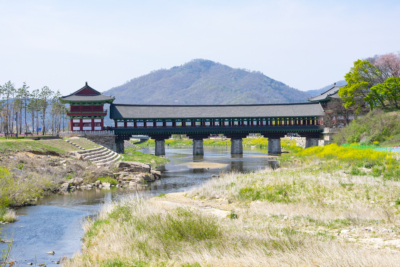
From the south side of the Gyochon Hanok village you will see the beautiful Woljeong bridge. You might have seen quite a lot of photos of this bridge on social media and for a reason – it’s beautiful. The wooden bridge was first built in the 8th century and reconstructed in 2018 in the form it is today.
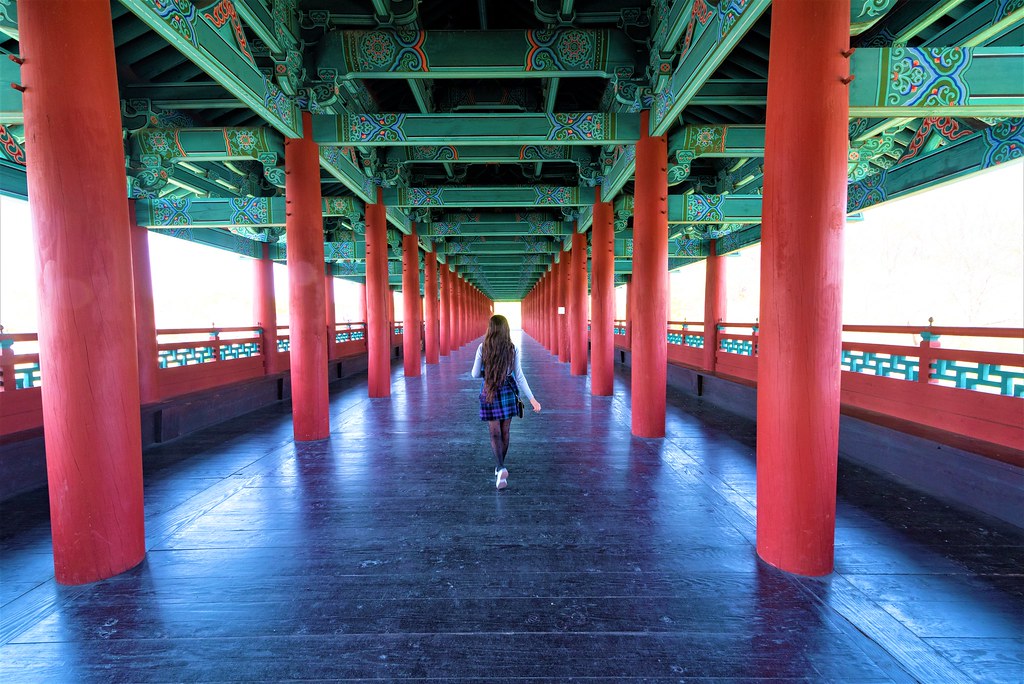
You can go up the towers on both sides of the bridge for the view and a small exhibition. The bridge is also beautiful at night with its illuminations, if you can come back to visit in the evening. We didn’t manage this though.
Fun fact: the bridge was featured in the K Drama: “The King: Eternal Monarch”.
Gyeongju National Museum
No entrance fees for the permanent exhibition
If you have time before visiting the Donggung palace and are not too tired, you can head to the Gyeongju National Museum. The museum was established in 1945 after the Japanese occupation to house archaeological artifacts of this old city from the Silla period. As mentioned above the museum showcases some of the artifacts found at the tomb complex, around the Anapji (Wolji) pond, as well as other excavation areas around the city.
Donggung Palace and Wolji Pond
Price: 3000 Won
Visit this site last, before the sunset to make sure that you see the palace during the day, as well as enjoy the light reflections in the pond at night – the palace is open late for that.
The Wolji pond (formerly called Anapji) is an artificial pond around which the palace complex was located. The pond was made here during the Silla dynasty around 7th century by the legendary King Munmu. According to the excavations 5 buildings – parts of the palace were standing around the pond.
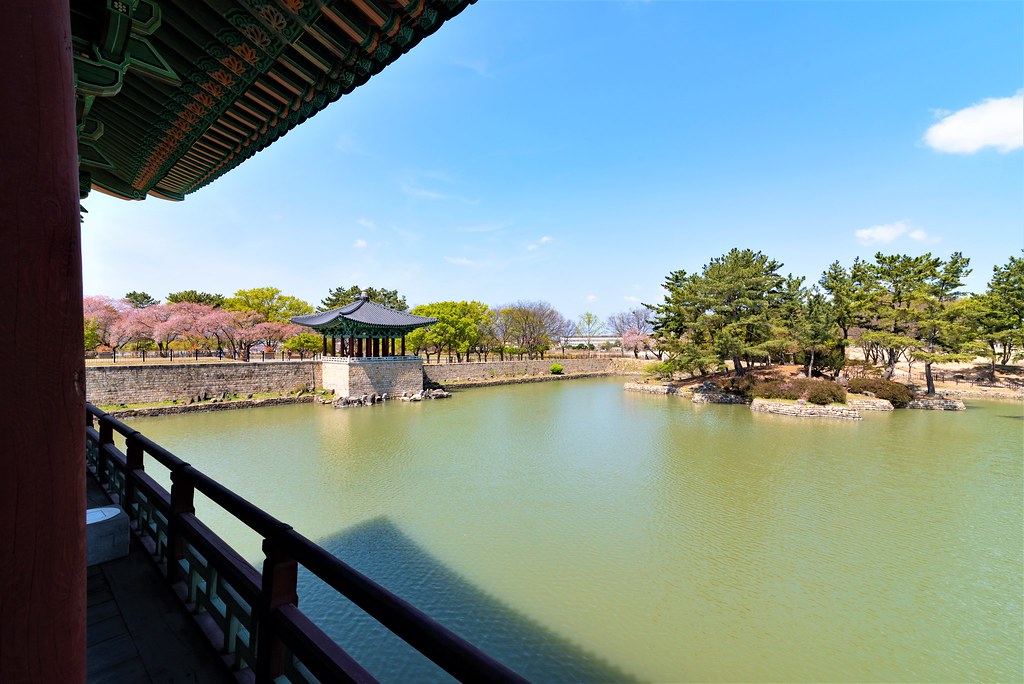
The Donggung Palace currently has 3 pavilions were reconstructed from the materials found during excavations. According to the information provided at the site, the buildings were significantly larger during the Silla period.
There was also a secondary palace – that of the crown prince – which was first constructed in the 7th century by King Munmu. But the site was completely forgotten after the fall of the Silla dynasty.
While little remains from the original royal glory of this area – almost nothing of the royal palace and only some things from the crown prince’s palace – it’s still a nice place and definitely worth visiting. After checking the pavilions, walk around the pond and enjoy observing the golden fish in the pond, beautiful trees and flowers.
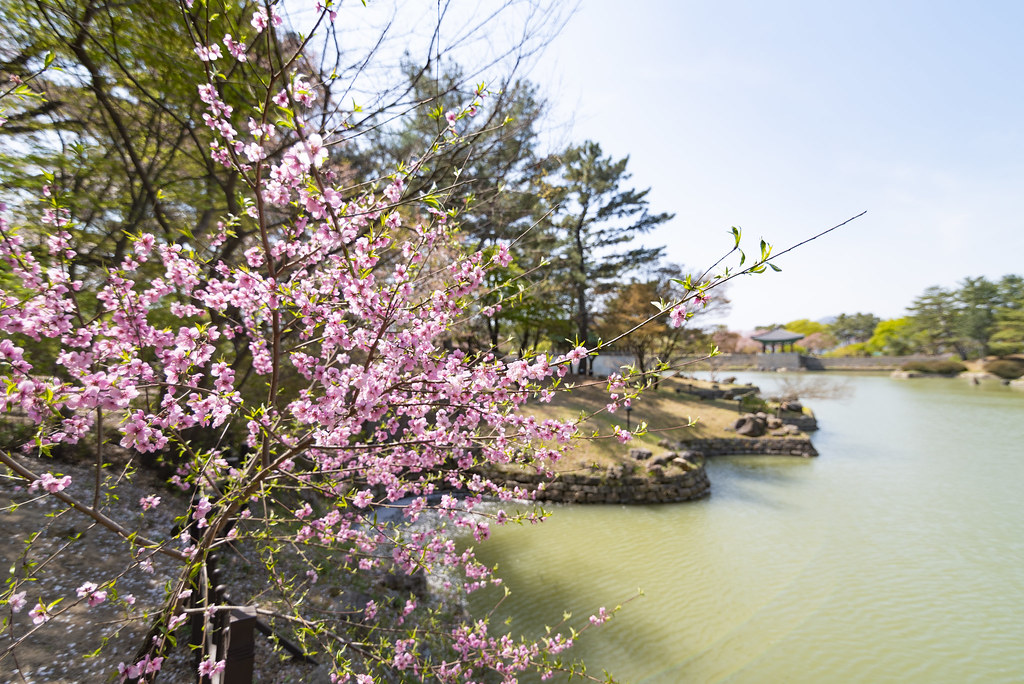
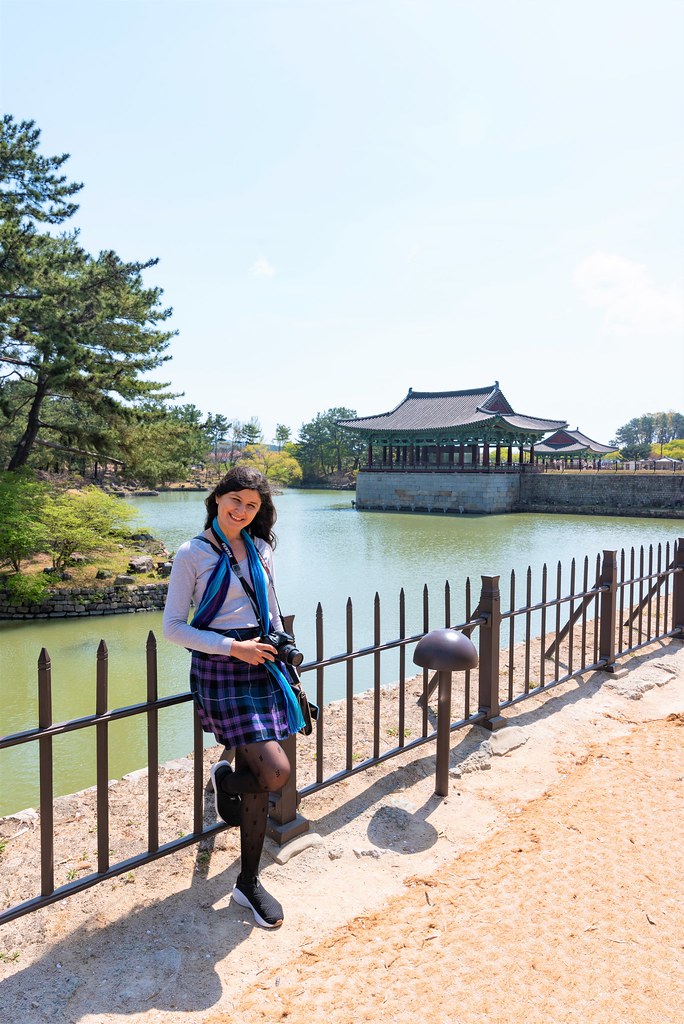
After dark, walk around the pond once again to enjoy the reflections of the pavilions in the pond, which is rather well-known. Due to this fact though most people visit the palace in the evening. Which means you will have to deal with the crowds. Alternatively, you can come here earlier in the day, when it’s peaceful and quiet.
If you still have energy to walk in the evening, I suggest to walk from Donggung Palace back to the Woljeonggyo Bridge to see it lighted, then head to Cheomseongdae Observatory. Alternatively you can hop on one of the many buses to take you to Taejong-ro.
After the long day, you can end up where you were in the afternoon, around the Poseok-ro. you can visit one of the many restaurants and cafes (most of them are very close to each other).
See the dedicated post about cafes in Gyeongju.
See the best suggested 2-day itinerary for visiting Gyeongju if you have longer time.
Join our travel community on Facebook Coffee Fueled Travel Club
See Also