With 2 days in Gyeongju you will be able to cover all its biggest highlights. If you’ve already explored Gyeongju’s city center in my Day 1 guide, this post will take you beyond the core attractions and dive into Day 2’s highlights: the UNESCO‑listed Bulguksa Temple, the mountain‑side Seokguram Grotto and the serene Bomun Lake.
See the detailed tips on accommodation, transport, etc. for visiting Gyeongju.
Day 1: Gyeongju Central Areas
Or see the links to each of the sites:
Day 2: Gyeongju Outskirts
Note: On this day, you will be travelling outside the central areas of the city, so you will need transportation (use Naver maps for directions). I will give suggestions for each attraction separately.
If you are using public transport, changing the buses will take quite a lot of time on this day. If you are short on time and can afford, it’s easier to take a private or group tour. Here is a highly rated private tour, which can save you a lot of time.
Bulguksa Temple
Price: 5000 won.
Bulguksa Temple together with Seokguram Grotto is the UNESCO World Heritage site, due to the exceptional significance of this religious architectural complex. These two were the first sites in Korea to be recognized, as UNESCO sites.
How to Get to Bulguksa Temple
Unlike the sites you visit on your first day in Gyeongju, getting to Bulguksa Temple requires transportation. You can get here by #10 and #11 from Gyeongju. Note that the numbers change according to the time of day – strangely in the morning bus #10 runs from central Gyeongju to Bulguksa, while in the evening it runs on the opposite route, same for #11, so in order not to be confused consult Naver.
If you are heading to Bulguksa from the Sin-gyeongju Train Station, you will need to first take a bus to central Gyeongju – to Taejong-ro (there are a number of buses – #70, 700, 50, etc – consult Naver maps). Then take bus # 10 or 11 (see above). Alternatively, if you are heading to Bulguksa from the Gyeongju Bus Terminal.
It was an easy ride for us by bus from Taejong-ro street near city centre, although it did take around 45 minutes. After you hop off the bus, just follow the people to find the entrance. The site has two entrances, you will simply have to walk either to the right or left from where you hop off the bus, as either will work. However, before getting inside the temple grounds, you walk through lovely greenery with a lot of cherry blossom trees. We visited when petals were already falling, and it was a beautiful thing to see. It also smelled heavenly.
Bulguksa Temple Highlights
I do suggest visiting as early as possible. While the grounds are spread out, the crowds can be crazy, especially during the popular seasons in Spring and Autumn. We visited at about 11AM, as we needed to take care of some other things earlier in the morning. The whole area was crazy crowded and there was hardly a way to walk peacefully without bumping into anyone.
If you enter from the main entrance, you will find a small pond with this beautiful bridge.
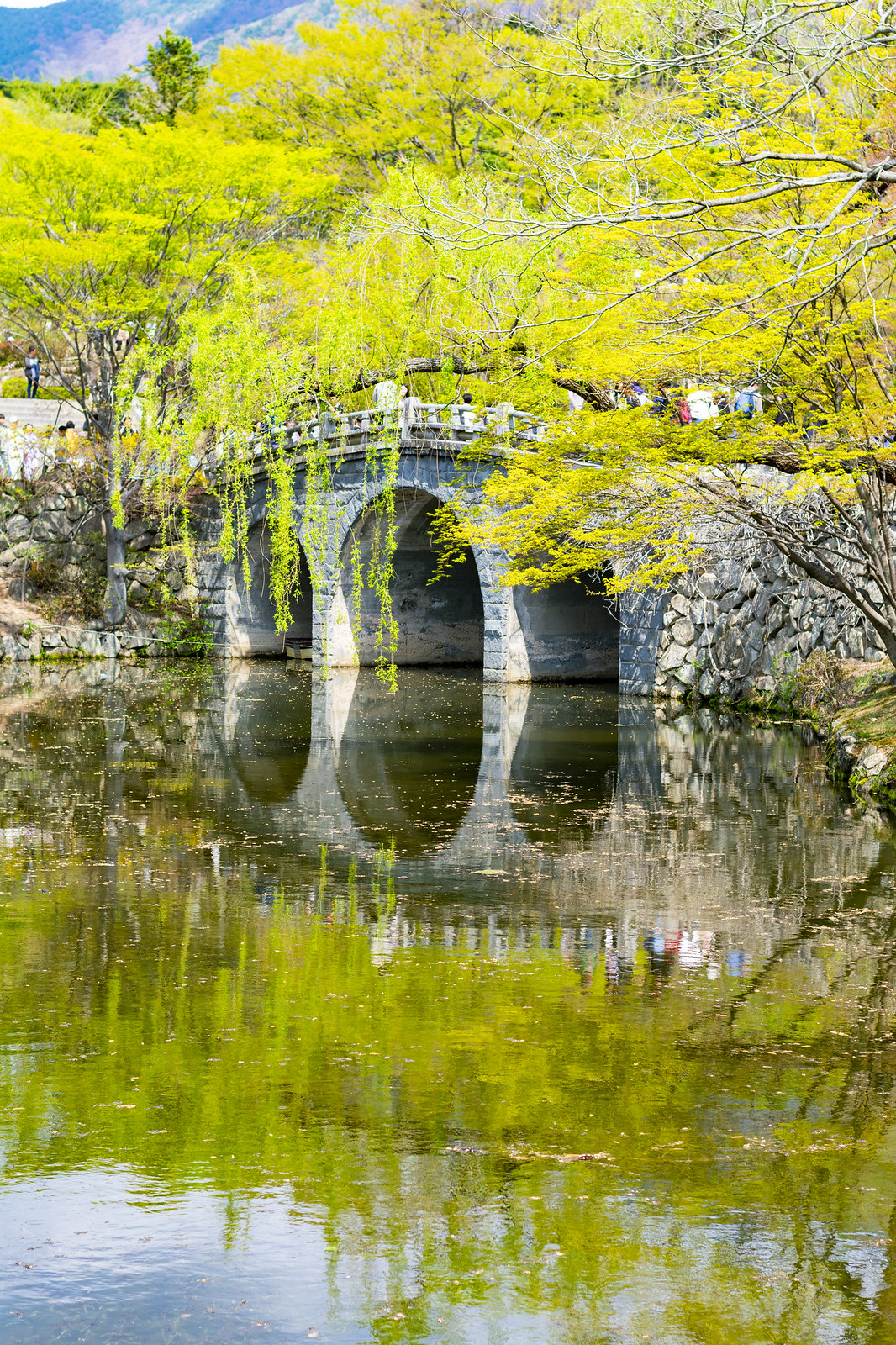
The Buddhist temple complex comprises several wooden structures. It was constructed during the Silla period in the 8th century, but was destroyed and reconstructed several times. The current buildings date mostly from the 18th century with some additional renovations in the 20th century. The temple complex is really beautiful and worth a visit even without its historical significance.
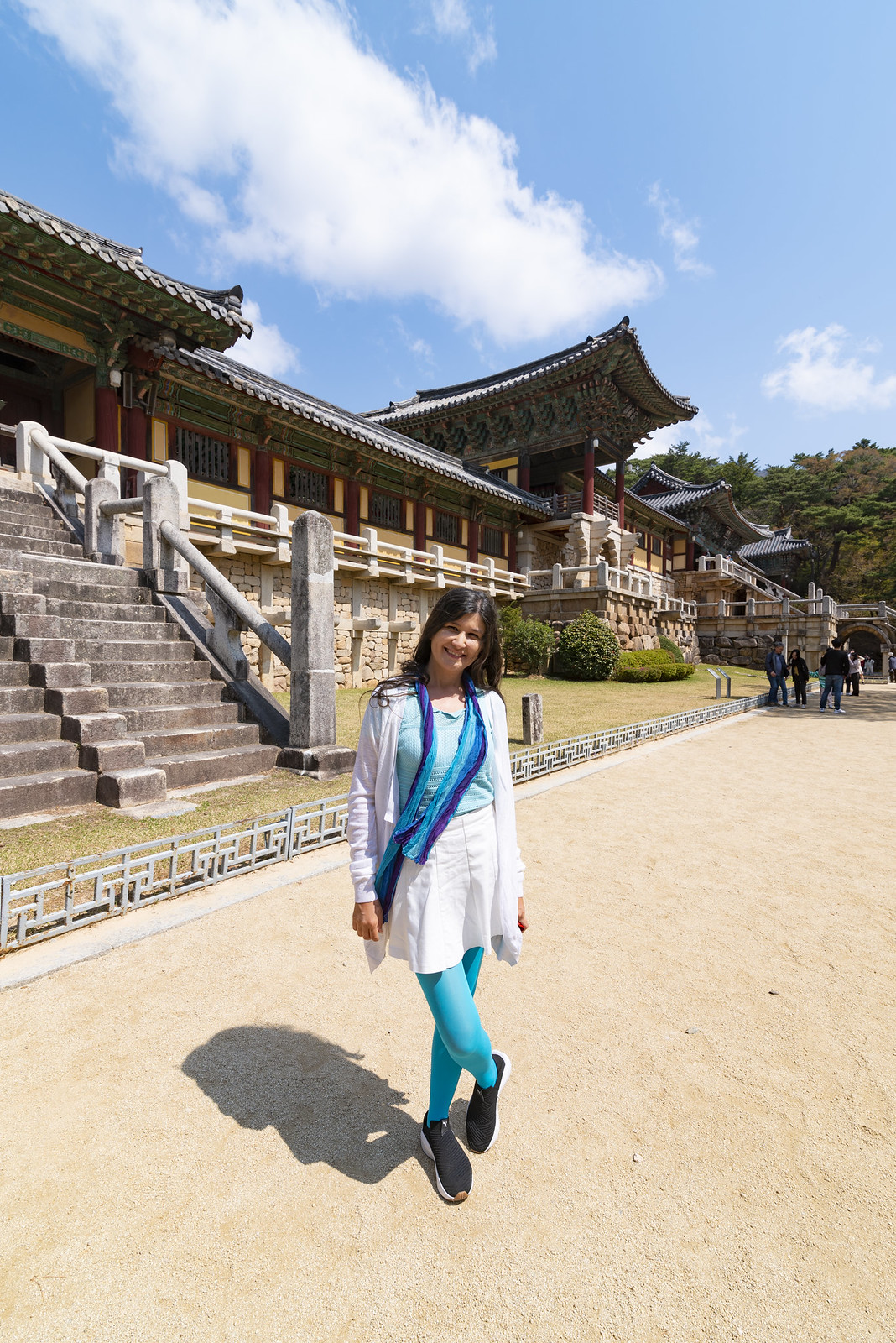
Before you enter the inner courtyards, you will see one long gate with two white staircases and “bridges” (they call them bridges, but they aren’t really that. You can’t walk on these, as they are closed off. Instead you will get into the inner courtyards by climbing from the side of the big gate.
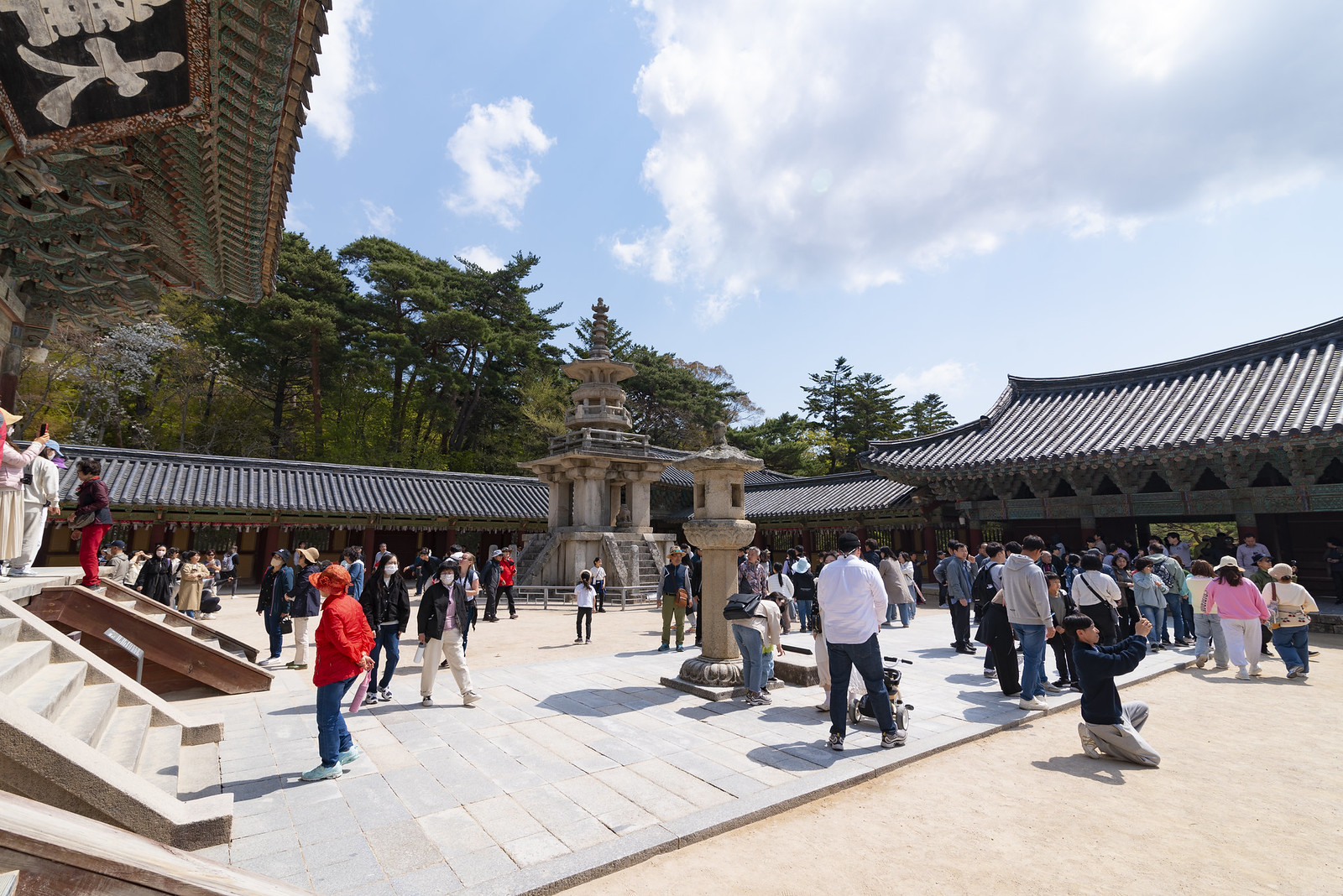
The main hall – Daeungjeon is the hall of Great Enlightenment, while the hall behind it – Museoljeon translates as the hall of no words (in accordance with Buddhist teaching that not everything can be taught with words).
The two stone pagodas standing in the courtyard you will find here are considered national treasures. One of them – Dabotap – is depicted on Korean 10 won coin.
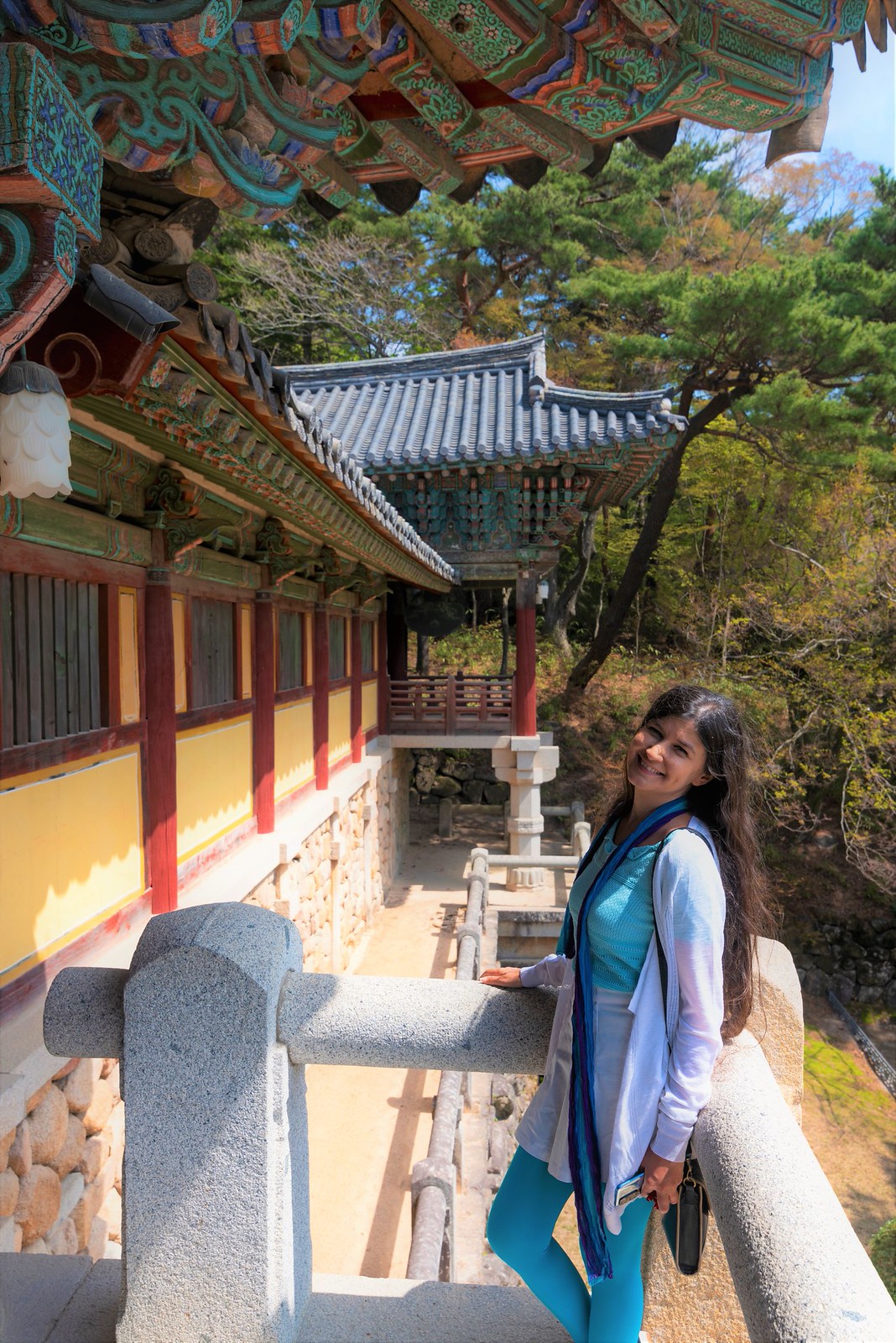
White exploring these areas, don’t forget to get on a sort of balcony on the gate from where you will get a view of the grounds. Do have a look at the beautiful carvings here, dragons are my favourite.
Tip: there’s an information center very near the bus stops. The staff there is very welcoming and helpful. We bothered them twice actually, once when we didn’t figure out where to wait for the bus to Seokguram grotto and another time, when we needed to charge our t-money cards. So if you need any help, don’t hesitate to ask them.
Seokguram Grotto
Price: 5000 won
Seokguram Grotto together with Bulguksa Temple is the UNESCO World Heritage site, due to the exceptional significance of this religious architectural complex. These two were the first sites in Korea to be recognized, as UNESCO sites.
Note: Seokguram grotto is definitely not one of the most beautiful places you visit. It just has a particular significance for Korean history and for Buddhism. If you are short on time, considering how long it takes to get here, this is what you will want to skip from this itinerary.
How to get to Seokguram Grotto
Once you get out of the Bulguksa temple complex (or get off the bus #10 or #11 coming from central Gyeongju), you will have to take a bus #12 to Seokguram Grotto. The trick is that there is literally only one bus running the route and it leaves every hour.
According to the the schedule we got from the Bulguksa bus station, the bus goes from Bulguksa from 8.40am every hour till 4.40pm. I had no idea about this and I didn’t see its schedule anywhere. So once we got out of Bulguksa and figured out the bus schedule, we realized that we had 50 minutes to kill before the next bus. We then explored the streets across the road from the temple grounds, where you find a number of cafes, restaurants and shops (there’s even CU). We stopped by the café Old City.
See the information about this and other cafes in the area in the dedicated post.
Bus 12 to Seokguram Grotto takes almost an hour. Once you get there, keep in mind that the bus will return in a bit more than an hour. This one hour is sufficient to comfortably get to the grotto and explore it, given that it’s small. However, keep in mind that you will have to walk about 10-15 minutes to get to it.
If you are coming to Seokguram Grotto from central Gyeongju, you will first have to get to Bulguksa and then switch to bus 12. There is no direct way.
Seokguram Grotto Highlights
Next to the bus stop you will notice a giant drum. You can actually hit it, if you pay certain sum (don’t remember exactly, but it wasn’t much).
From here to walk to the grotto itself, you will need to walk on the pathway lined with colorful lanterns. It’s not a difficult path at all with hardly any ups and downs, however, it’s a dirt path, so it would be hard for wheelchair users. Overall, accessibility is limited.
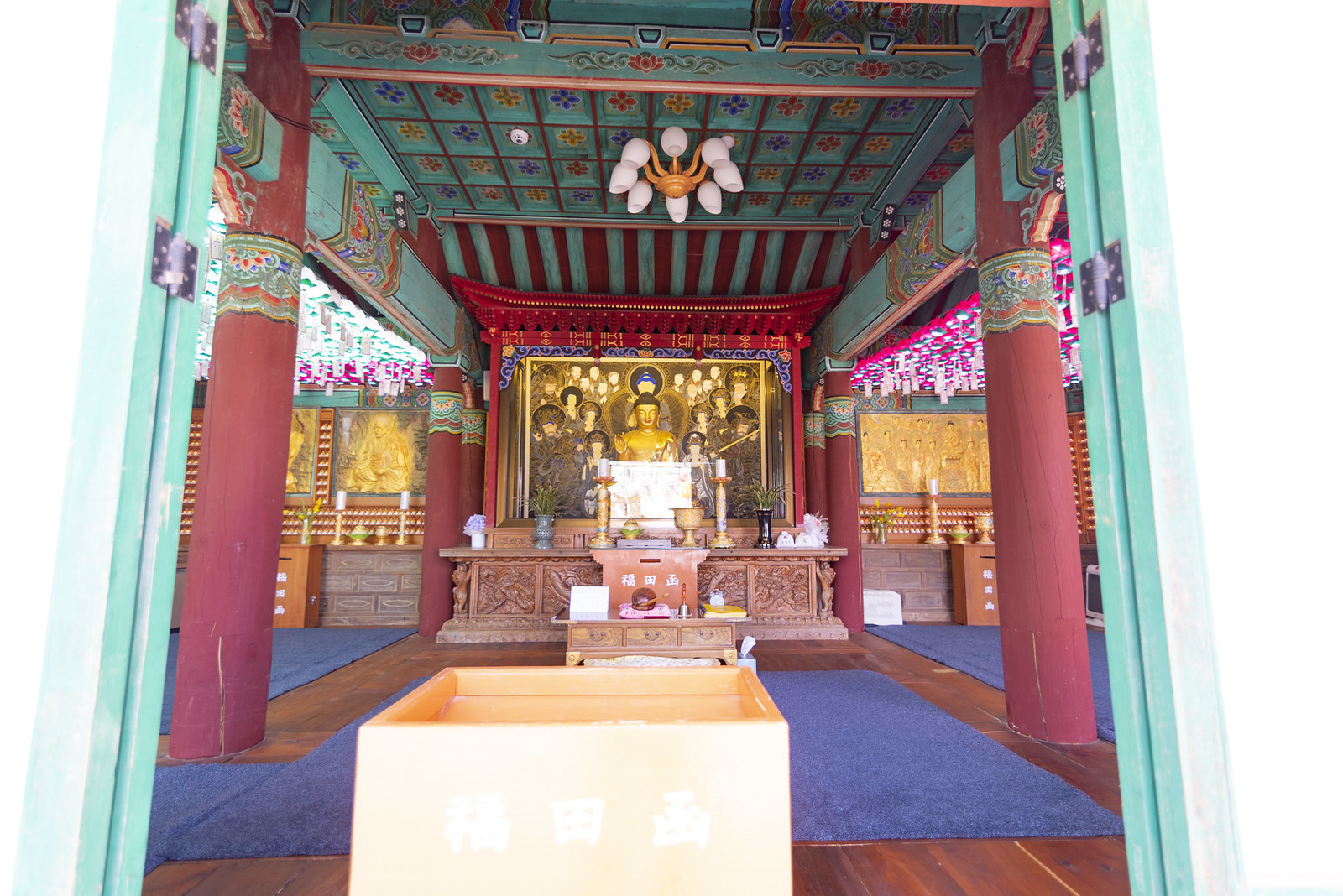
The Grotto was constructed during the Silla period, around 8th century. Buddha sitting on a Lotus throne is located inside a small traditional Korean style building.
Bomun Lake
Compared to other sites you visited on this day, Bomun lake doesn’t have historically significant areas. This is another spot you can remove from your itinerary if you are short on time. However, if you do have time, it’s a nice area to stroll around.
How to Get to Bomun Lake
From Seokguram, you will have to go back to Bulguksa bus stop (by bus #12) and then take a bus #11, which goes to central Gyeongju passing Bomun lake (make sure to double check with Naver as bus numbers change). If you are coming from central Gyeongju, it will be either bus #10 or 11, depending on the time of day.
Bomun Lake Area Highlights
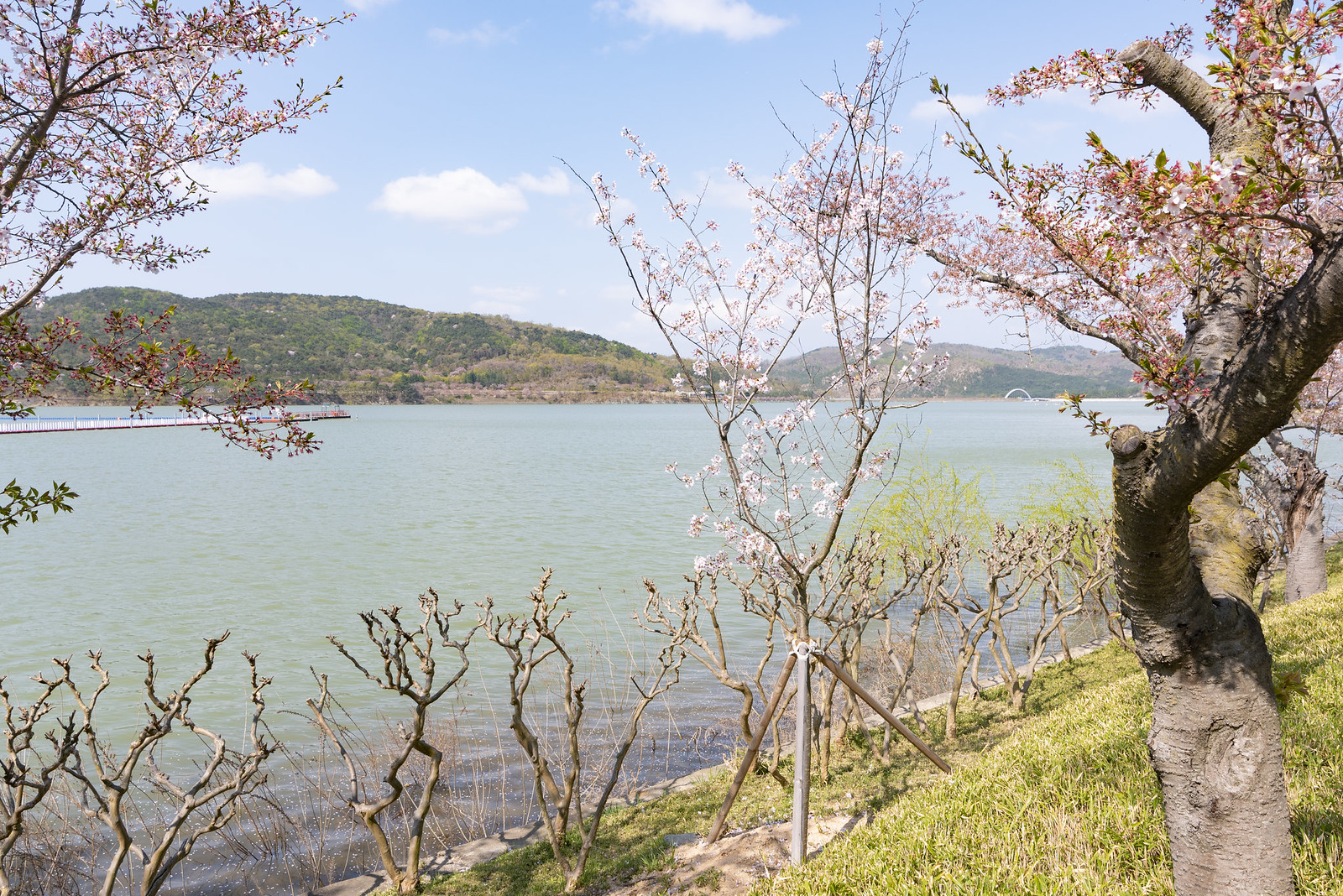
Bomun lake is particularly lovely during the cherry blossom season with the trees lined along the pathway around the lake. Surprisingly, when we visited in Spring, beginning of April on a late afternoon, the area wasn’t very crowded. We could enjoy the peaceful environment. Although the cherry blossoms were already falling.
First of all, you will hop off from the bus near the Gyeongju world (it’s a theme park). You will be greeted by the huge gates, which lead to the park. This is a popular attraction park with roller coasters, water attractions and more. If you are in the area with children, you may want to check it out. We are not fans of theme parks, so we skipped this one, opting for a lovely late afternoon around the lake instead.
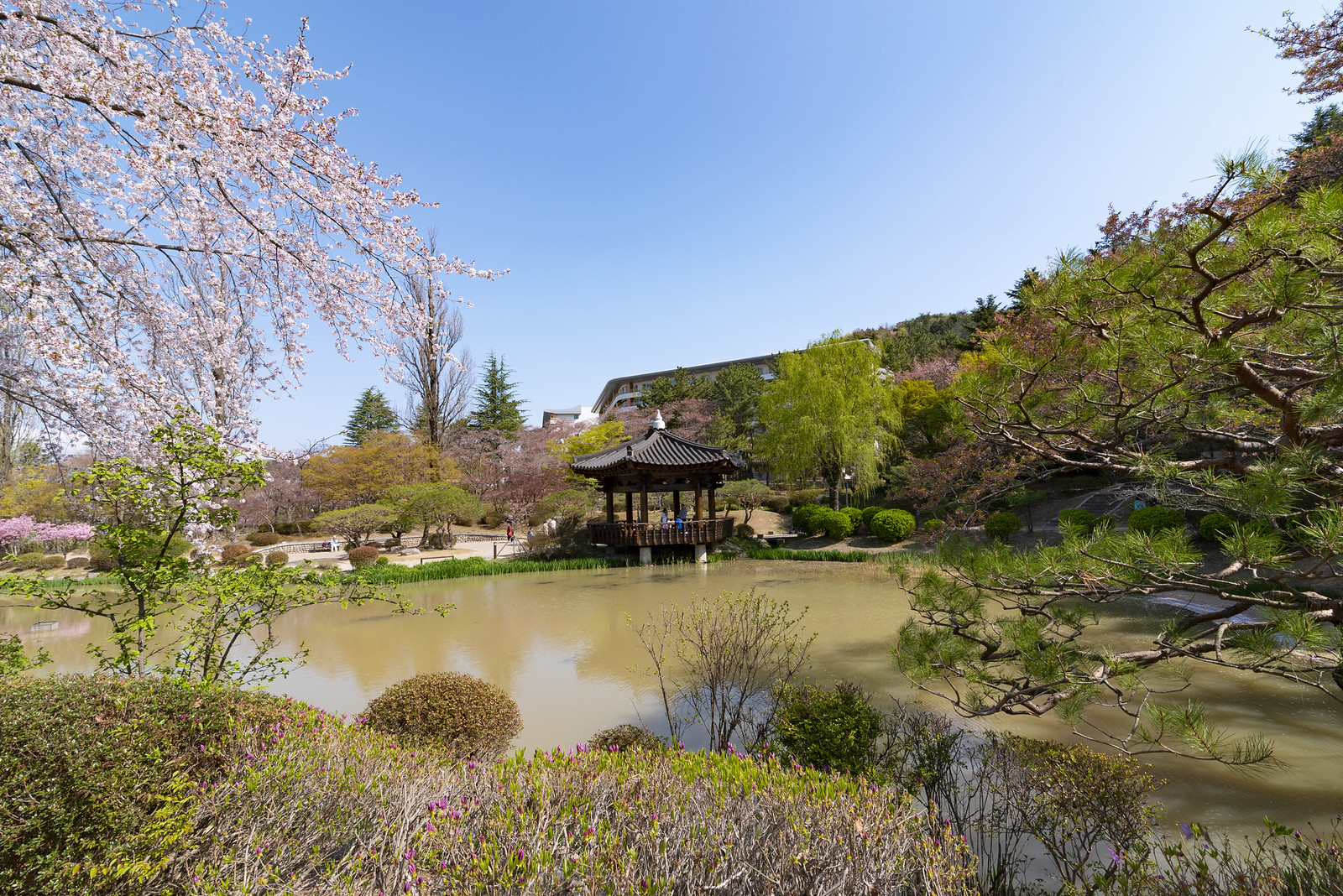
If you skip the Gyeongju world, head to the Bomujeong pavilion. It’s a lovely small pond with a pavilion and especially nice during the cherry blossom and autumn foliage seasons.
After that, continue walking towards the lake and stroll around the lake. Don’t forget to check out one of the lovely cafes in the area. We chose Matinata for its cute interior and location with cherry blossoms all around.
See the information about this and other cafes in the area in the dedicated post.
If you are visiting Bomun lake with the kids, there are also Teddy Bear museum and a Car museum in this area.
After this tiring day hop on the bus back to central Gyeongju and find a nice restaurant or a café.
Join our travel community on Facebook Coffee Fueled Travel Club
See Also