Planning a trip to China is one of the most difficult tasks on par with planning travel to Iran. The issues include the limitations on buying tickets for trains online in advance, restrictions on using Google maps and a number of other apps we are all used to, the problems of using foreign bank cards, etc.
While planning, I saw a number of people complaining that they had difficulties finding their way, most signs were not in English and it was impossible to get around. People kept suggesting to hire a guide, not to try to plan the trip myself, as, even though I am an experienced traveler, China is another world and I wouldn’t be able to find my way. I am not the one to give up on planning an independent trip though, however difficult.
So I planned everything myself and I found travelling to China much easier than to a number of other countries, especially because everything is so well-organized. Yes, there were some difficulties involved, as with any travel, but with the right planning, everything went smoothly. We loved the culture and the people and we can’t wait to visit again. If you have any difficulties, ask people around, they are super nice and will try to help, even if they don’t know any English – body language and Google translate always work wonders.
Based on our experiences, I have compiled these tips to help you plan your trip and avoid any difficulties.
- Best Time to Visit China
- Visa Requirements for Entry to China
- Money Matters in China
- Accommodation Guide for Visiting China
- Where to Stay in Beijing
- Where to Stay in Pingyao
- Where to Stay Xi’An
- Where to Stay in Shanghai
- Where to Stay in Suzhou
- Internet in China: Using Google and Other Apps
- E-SIM vs. SIM Card for China
- Essential Apps for Traveling in China
- Transport in China
- Food in China
- Best 10-Day Itinerary Tips for Visiting China Independently
- Other Tips for Travelling Independently in China
Best Time to Visit China
Summers are rather hot in China, particularly in the bigger cities, where air is polluted and it’s difficult to breathe. Winters are cold. So I immediately discarded those seasons, as options.
Springs may have more showers than autumn, so we decided to go for mid to end of October. The thing is, this time is already colder than beginning of October, but 1-7 is the Chinese National holidays and everyone will advice to avoid this period. It really would be impossible to move around at this time. The attractions are still crowded any time of the year, mainly with the local tourists, but it’s still possible to navigate.
Visa Requirements for Entry to China
Citizens of selected countries can enter China visa-free – this list may change, therefore, make sure to check the official website before your travel. Certain country nationals also may qualify for 24-hour, or 240-hour transit visa exemptions. It can get confusing, so make sure to double check exactly which cities may allow citizens of your country to travel either through visa on arrival or free transit.
If you need a visa, there is a possibility to order your visa via travel agencies, but this would cost more than going to the Embassy. The process was extremely easy. You will need to fill in the online form, which you can find here. You will then need to bring to the relevant Embassy the printed form together with passport and a passport sized photo, the information about your flight and hotel bookings (I brought the printed copies) and a letter from your work/study place (the documents may be different according to the embassy requirements, so make sure to double check).
Upon arrival, you need to have your fingerprints taken. The machines are standing before the line for passport control. They worked well, and we were able to go through the process in several minutes. You will get a small paper slip with OK written on it with huge letters. When you join the queue, you will need to have this paper slip in hand, as well as the immigration fill form. We filled this form, while queuing not to lose time. The whole process took about 45 mins, even though the queue was quite long. The officer didn’t ask us anything else.
Money Matters in China
In many cities of China, cash is rarely used. Particularly after COVID-19, everyone uses one of the two payment apps – WeChat or Alipay. To use these apps, you need to have the NFC compatible phone. You will need to register for the app, link your credit or debit card and ensure you have internet connection for the times you will be paying with these apps.
Using the above mentioned apps, you will either scan the code displayed at the cafes and shops or have them scan your app. Even the small stalls at the markets have those codes nowadays.
Theoretically you could try asking to use your bank card, however, whenever we tried they had no option for this. They only have an option to pay via the apps and that’s it.
As a tourist, you still can sometimes use cash though. You can exchange money for Chinese yuans at the banks. Do not exchange money at the exchange offices, as their rate is really bad not only at the airport, but everywhere, and they also add the commission for exchange. So you would lose at least 10%. We found Bank of China at the Departures part of the Beijing airport. Find the counter 3 and the bank is in the back. They will exchange your money with usual exchange rate. We didn’t have to wait in queue, however, it took about half an hour for them to go through all procedures. The exchange in the banks can be done only until 5pm though. If you arrive later, try to have some yuans exchanged in your country or get money from the ATM, it definitely will be better than exchanging at the exchange office. Next day you can find a bank in the city.
I heard that in banks many people had to wait in long lines, so try to find a quieter branch. We exchanged money second time in Suzhou and there were no queues. However, the exchange process itself took half an hour again, so there’s no avoiding that.
Accommodation Guide for Visiting China
I do suggest booking hotels, instead of flats because hotels will register you with authorities, as is require upon 24 hours of your arrival. If you don’t stay at the hotels, you would have to do this yourself.
Where to Stay in Beijing
The attractions are spread out in this huge city and it’s impossible to stay anywhere convenient to walk to attractions. Therefore, your best bet is finding accommodation somewhere close to a metro station. Keep in mind that buses can be very inconvenient for foreigners. It’s difficult to find any information in English about their destination or stops. On top of this, they get stuck in traffic and are extremely slow, so you will lose a lot of time with them.
Where we stayed: I chose a hotel considering the cost efficiency, as well as location. Happy Dragon Alley Hotel was located 3 minutes walk from Zhangzizhong Road metro station on Line 5 and this saved us a lot of time. Plus, the hotel provided rooms for families so I was able to book for the three of us. It was a very small clean hotel, which met our needs.
Where to Stay in Pingyao
As the city is small, basically anywhere inside the old city walls is central and convenient to walk around. The main thing is that no other transport but the hotel’s own transfer cars can enter the city walls. Therefore, consider that you will either have to book their transfer or walk a bit from the gates.
Where we stayed: We stayed at Pingyao hotel. We loved its cute courtyard and beautifully decorated rooms. It was very clean, very cute and the people who met us were very nice.
Where to Stay Xi’An
Xi’An attractions are quite spread out, therefore, you won’t be able to simply walk among them. Therefore there is no one central location, which will be convenient for everything. That said, staying near Bell Tower will put you closer to some of the main locations you will be visiting. Otherwise, it’s best find a place close to metro stations.
Where we stayed: The hotel we stayed at doesn’t exist any more, I wouldn’t recommend it anyway, as it was inconvenient location wise. Before booking, I thought buses would be convenient, but they took too long to get anywhere. However, taxis were cheap in this city, so we took taxis sometimes. Instead I recommend Campanile Hotel Xi’an Bell Tower, which is in a great location. They have discounts at the time of writing for high season, if you book early. The location is very central, near the Bell Tower and the Clock Tower and metro links. This will allow you to get around the city easily.
Where to Stay in Shanghai
In the Shanghai area, you can either stay in Shanghai itself or its surroundings. As usual with bigger cities, it’s best to find a location which is close to a metro station, because you will need to use public transport often. As I was searching, I found that Shanghai hotels near transport links are quite expensive. So I decided to stay outside the city, in Suzhou (the train from Xi’an stops in Suzhou before arriving to Shanghai, so this was the most convenient option).
Where to Stay in Suzhou
Suzhou is one of the cities, which has its sightseeing spots very spread out. I highly recommend to stay near a metro station in this city as well.
Where we stayed
Internet in China: Using Google and Other Apps
China has not only banned access to Gmail and other Google services, Facebook and other websites, but also banned downloads of VPNs. Therefore, if you want to access any of these apps and websites, while in China, do what all foreigners do – either get an E-SIM before arrival or download a VPN before you arrive.
Most free VPNs barely work in China – they keep turning off, but you can get 5 minutes on your email at least or not … A couple of my VPNs worked the first day, then none of them worked for some days, then they started working again. I have no clue why. If you can’t survive without your Fb access, then you will need to pay for a more advanced VPN service in order to get a reliable access. People recommend LetsVPN – however, I haven’t tried that one, so not sure if it works.
Maps – you won’t be able to download offline China maps on Google maps. And the map access may be difficult. I decided not to rely only on VPN and downloaded other apps. That was somewhat annoying, as I am too dependent on my Google maps, but well 😊
- The most useful was maps.me, which works fine in China. I moved all my Google map pins there and was mainly using this app.
- Another good option is OsmAnd maps. You can download offline maps and change the language from Chinese to English.
- Visit a City app was also helpful for putting all the sights together.
E-SIM vs. SIM Card for China
Having mobile data is quite essential while traveling to China. Especially nowadays, when you will need Alipay or Wechat for payments.
As noted above, E-SIM cards are the best option, as they will allow you to have access to the websites and apps most of us rely on. Airalo offers a great option
If you are opting for prepaid SIM cards, make sure they are compatible with your phone. For instance, Chinese Telecom cards don’t work with phones produced outside China. You can buy the SIM card with the data either online before arrival or after arrival at the airport or in relevant shops. You can top up your card in local stores if needed or through Wechat or Alipay.
Essential Apps for Traveling in China
Download these essential apps before departure:
- A VPN or several. One may not work, but another will. In my case, none worked on some days. The VPNs I had were Tunnelbear (this one is actually my go-to free VPN usually), Windscribe, express vpn (7-day free trial) and Hide.me. They worked sometimes, but keep in mind that none of these will work all the time. Some people recommend LetsVPN, that might work better – however, I did not try it.
- Maps – As already noted maps.me worked well. OsmAnd and Visit a City will also help.
- Translate app – Google translate offline works fine. You can also download Baidu and Pleco, but they don’t translate full sentences, only words.
- For taxis, download Didi app – we didn’t use it, as I couldn’t sign up with my number and we didn’t get a Chinese sim card.
- MetroMan – really helpful for metros in any city. It gives metro maps and schedules offline.
- Wechat – it’s an app used by most Chinese. I contacted one of the hotels via Wechat, for instance. It is also used, instead of bank card to pay for services and goods (see above in the section about money). It is difficult to sign up though and keeps getting blocked, but it worked for me in the end.
- Alipay – like Wechat, Alipay is used for paying for services and goods.
- Trip.com – a Chinese travel agency, which I relied on quite a lot. I used them to book train tickets, the tickets for Mubus, as well as for booking hotels.
- Find another search engine, as Google may not work. Baidu is Chinese search engine, but I couldn’t understand, how to switch it to English. Bing is a good option.
- Download a web browser – Firefox will do. Chrome and Opera may not work.
Transport in China
China has one of the best developed public transport networks in the world. Trains are the best mode of transportation and I highly recommend using them, wherever possible. We always used trains for long distance travel and metro inside the cities, unless they were not available. Buses were a more complicated option.
For the detailed information on public transport, see the post here.
Food in China
Food in China is different from what you find in Chinese restaurants in many parts of the world. I had heard before that the food is adapted to local tastes and real Chinese food is different and I agree with this. We found out that Chinese don’t so much like salt, but they heavily rely on sugar and spices. Most things we tried came with sweet and hot sauces and/or with sugar. The food is quite greasy most of the time, but we found some things that we really liked:
- We loved dumplings in some places. In our experience, shrimp dumplings were mostly too greasy, but the classical meat ones were good mostly.
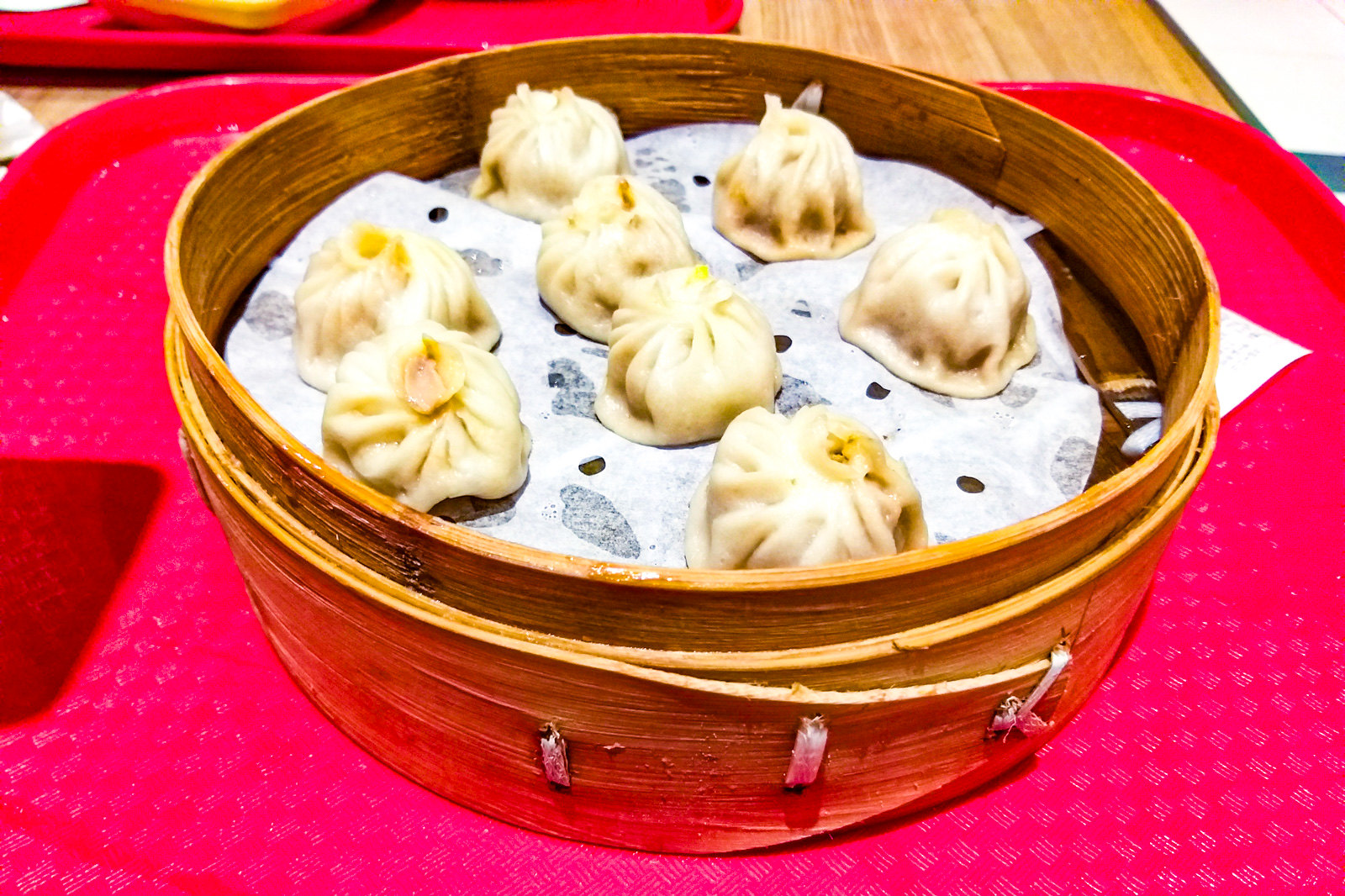
- We loved the different versions of rice dishes, especially with shrimp.
- Our favourate sweets were mango desserts, you will find mango pudding in many places and it is delicious. We also liked mango pancakes.
- Another sweet dessert we liked were tea cakes.
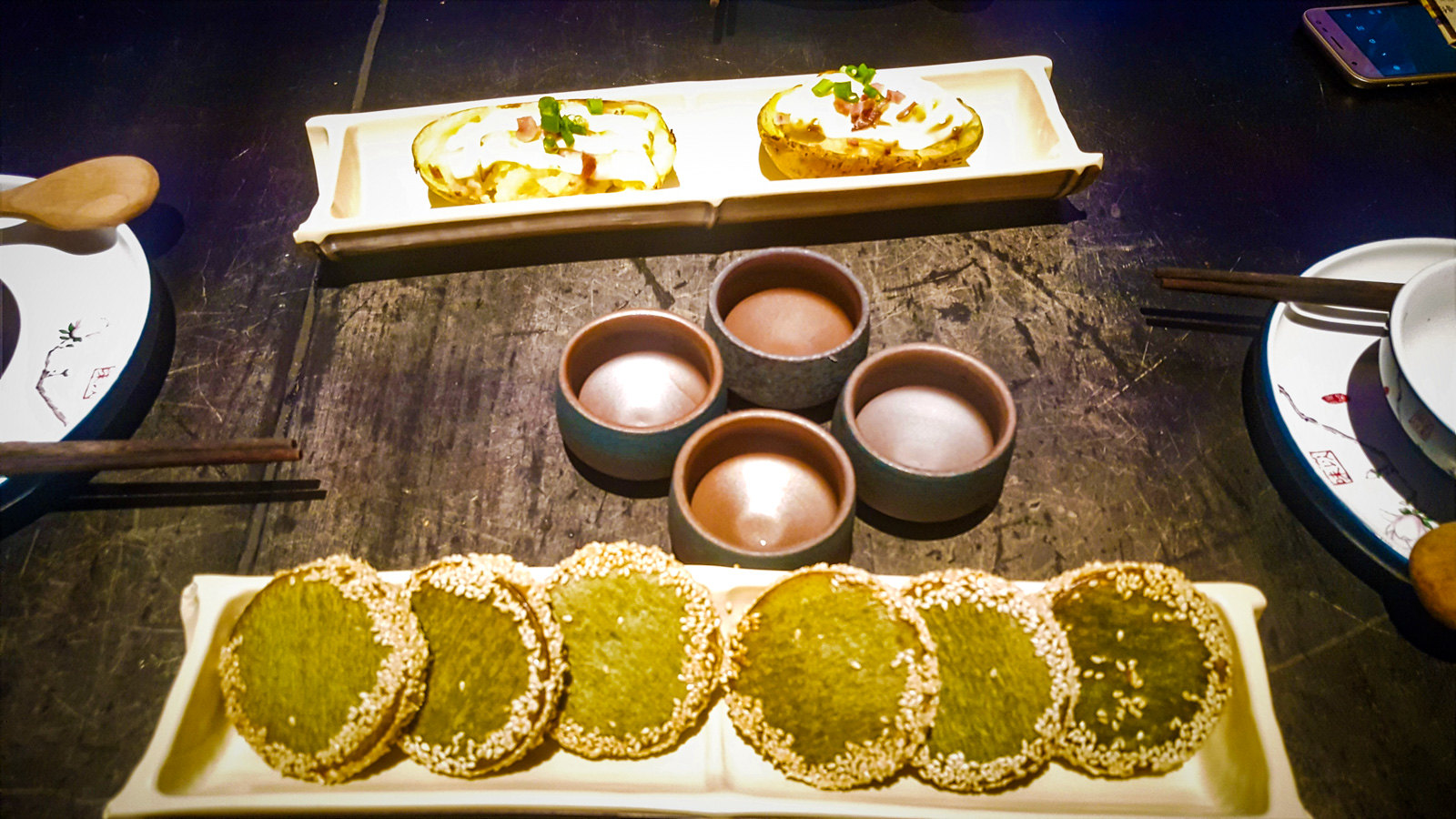
- Fish was mostly great, but they often bring it with sweet sauces or fried in a sweet sauce.
- We were not a fan of Peking duck, it was too oily, although tasty for a bite 😊
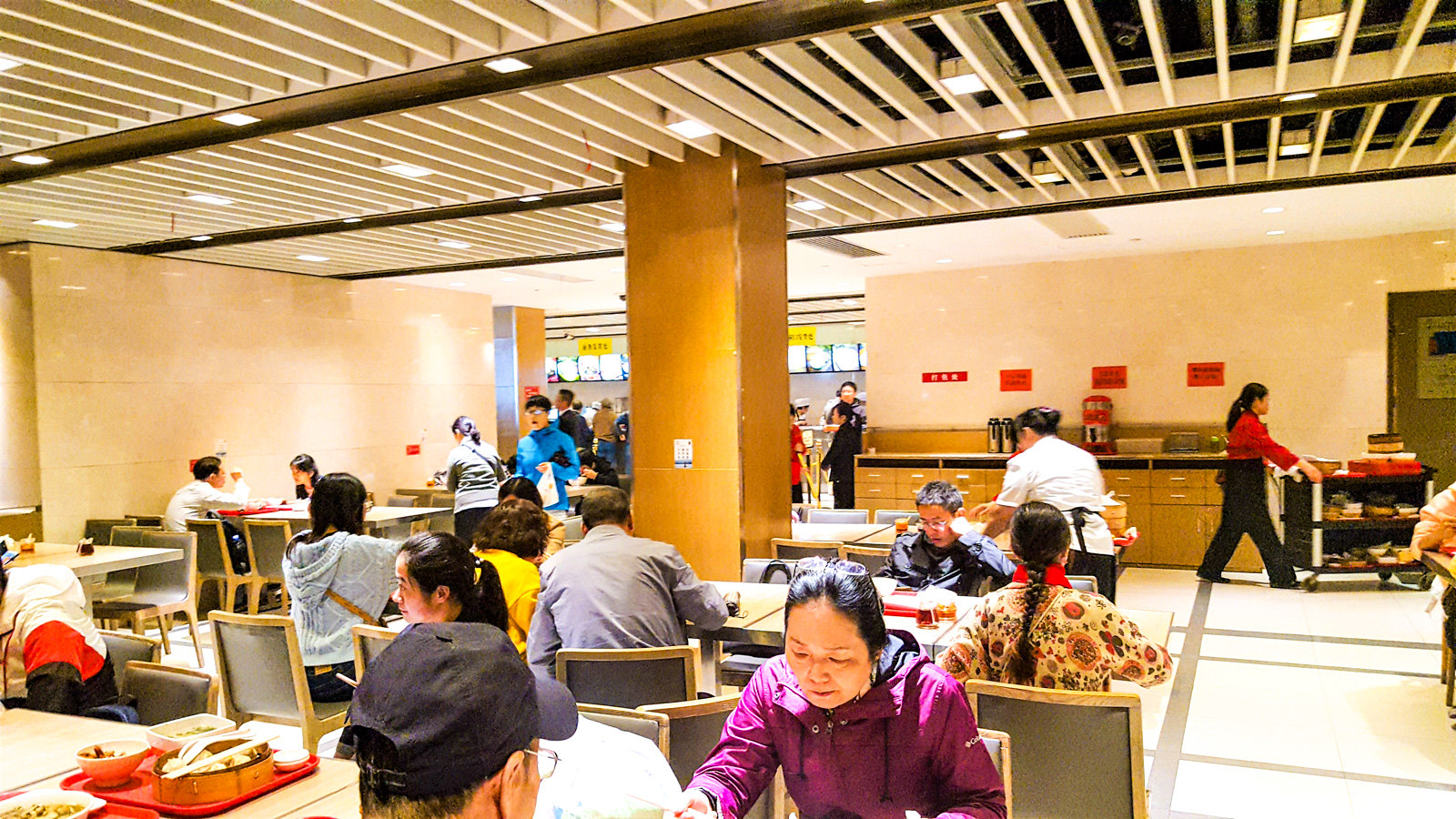
In many restaurants you will have to wait for your table, unless you enter a fast food place or unpopular restaurant. Almost everywhere we went for lunch or dinner, we had to wait 15-45 minutes, depending how busy they were.
Here are a few restaurants we liked and can recommend:
Shanghai
- Shanghai Grandmother restaurant – conveniently located near Bund and old town area with modern atmosphere.
- Yang’s fried dumplings – the restaurant is a chain and has locations in several places. We were not huge fans, as for us it was greasy. But it came highly recommended and Chinese food lovers may like it.
Hangzhou
- Grandma’s – local chain with several branches.
- Green Tea Restaurant – another local chain with various locations.
- We liked their dumplings.
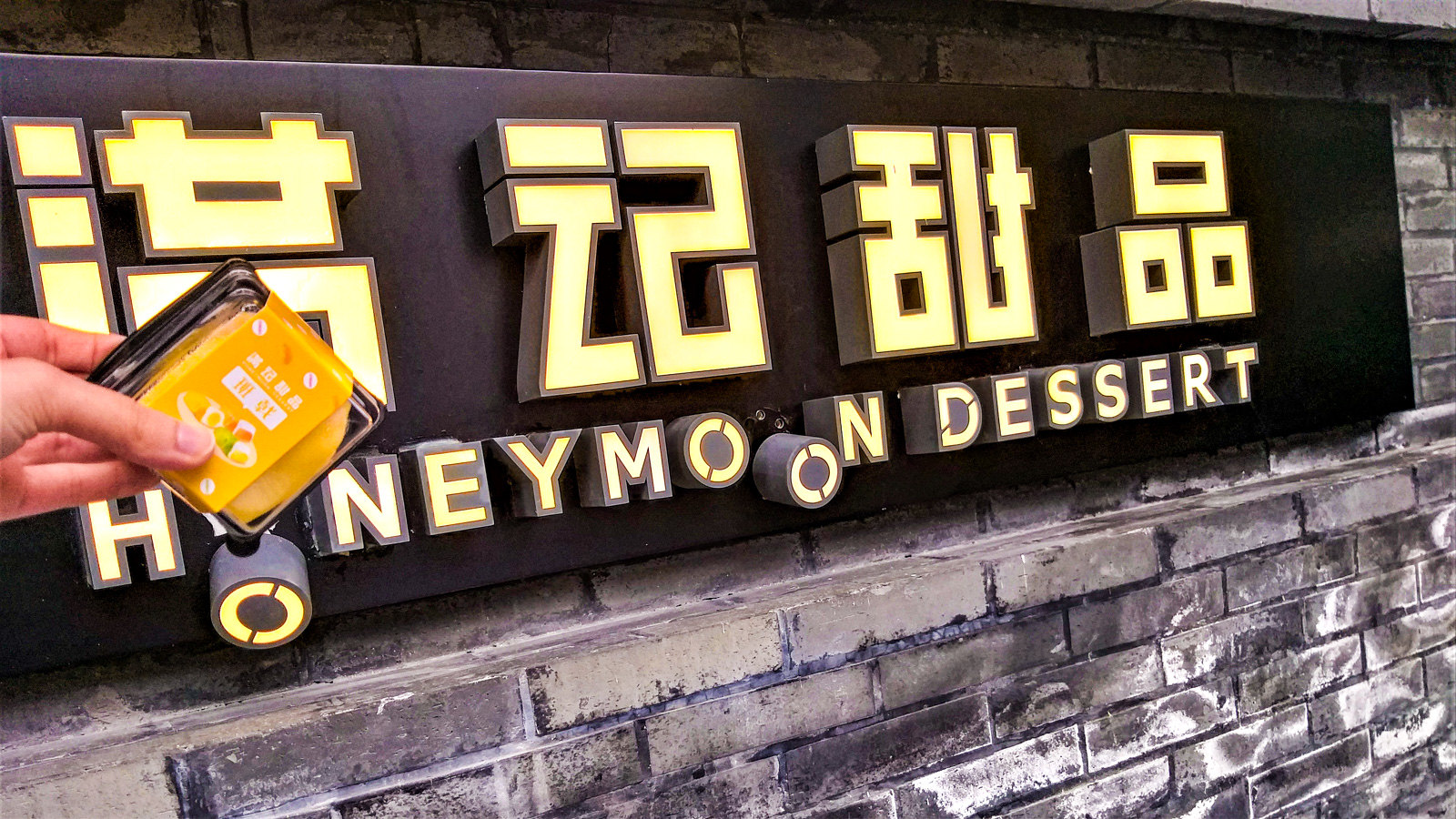
- Honeymoon Dessert – this dessert place had amazing mango based sweets. Just try everything, all of them are great. We actually tried once, then went back second time and got some to take back with us – yes, we actually carried the desserts all the way to Georgia. I am not kidding, the mango desserts pictured below travelled 10+3 hours, not including the way to and from airports and waiting time during transfer 🙂
Xi’An
- Three Sister (or 3rd sister) Dumplings – nice no frills place near South gate with great dumplings.
Pingyao
- Buy local pastries anywhere in town.
Best 10-Day Itinerary Tips for Visiting China Independently
(this can be arranged and rearranged according to your wishes)
Day 1 – Beijing – Tiananmen square, Forbidden city, Jinshan park, Wangfujing road.
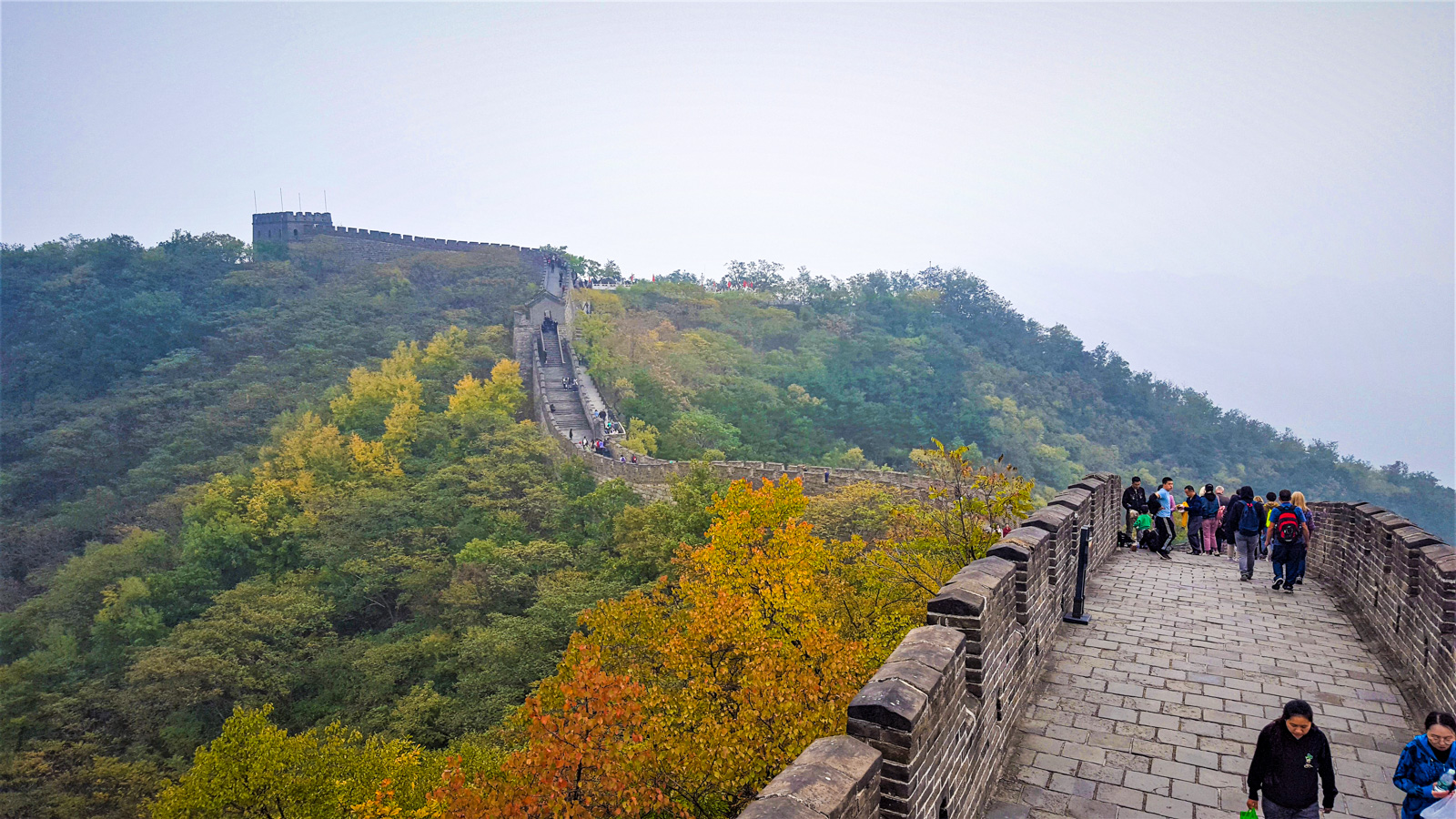
Day 2 – Beijing – Mutyaniu section of the Great wall.
See the detailed guide for visiting Great Wall and which section to choose.
Day 3 – Beijing – Beijing zoo, Summer palace, Starry Road.
See the detailed guide for visiting Summer Palace in Beijing.
Day 4 – Beijing – Temple of Heaven, Lama Temple, Drum and Bell tower, Hutongs, Houhai lake, Beihai park.
Day 5 – Pingyao – (high speed trains will get you from Beijing to Pingyao in 4 hours and Pingyao to Xian in 3 hours).
Day 6 – Xian – Terracota warriors, Xian city wall (enter from South), Giant Goose Pagoda
Day 7 – Xian – Bell and Drum towers, Muslim quarter including Great Mosque, maybe Shaanxi museum, Tang paradise.
Day 8 – Suzhou – Canglang Pavilion, Pingjiang road, Boat ride on the canal, Humble Administrator’s garden, Lion Grove garden, Shantang street and the lighted up canal at night.
You can spend a couple more days in Suzhou and visit Tiger hill, Hanshan temple, The Master of the Nets garden and the Lingering garden. I adored this city and would have spent much more time here.
You can also visit the water towns from here, like Tongli and Zhouzhuang.
Day 9 – Shanghai – People’s square (if you are here on the weekend, you will see the Marriage market), East Nanjing road, the Bund, Ferry to Pudong, skyscrapers, Oriental Pearl Tower with glass floors, French concession.
If you spend more time in Shanghai, you can also visit another skyscraper, Yu garden (after Suzhou gardens, it’s not that great), City God temple, Shanghai museum and/or water towns, like Zhujiajiao
Day 10 – Hangzhou – walk around the West lake, Yongjin bridge, Orioles Singing in the Willows, Leifeng pagoda, Dragon ferry to Three pools island, Baoshi hill with the Taoist temple, Broken bridge.
If you have more time in Hangzhou, you can explore more parks and pavilions around the lake and go to Lingyan temple and Feilaifeng
Other Tips for Travelling Independently in China
- If you look different (lighter skin, red hair, darker skin, tall or whatever else), you will feel like a celebrity or an attraction 😊 People were taking selfies with us, repeating the word “beautiful”, asking where we are from, etc. I was aware of the scams and was apprehensive at first, but none of the people who talked to us wanted more than to take a photo with us and to genuinely help.

- Chinese are very keen to help, even if they have no clue, what you are asking. If you get lost or need something, just stop someone on the street. We were able to ask for help with body language or through a translation app – this last was extremely helpful.
- Still be careful of the people aggressively pushing their services or products. For instance, in Xi’an, when looking for 306 bus stop, a lady tried to push us to some buses, loudly shouting at us. Not sure, if the service would be ok (from what I heard the scammers take tourists to souvenir shops and ask for a lot), but I am always apprehensive, when they ambush me. So just say no and stick to what you have planned to do.
- Public toilets are quite easy to find in a lot of places, especially near tourist attractions. They are always free. The toilets can be squat or a western version, but former is in bigger supply.
- Carry toilet paper and hand sanitizer everywhere. You will find paper in some toilets before you enter the stalls, but in many cases, you will find none. Soap is also rare.
- Bargaining is an important part of Chinese markets. Check prices of anything you want to buy in many spots to get the idea of what it may cost. For instance, for exactly the same chopsticks we were seeing everywhere, we were quoted 10, 20, 100 or even 200 yuan. Keep in mind that in most places they will quote to a foreigner far higher price than any Chinese would be willing to pay. You can bargain. My mom is great at this and on several occasions she managed to make them decrease the price threefold or more (which I am sure was more than Chinese would pay, but as tourists we were fine paying that amount).
- Blowing your nose loudly is impolite in China. On the other hand, you will find a lot of people spitting on the street, so don’t be surprised.
- If you are used to a lot of personal space, Chinese cities provide definitely the opposite. I guess it’s due to the huge numbers of people living in cities, which doesn’t make it possible to keep enough distance.
- Have a lot of fun 😊
Join our travel community on Facebook Coffee Fueled Travel Club
See Also

So much useful information. Things you necessarily wouldn’t know without a lot of research or first-hand experience. Thanks!
Very interesting about the payment apps! I went when Shanghai Disney opened and the payment apps are for sure a new thing!
Yes, they only allowed it this July. When we visited it wasn’t possible either so we only used cash. But this change will make things a bit easier for tourists.
A very informative post. I hope to go to China in the next year or two and it will definitely come in handy. Thanks!
Thanks for the information. China sounds a little controlling for foreigners. But still a wonderful place to visit.
I believe they don’t care what foreigners do – at least that was our impression.
Been to China for a day trip from HK. I haven’t seen most of what you shared. Very helpful tips as well. Oh and the foods look so delicious!
Thanks for sharing, this is a very informative post! Lots of great tips to keep in mind 🙂